Cis-editing for all, even for foodies

Nature Biotechnology devoted an editorial to the positive contribution CRISPR can make to the democratization of agricultural biotechnology. The hope is that, without the burden of overregulation, even public institutes and small biotech companies can bring useful products from the lab to the fields. Gene editing without the introduction of “trans” sequences from other species can be given the suffix “cis,” hence the title of the article, Cis-editing for all.

Continue reading
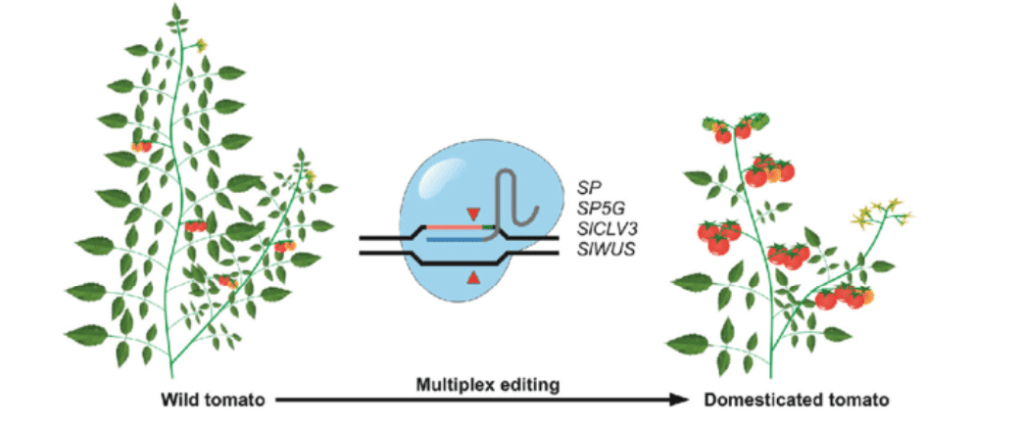
Domesticaton in the CRISPR era

The world’s food supply depends on about 150 plant speciesbut this number could increase, even considerably. In fact, 250 species are considered to be fully domesticated, while 7,000 are semi-domesticated and 50,000 are edible. In the genomic era domestication may not require centuries and millennia, as was the case in the early days of agriculture. The process could happen at an accelerated pace, within a few years, taking advantage of modern knowledge about useful traits and new tecnologies such as gene editing. 

Continue reading

Crispy salads are here!

Berkeley professor Patrick Hsu on twitter: “Delighted to try out the world’s first CRISPR-edited salad”

I must say that I’m a bit envious and eager to taste this kind of Brassica juncea with the “mustard bomb” mechanism prevented by knocking-out multiple copies of the gene responsible for the bitter taste.

Continue reading