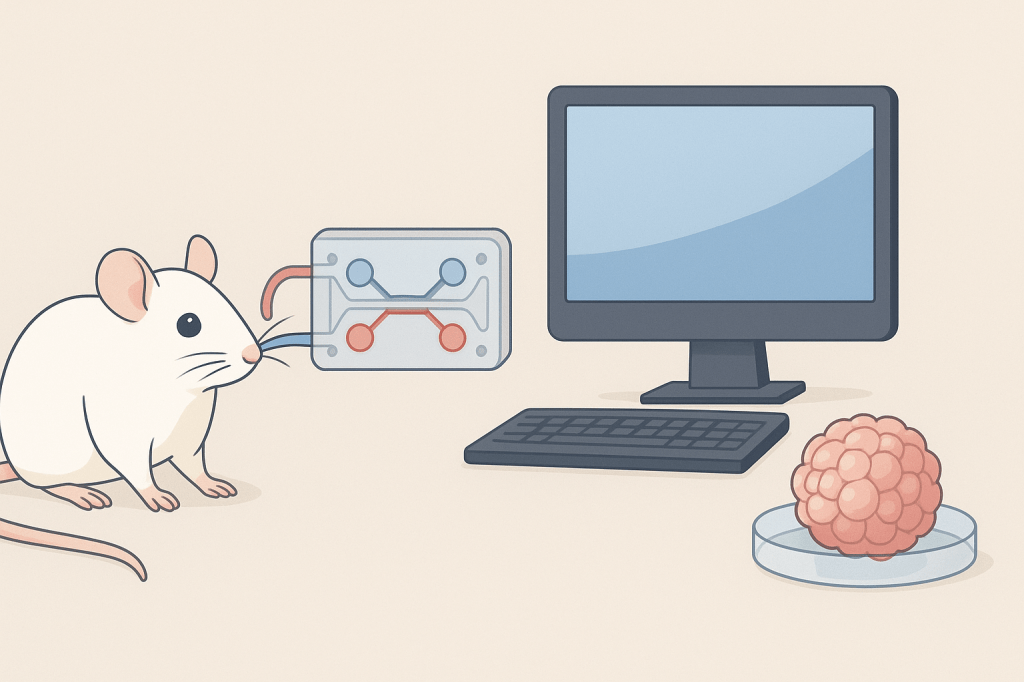
Can technology replace animal testing?

New Approach Methodologies (NAMs) have a bright future ahead, but they should be seen as complementary rather than alternative to classical experimentation.

Regulatory and funding agencies in the U.S. and Europe are promoting ambitious initiatives to foster the development and adoption of advanced systems capable of testing the effects of drugs and other substances without using animal models. The hope is that biomedical research can become more ethical, safer, and cheaper. But the challenge is complex, and the requirements vary depending on the application. As a result, some voices urge a faster “transition,” while others warn that rushing the process could be risky. Recently published articles in leading scientific journals capture this polarized debate, but they also hint at a possible middle ground.

Continue reading

Brilliant Minds: David Liu & Sammy Basso

The first is a CRISPR innovator (base editing and prime editing came out of his lab). The second has a genetic disease that causes him to age prematurely (progeria) and has taken his destiny into his own hands by becoming a biologist. They are each other’s inspiration and in this video they tell us why.

Great progeria paper opens CRISPR new year

A paper published in Nature by CRISPR innovator David Liu and a giant in medical genetics, Francis Collins, raises great hopes for treating a rare, devastating pediatric disease causing premature-aging (Hutchinson-Gilford progeria syndrome). “The outcome is incredible,” according to gene-therapy researcher Guangping Gao. “Dance on the lab bench” amazing, according to editing pioneer Fyodor Urnov. Let’s be clear: the CRISPR variant called a base-editor has helped only progeria mice so far, but results are beyond anyone’s wildest expectations. One injection is enough to fix the single-letter mutation in several tissues, doubling mice’s lifespan. To learn more, see David Liu’s tweets and the NIH Director’s Blog.