MicroRNAs won Victor Ambros and Gary Ruvkun the 2024 Nobel Prize in Medicine. Thomas Cech (Nobel Laureate for the discovery of catalytic RNA) has found a fun way to explain how they work. His book, which I reviewed a few weeks ago, is a mine of insights and information. Here is a small excerpt.
Drew Weissman will forgive us, but this will go down in history mostly as Katalin Karikó’s Nobel Prize. And perhaps in addition to being an award to celebrate, it is also an award that should make us angry. Because this scientist’s story is too extraordinary, for all the obstacles she had to face and overcome. It is always said that girls need model female scientists to inspire them, Karikó is a beautiful role model but we sincerely hope that she does not have to be an example to anyone, because it is not fair that a researcher of this stature was forced into precariousness for decades and could not count on a stable professorship in the United States where she moved from Hungary in the 1980s (at the University of Pennsylvania she results “adjunct professor”).
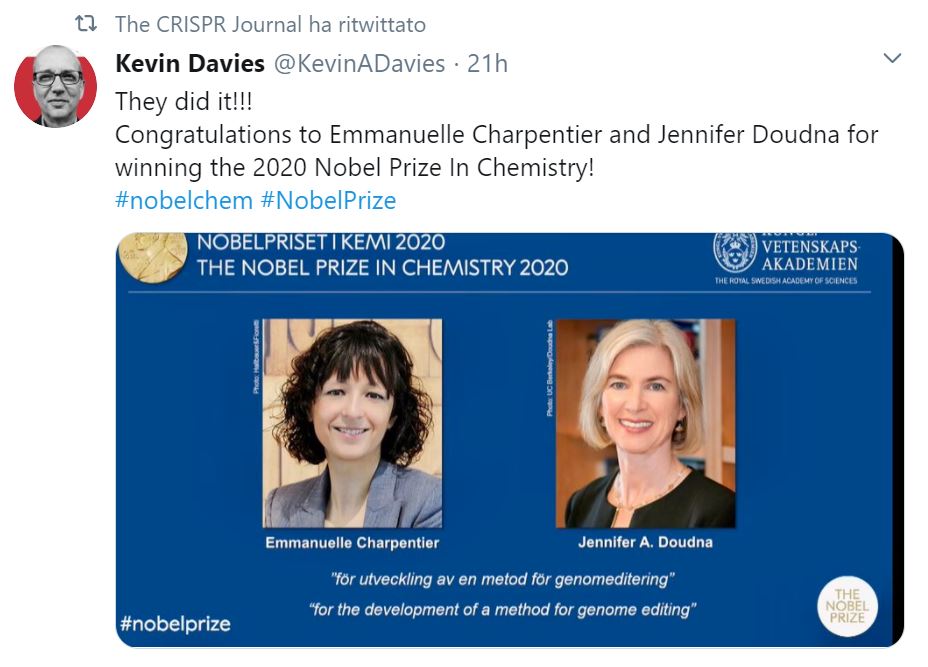
CRISPR inventors Emmanuelle Charpentier and Jennifer Doudna won the Nobel Prize in Chemistry in 2020, a pandemic year, so they had to wait until today, 10 December 2022, to experience the Nobel ceremony. Watch the video!
Chemistry laureates Emmanuelle Chapentier and Jennifer Doudna showing their Nobel Prize medals Credit: Nobel Prize Outreach
Here you can watch le Nobel Lectures by Emmanuelle Charpentier and Jennifer Doudna. Emmanuelle is very focused and très, très chic, oui. Jennifer is generous with credits to colleagues and willing to represent the public conscience of genomic editing. The thing I liked most is the reference to CRISPR-Casɸ: a hypercompact genome editor found in huge phages. Probably it evolved to target the genes of competing phages inside bacterial hosts.
Traditionally the Nobel Laureates travel to Stockholm to receive their prizes. This year the prizes are coming to them. On 7 December, 19.00 CET, the diploma and medal will be presented to Emmanuelle Charpentier at the Swedish Ambassador’s Residence in Berlin. On 8 December, 16.00 PST, it’s Jennifer Doudna’s turn at the Residence of Barbro Osher, Honorary Consul General in San Francisco. Also on 8 December, 11-13 CET, we can watch online the Academy’s official Nobel Lectures 2020: For the development of a method for genome editing, by Emmanuelle Charpentier, and The Chemistry of CRISPR: Editing the Code of Life, by Jennifer A. Doudna. Full programme here.
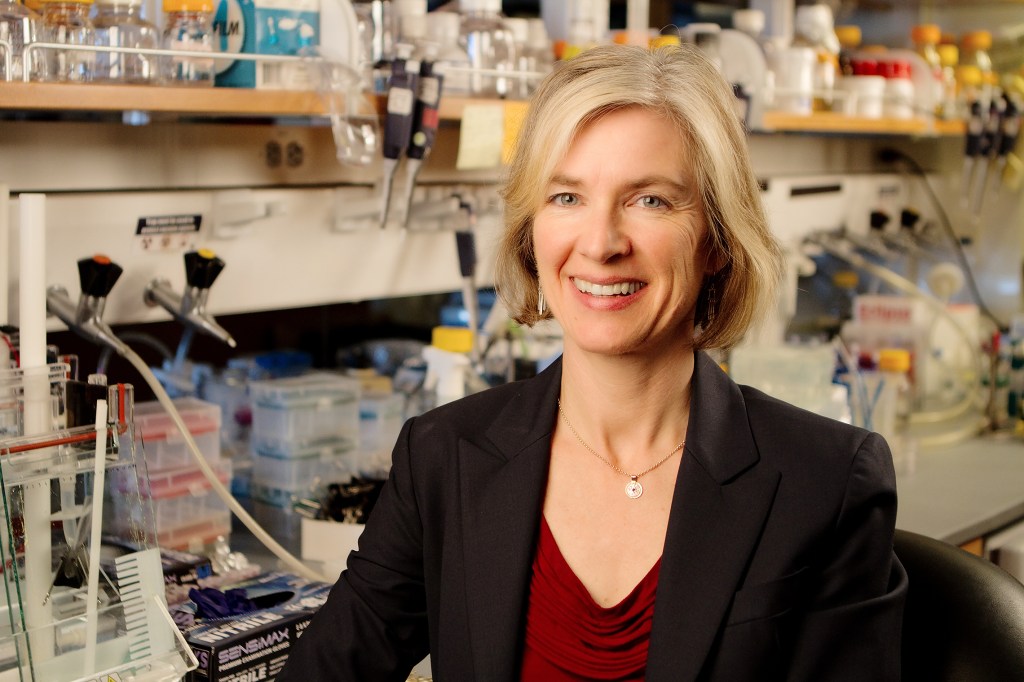
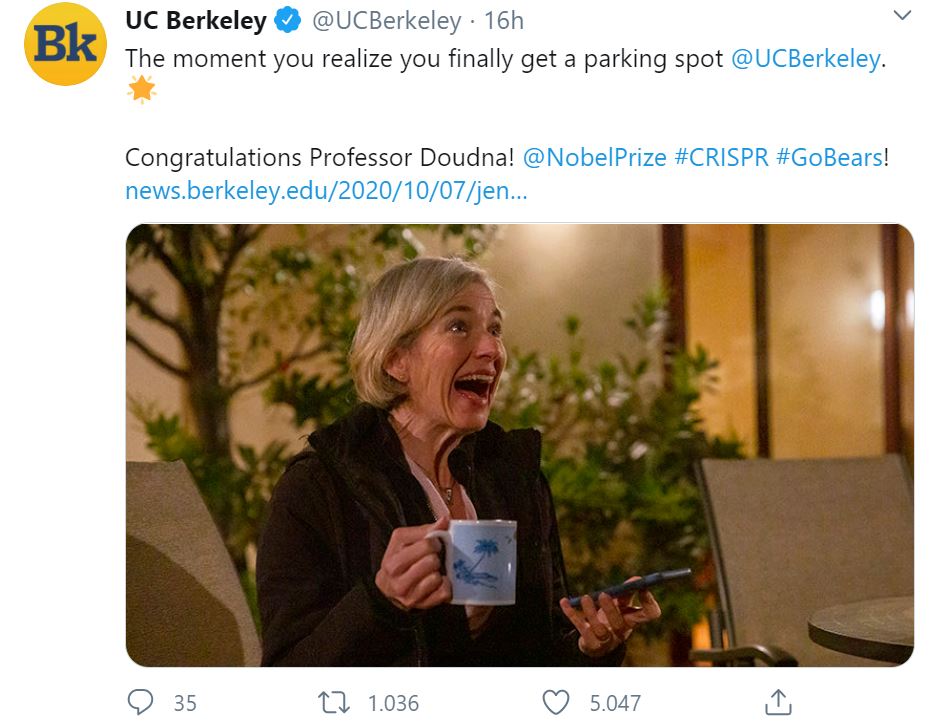
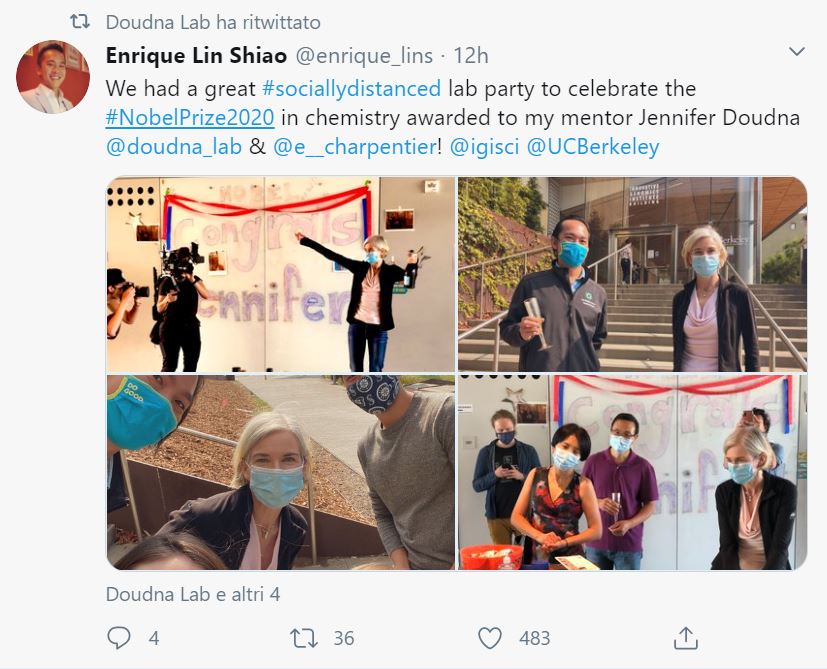
The Nobel Prize for CRISPR is one of the most exciting ever assigned in chemistry and one of the most celebrated in the media, for reasons related to the invention and the inventors alike. On the one hand, the technique is changing the practice and the image of genetic engineering. On the other hand, Jennifer Doudna and Emmanuelle Charpentier are not merely great scientists; they are a success story in cracking the glass ceiling and a symbol of the strength of collaboration.







 CRISPeR FRENZY