
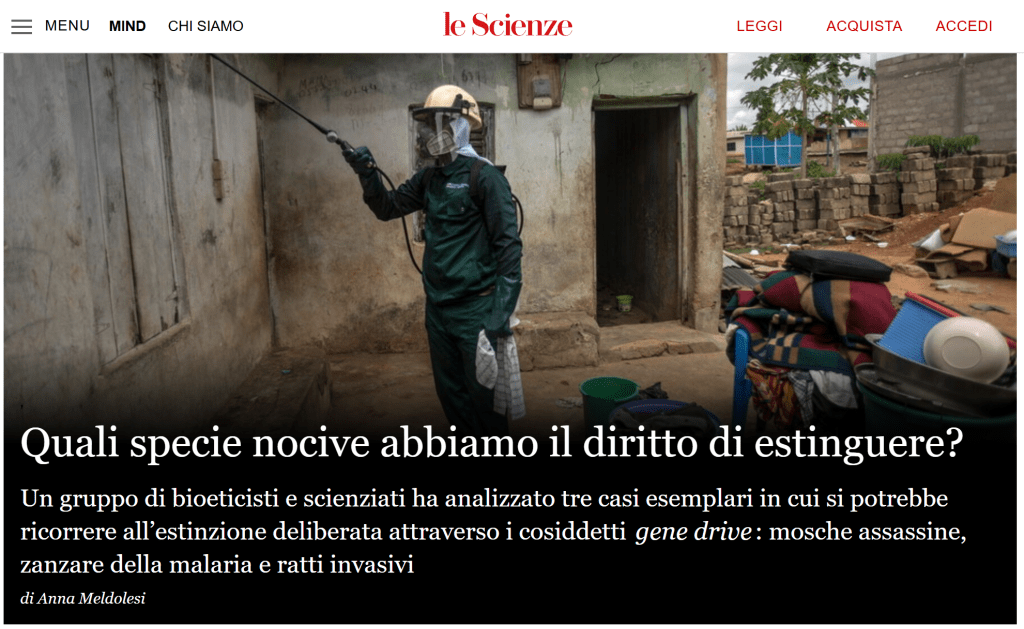
Since its origins, Homo sapiens has driven many species to the brink of extinction—and sometimes irreversibly beyond it. We have done so to feed, defend, colonize, cultivate, and enrich ourselves—often without fully realizing it. To do so today, deliberately, in an era of biodiversity treaties and conservation efforts, might seem absurd or extreme. Yet there is no shortage of organisms deemed highly harmful to human health or the environment. Under what conditions might it be justifiable to eliminate them using genetic technologies? Do we have the right to erase another life form from the face of the Earth?
Continue reading
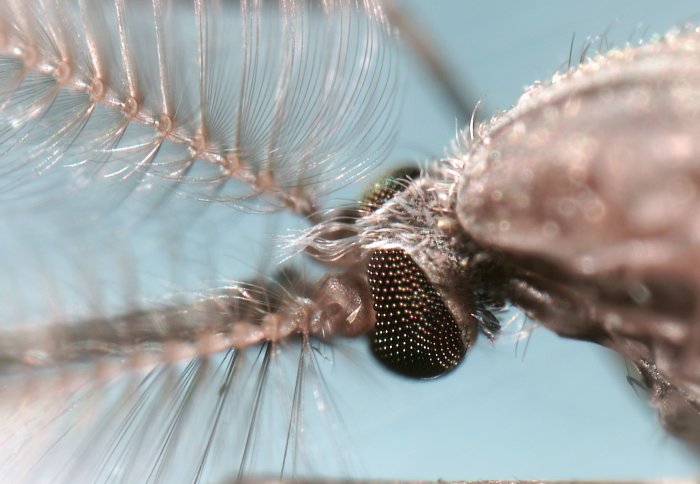

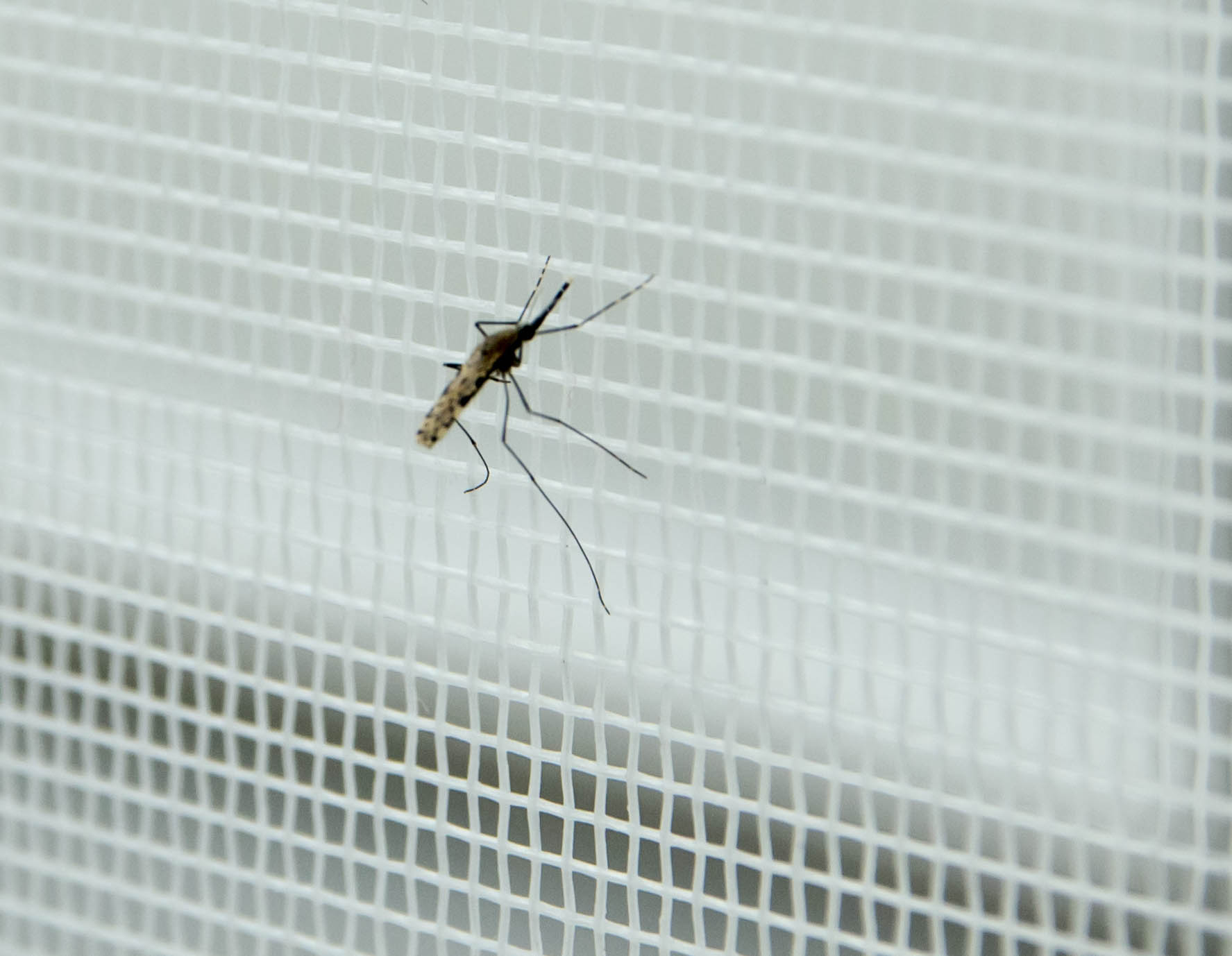 Mosquito nets are not enough, vaccines are late to come, land reclamation in Africa is a challenge. But there is a new hope for defeating malaria, coming directly from the most advanced CRISPR frontier. The trick is a kind of genetic chain reaction fuelled by genetic elements called “gene drives”. Researchers are experimenting their power with the aim of crashing the number of mosquitoes responsible for Plasmodium transmission, by spreading genes that are bad for Anopheles gambiae. A gene behaving in Mendelian way has a 50% chance of being passed on from parent to offspring, but it can virtually reach 100% with a little help from a drive. Thus a gene designed to damage a harmful species can propagate within a few generations with a domino effect, until the population collapses. One of the founders of this futuristic strategy is an Italian molecular parasitologist:
  CRISPeR FRENZY