Beyond Baby KJ: manufacturing lessons for the next CRISPR cures

The coordinated effort that last spring saved the life of little KJ Muldoon earned widespread and enthusiastic media coverage. But between the invention of the treatment and its delivery to the patient lay a lesser-told story: an unprecedented manufacturing sprint. Genetic Engineering & Biotechnology News organized an online roundtable led by its deputy editor in chief, Julianna LeMieux, to discuss how therapeutic components were produced quickly, cost-effectively, and to clinical-grade standards.

Continue reading

CRISPR cures for kids? A new center is born!

Jennifer Doudna and Priscilla Chan

Last May, the case of baby KJ made headlines: the child, suffering from a severe metabolic disorder, received a therapy developed specifically for him in just six months. The rapid improvement in his condition and his discharge from the hospital left the rare disease community with a pressing question: was this an unrepeatable one-off, or a replicable model of intervention? The right answer might be the latter, as demonstrated by the launch of the Center for Pediatric CRISPR Cures in California. This new center, to be led by Fyodor Urnov, begins with the mission of developing customized genome-editing treatments for eight young patients with congenital metabolic and immune system disorders.

Continue reading

Baby KJ is a symbol of hope — But is it replicable?

The personalized editing therapy developed at record speed for the American newborn required preliminary studies, favorable circumstances, and a heroic collective effort.

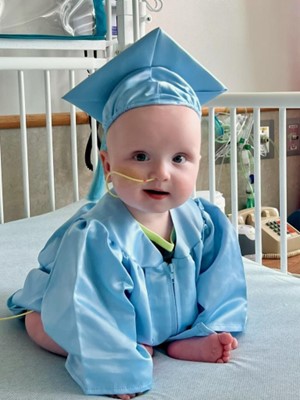
After 307 days, little KJ Muldoon was discharged from the Children’s Hospital of Philadelphia (CHOP), wearing a tiny graduation outfit complete with a blue gown and cap. Born ten months ago with a severe metabolic disorder, the baby received a genome editing therapy developed exclusively for him, and his remarkable progress has been hailed by many as the dawn of a new era in precision medicine. A month after the publication of his case in the New England Journal of Medicine, we take a closer look at how researchers managed to develop the treatment in just six months—and whether this breakthrough could be replicated for other rare disease patients in need of life-saving therapies.

Continue reading

Hi I’m JK, the first baby treated with a personalized CRISPR therapy

The announcement was made yesterday at the annual meeting of the American Society of Gene & Cell Therapy and simultaneously published in the New England Journal of Medicine. I wrote about it for the Italian edition of Scientific American, but this story is worth seeing and reading.
PS: Before KJ was treated for his metabolic disorder, there was the case of Terry Horgan, who had muscular dystrophy. Unfortunately, the personalized treatment for him came too late, and he did not survive an adverse reaction. So yes, we can say that KJ represents a first: the first time genome editing was used early, rapidly, and tailored enough to truly offer hope for a happy ending.

CRISPR News – A Trio of Firsts

Many interesting papers have been published recently; here are our top three picks. They cover an innovative gene therapy trial, a new experimental approach for oncology, and the development of novel tools to map gene enhancers.

Continue reading

The Huge Little Thing: NanoCas is Coming

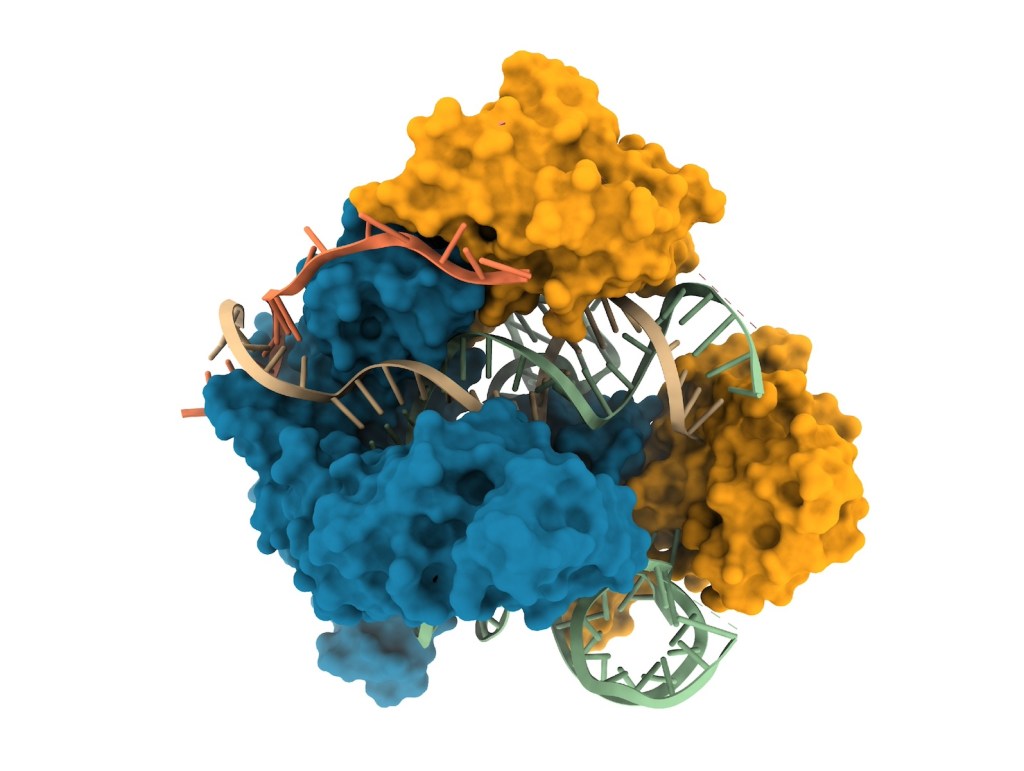
3D structure of the NanoCas system [Mammoth Biosciences]

It is currently only a preprint on bioRxiv, but it has already attracted significant attention from the scientific community and the journal Science. Mammoth Biosciences, a company founded by CRISPR co-inventor Jennifer Doudna, has developed NanoCas, a mini-editor that is just one-third the size of traditional gene-editing scissors (Cas9).

Continue reading

Chemotherapy pretreatment claims a victim in a CRISPR trial

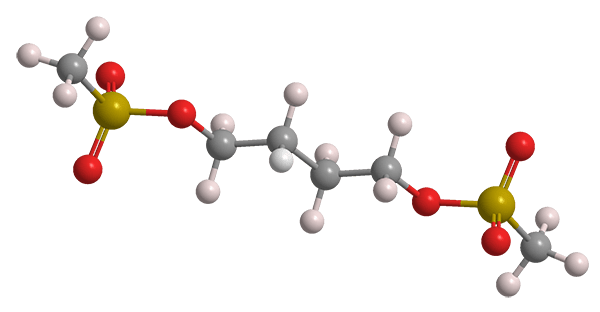
Busulfan 3D

Experimental patients often find themselves in a paradoxical situation: they must be sick enough to qualify for a clinical trial but healthy enough to endure its side effects. They also need the audacity to subject their bodies to protocols whose safety and efficacy remain unproven. For this reason, many describe them as pioneers or even warriors.

Continue reading

CRISPR in Trump’s time

A wait-and-see atmosphere lingers in the biotech and pharma sector. Vice President-designate J.D. Vance recently spoke with enthusiasm on Joe Rogan’s podcast about the first CRISPR treatment to hit the market—the one for sickle cell anemia. However, there’s rising concern about RFK Jr., who could exert significant influence over health and food policies. His broad “natural = good” ideology is both philosophically and scientifically dubious, and his clear anti-GMO positions are worrisome. Listening to his conversation with anti-biotech activist Jeffrey Smith on the RFK Jr. podcast reveals a revival of the classic 1990s narrative—corporations as villains, a corrupt establishment, suppressed scientists, concealed health risks—all now repurposed to criticize CRISPR technology, which is portrayed as unreliable and uncontrollable.

India’s way to CRISPR cures

Uditi Saraf died before receiving treatment, but efforts launched for her could help spell a happy ending for other patients awaiting advanced life-saving therapies

Uditi Saraf with her mother. Credit: Rajeev and Sonam Saraf

Familial encephalopathy with neuroserpin inclusion bodies is a rare neurodegenerative disease with no cure due to the accumulation of toxic proteins in the brain. Depending on the specific mutation, the age of onset can vary greatly. In Uditi Saraf’s case, the first symptoms started early, at age 9. As she worsened, her parents decided to have her genome sequenced, identifying the genetic defect and diagnosing the condition. Their race against time to try to save their daughter was chronicled in an article in Nature, which also offers a glimpse into India’s efforts to make genomic treatments more accessible (see also Nature Biotechnology on gene and cell therapies in the Global South).

CRISPR trials: the 2024 update

The recent approval of Casgevy represents the first official success of gene editing-based therapies. The treatment for sickle cell anemia and thalassemia came in record time, only 11 years after CRISPR was invented. “Two diseases down, 5,000 to go,” commented Fyodor Urnov, Director of Technology & Translation at the Innovative Genomics Institute. Among the many diseases awaiting a cure, what will be the next to benefit from CRISPR? At what rate can we expect new treatments to arrive? The periodic update published by IGI is a must-read to navigate through hope and hype, papers and press-releases. The picture is overwhelmingly positive, but there is also some cause for disappointment. Here is an excerpt from the introduction:

Continue reading