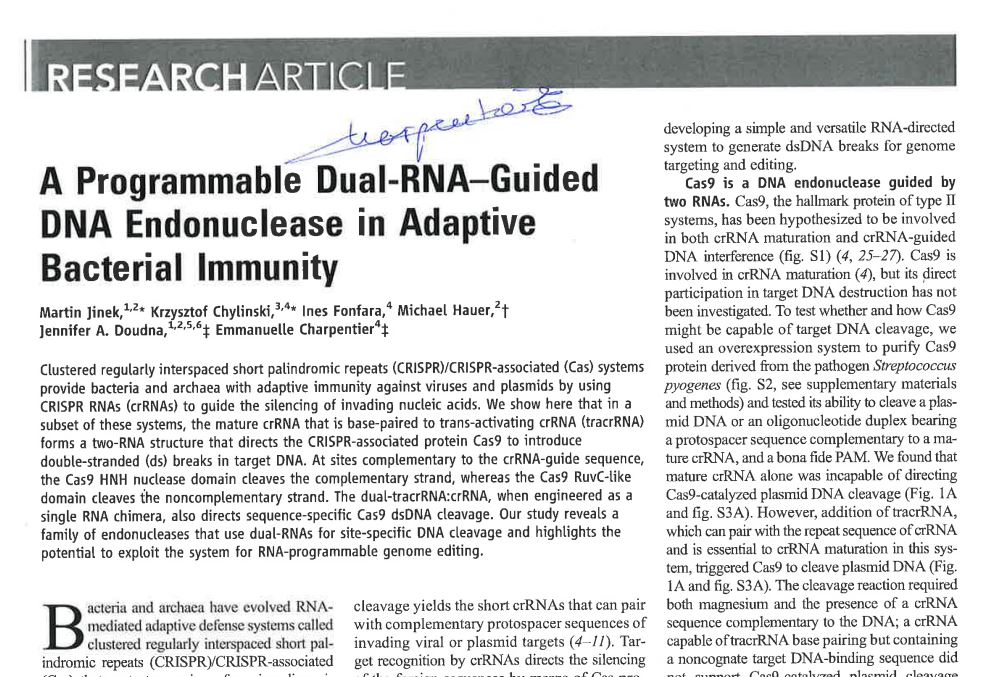
CRISPR biofortified foods

Nutritional improvement of crops is one of the fields set to gain from the advent of genome editing. Let’s take vitamin D3. People suffering from its deficiency in the world number about one billion. Plants do not contain it naturally, but some of them (solanaceae) are able to produce its precursor (cholesterol) within a biosynthetic pathway that leads to the synthesis of certain secondary metabolites (glycoalkaloids). Luckily, they can be induced to accumulate provitamin D3 by switching off the gene responsible for this reaction.

Continue reading
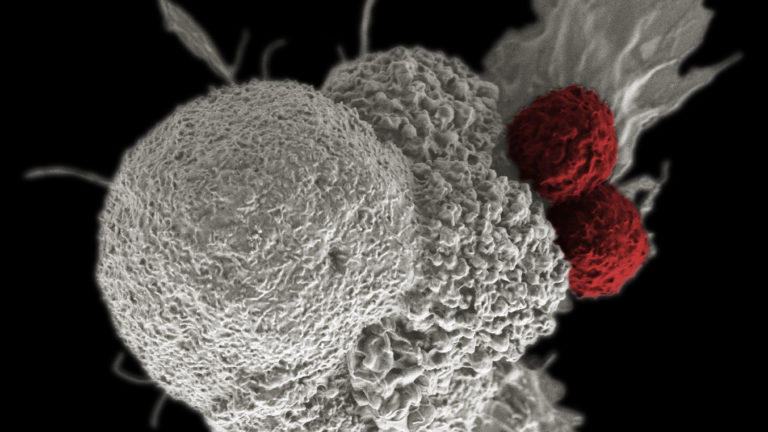

Cancer, CAR-T & CRISPR

Hopes are high for an experimental immunotherapy recently described in Nature, possibly the most complex treatment ever developed and tested on humans. The results of the small trial carried out by the California-based PACT Pharma look promising, even if the success is more technical and conceptual than clinical.

Continue reading

Nobel portraits, mind & hand

CRISPR inventors Emmanuelle Charpentier and Jennifer Doudna, portrayed by Herlinde Koelbl for the book Fascination of Science, which the photographer (famous for her work on Angela Merkel) dedicated to leading scientists. The photos, currently on display at the Koch Institute, capture “the connection between the personal & the pursuit of knowledge—between mind & hand—of pioneering scientists across the globe.”

Genome editing for smallholder farmers

A few months ago Nature Genetics published an article on “Genome-edited crops for improved food security of smallholder farmers”. It lists the applications being studied at the CGIAR consortium of agricultural research centers: “climate resilience in rice; disease resistance in banana, maize, potato, rice, wheat and yam; and nutrition improvement and consumer and environmental safety traits in cassava”. Additional traits include “brown streak virus resistance and haploid induction in cassava; nutritional quality and digestibility in bean; Striga resistance in sorghum; low phytate and high provitamin A in maize; reduced acrylamide, phytate and polyphenol oxidase in wheat; reduced aflatoxin in groundnut; delayed flour rancidity in pearl millet; reduced glycaemic index and apomixis in rice; and heat tolerance and apomixis in potato”. We emailed the CIMMYT’s scientist who leads the Genetic Resources work and is the first author of the NatGen article for an updated comment about the CGIAR’s vision of genome editing in agriculture. Kevin V. Pixley answers our questions below

Continue reading

Wheat science and the climate crisis

How long will we have to wait for the first wheat varieties genetically edited to resist drought? We asked geneticists gathered in Bologna to discuss the future of pasta.  

The climate crisis threatens the grain that feeds the world. If you think this is an exaggeration, think again. Wheat scientists expect a 6-7% decline in yield for every degree increase in temperature. This a decrease we cannot take lightly, knowing that wheat is the most widely grown cereal in the world and provides two and a half billion people with 20 percent of their carbohydrates and protein.

Continue reading

A genomic vertigo for World CRISPR Day

Today is World CRISPR Day, let’s feel a bit of genomic vertigo by exploring CRISPR’s orders of magnitude with the help of the CRISPR Journal. The latest editorial (“Extreme Genome Editing”) goes from micro to macro, from phages to forests. Let’s give some numbers.


The size of edits spans from a single nucleotide to the removal of genomic islands greater than 100 kb (almost six orders of magnitude). The size of edited organisms varies between 10−7 m for submicroscopic viruses to over 10 m for trees (more than eight orders of magnitude). The range of genomes is tens of kilobases to tens of gigabases (seven orders of magnitude).

“Some of these theoretical combinations thus reach frightening orders of magnitude, from the modification of a single base in a 30 kb bacteriophage administered in a single 1 ml dose to 1 kb inserted in a 30 Gb tree genome scaled up to 100,000 hectares of a commercial forest” (here is the full text for more enjoyment of CRISPR vertigo).

Craspases – surprising new CRISPR scissors are coming

3D portrait of Craspase (credit Ailong Ke)

The classic CRISPR system cuts DNA. Other variants cleave RNA. But now in the toolbox of new biotechnologies may come a tool that targets proteins: a CRISPR-driven caspase, already dubbed Craspase. What remains constant is that all these tools are programmable, thanks to the guide molecule that recognizes the desired target and directs the scissors there for editing. They are not paper shredders, rather they act like scalpels.

Continue reading