
Grateful for the award!
Reply

Recently David Liu announced that Prime Medicine will likely submit the first human trial application in 2024. The standard version of CRISPR uses an RNA guide to find the editing site in the genome. Prime editing, on the other hand, also uses the same RNA molecule to direct the correction, in short, to specify what to do as well as where to go.
This insight blossomed in Andrew Anzalone’s mind a few years ago during his PhD at Columbia University. The first practical demonstration came with a paper published in Nature in 2019 after joining the Liu’s Lab at the Broad Institute. Since then, this platform has been used in hundreds of experiments to fix all kinds of mutations in vitro and in animal models.
Meanwhile, the company co-founded by Anzalone and Liu has begun work on 18 treatments, the most advanced for chronic granulomatous disease. To learn more, from the eureka moment to the latest developments, we suggest listening to the Close to the Edge podcast and reading Alex Philippidis’ article in GEN.
The news of the week is definitely this: the first clinical trial with base editing (the CRISPR platform used to chemically change single DNA letters without double-strand breaks) hit the goal of lowering cholesterol in patients but raised questions about the risks (with two serious adverse events, including one death), as Nature reports.
But we also recommend reading two other articles. Nature Biotechnology takes a look at experiments using CRISPR to eliminate viruses that manage to hide from the immune system, such as HIV and hepatitis. While Genetic Literacy Project publishes an analysis of the problems that could cripple the new regulation on edited plants proposed by the European Commission and delay (even until 2030) the arrival of the first products on the EU market.
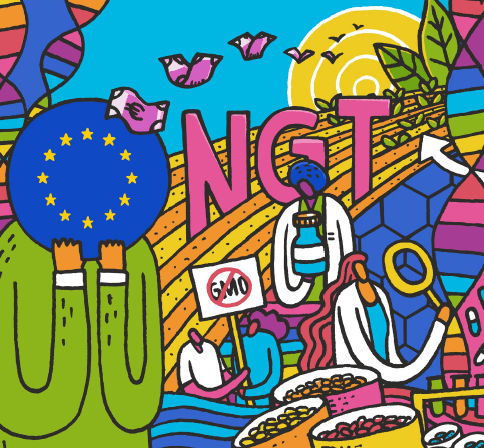
The scientific community has warmly welcomed the proposal for partial deregulation of new genomic techniques put forward by the European Commission last July. Unfortunately, the legislative process will not be able to make significant progress before the next parliamentary term, which opens with the European elections in June 2024. However, this time will not be wasted if it serves to address a few problematic points and to finalise a few clarifying amendments. The devil is in the details: from the 20-nucleotide threshold proposed to delimit permissible interventions on the genome to the unknowns regarding coexistence with organic farming, not forgetting the stigma against herbicides. This article published in Nature Biotechnology by Belgian and German researchers is useful for going through the still unresolved issues.
Don’t miss the lipid nanoparticles delivering CRISPR to the lungs (in Nature), the ever-growing CRISPR toolbox (in the CRISPR Journal), and the pig-monkey xenograft that brings experimentation on human patients closer (also in Nature).

Some champions can make a difference, but to win matches and tournaments, there must be chemistry among the players. The same happens for the effort to increase the productivity of crop plants. Hunting down the single key gene, hoping it will work the miracle, is not enough. One must focus on the harmony of genetic combinations, through approaches that marry the most advanced technologies with agronomic knowledge. In short, handling DNA and test tubes is fine, but it is equally important to know what actually works when the plants reach the field. That’s the message a group of influential researchers such as Pamela Ronald of the University of California at Davis delivered to the pages of Nature in a commentary provocatively titled “Genetic modification can improve crop yields – but stop overselling it”.
Continue reading
Drew Weissman will forgive us, but this will go down in history mostly as Katalin Karikó’s Nobel Prize. And perhaps in addition to being an award to celebrate, it is also an award that should make us angry. Because this scientist’s story is too extraordinary, for all the obstacles she had to face and overcome. It is always said that girls need model female scientists to inspire them, Karikó is a beautiful role model but we sincerely hope that she does not have to be an example to anyone, because it is not fair that a researcher of this stature was forced into precariousness for decades and could not count on a stable professorship in the United States where she moved from Hungary in the 1980s (at the University of Pennsylvania she results “adjunct professor”).
Continue reading
Once upon a time there was a field of research that had been dormant for over a century, well now it has awakened. Approved clinical trials are in dozens, scientific journals are publishing reviews of the state of the art, the first books are coming out, chronicling unexpected individual successes, and even the first inquiries from major publications such as the Economist are popping up.
Continue reading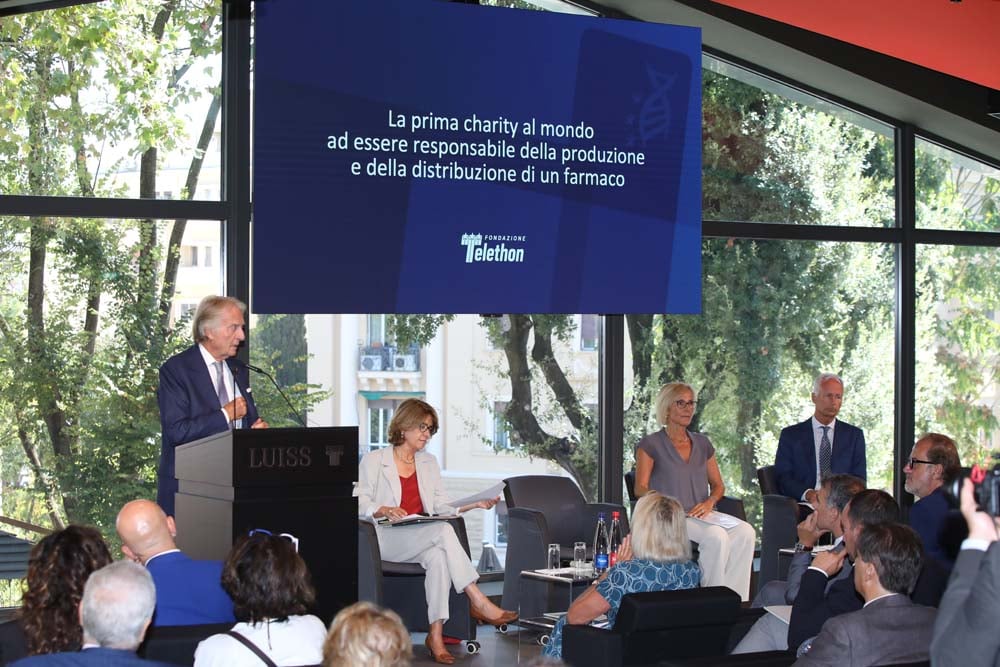
After half a century of experimentation, biotech tools have advanced to the point that many treatments capable of changing the lives of people with rare and ultrarare diseases would be achievable, at least in theory. However, the harsh reality is that, in the vast majority of cases, the costs of research and production are too high, while the number of beneficiaries of each treatment is too small, to attract and then maintain the interest of the pharmaceutical industry.
After the first biomedical “valley of death” in which flawed drugs fatally strand, a second economic “valley of death” is looming for treatments that work but are not profitable enough, ss Michele De Luca and Giulio Cossu wrote in EMBO Reports. It is in this context that the Italian charity Fondazione Telethon last week announced the transfer of the marketing authorization for Strimvelis, a gene therapy for the immunodeficiency ADA-SCID developed by their reserachers (at SR-Tiget in Milan) and then abandoned by the manufacturer (Orchard Therapeutics) despite the excellent results.
“We are the first non-profit organization to take on the commercialization of a gene therapy. This step is necessary to remain true to our mission and continue ensuring access to this important therapy,” said Telethon’s general manager Francesca Pasinelli. Will others follow suit? To learn more about the background of this decision you can read our post from a year ago; for an updated insight we recommend Telethon’s press release.
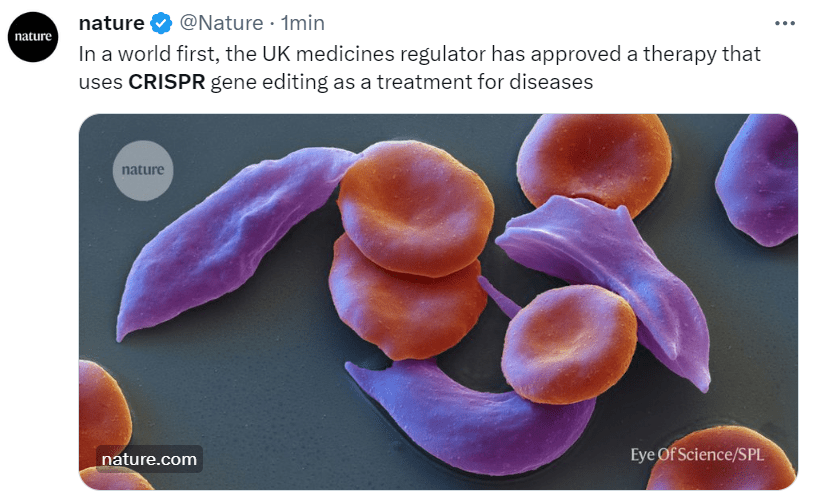
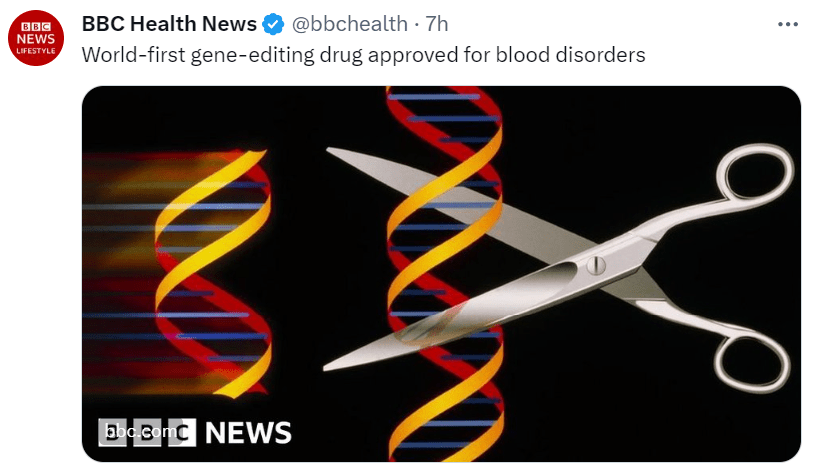




 CRISPeR FRENZY