
 The aim is engaging: to treat an increasing number of diseases by correcting the underlying genetic defects. And researchers are breathing optimism at last. The San Raffaele Telethon Institute for Gene Therapy (SR-Tiget) in Milan has already treated 58 patients (including ADA-SCID, leukodystrophy, Wiskott-Aldrich syndrome and beta-thalassemia) and the count is approaching 300 worldwide. Moreover the promise of genome editing is looming on the horizon. We discussed the present and future of the field with the SR-Tiget director Luigi Naldini, who contributed to the latest report on human genome editing published by the US National Academies of Sciences and Medicine. Continue reading
Gene therapy meets CRISPR
1
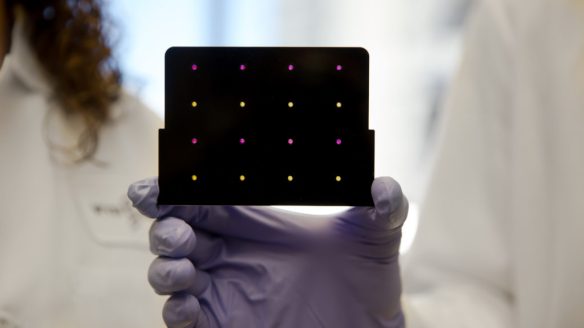 Elementary dear Watson, we should have expected that. The CRISPR wave is hitting diagnostics, with a new high sensitivity detection platform named after Arthur Conan Doyle’s popular detective. The acronym SHERLOCK stands for “Specific High Sensitivity Enzymatic Reporter UnLOCKing”. While the technique is used in thousands of labs to turn genes on and off, CRISPR embarks also on epidemiology and learns how to identify nucleic acids from viral and bacterial pathogens to diagnose infections. The paper published in
