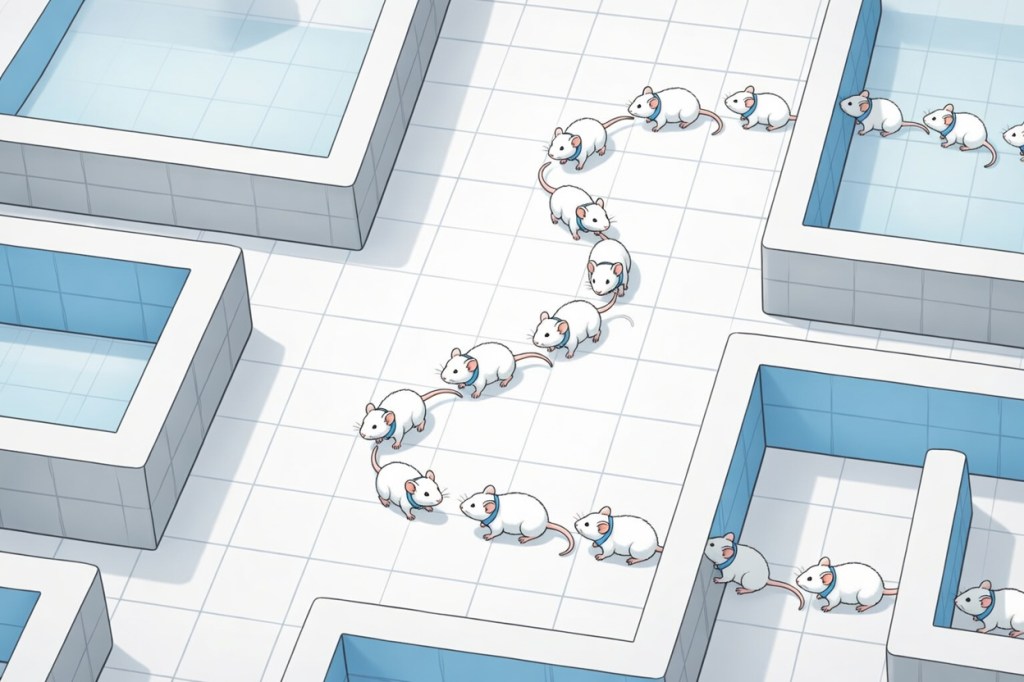
Can technology replace animal testing?

New Approach Methodologies (NAMs) have a bright future ahead, but they should be seen as complementary rather than alternative to classical experimentation.

Regulatory and funding agencies in the U.S. and Europe are promoting ambitious initiatives to foster the development and adoption of advanced systems capable of testing the effects of drugs and other substances without using animal models. The hope is that biomedical research can become more ethical, safer, and cheaper. But the challenge is complex, and the requirements vary depending on the application. As a result, some voices urge a faster “transition,” while others warn that rushing the process could be risky. Recently published articles in leading scientific journals capture this polarized debate, but they also hint at a possible middle ground.

Continue reading

CRISPR pigs resist swine fever virus

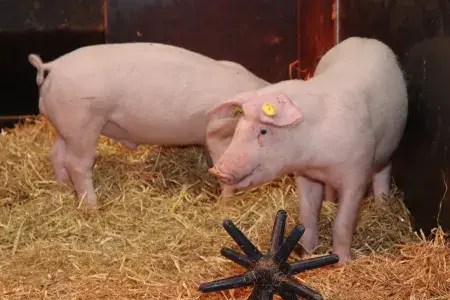
At the Roslin Institute of the University of Edinburgh – the same research centre that created Dolly the sheep – scientists have used gene editing to achieve a new advance in animal breeding. With a precise CRISPR tweak, they have produced pigs that are immune to a highly contagious and often deadly viral disease: classical swine fever.

Continue reading

Genetic rescues for biodiversity? Proceed with caution

Photo©IUCN/Andrew McConnell/Workers Photos

The International Union for Conservation of Nature (IUCN) rejects the moratorium request and approves a resolution recognizing the risks and benefits of SynBio techniques, calling for case-by-case evaluations

Continue reading

CRISPR news from the world

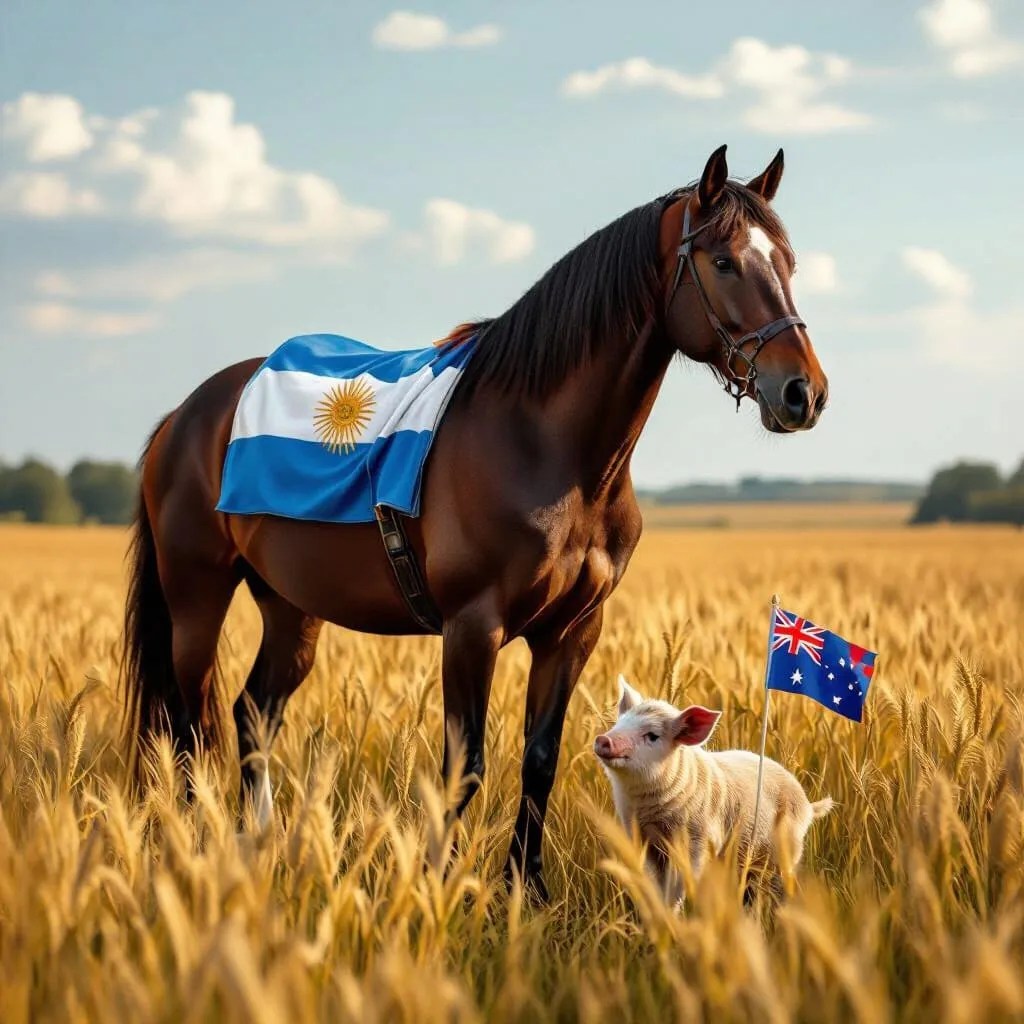
A selection of news we missed during August. Reuters reports on the controversy surrounding horses edited by Kheiron Biotech to enhance their muscles. In Argentina, veterinary reproductive technologies are cutting-edge, and the use of cloning in horse breeding is accepted. Still, for now, genetically edited animals are not allowed to compete in polo.

Continue reading

Gene drives: the first book by a pioneer

Italy has a strong tradition in malaria research, and it’s noteworthy that one of the most innovative tools to fight this disease in the future was developed with the crucial contribution of an Italian scientist. Andrea Crisanti has become a familiar face in the country due to his expertise in COVID-19 epidemiology and numerous TV appearances, first during the pandemic and later in his role as a senator. Yet his international reputation is more firmly rooted in a different field: the development of CRISPR-based strategies to eliminate malaria-transmitting mosquitoes.

Continue reading

Gene drives and the ethics of extinction

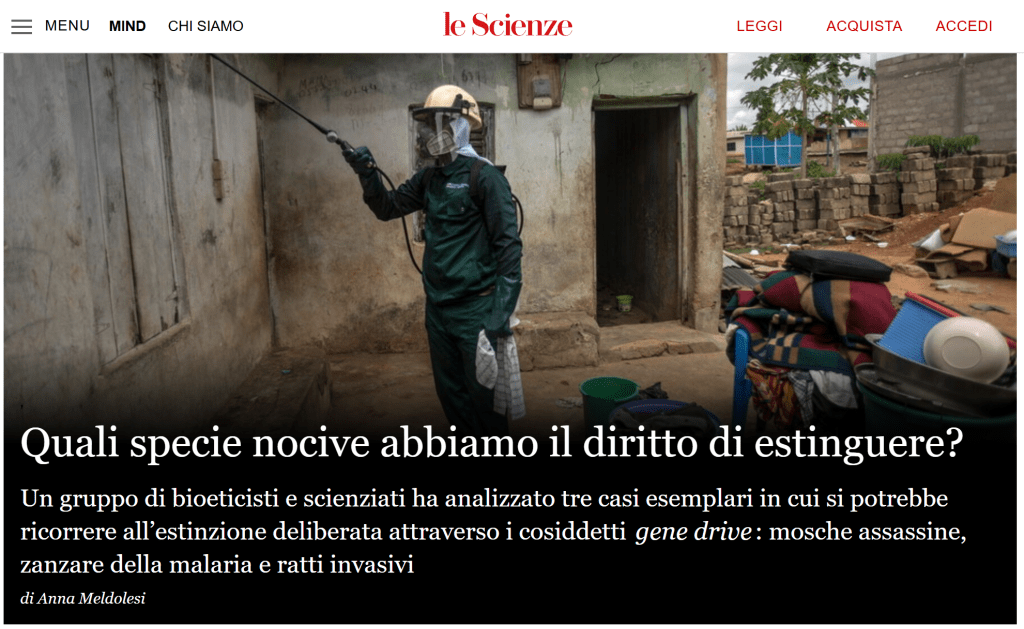
Since its origins, Homo sapiens has driven many species to the brink of extinction—and sometimes irreversibly beyond it. We have done so to feed, defend, colonize, cultivate, and enrich ourselves—often without fully realizing it. To do so today, deliberately, in an era of biodiversity treaties and conservation efforts, might seem absurd or extreme. Yet there is no shortage of organisms deemed highly harmful to human health or the environment. Under what conditions might it be justifiable to eliminate them using genetic technologies? Do we have the right to erase another life form from the face of the Earth?

Continue reading

CRISPR pork and the challenge of animal welfare

Classic genetic modification has met the most resistance in the livestock sector, but soon, American consumers will be able to eat meat from the first gene-edited animals: pigs immune to the PRRS virus.

BBQ ribs, pulled pork, crispy bacon. In the near future, those visiting the U.S. will likely have the opportunity to taste classic American dishes in a genetically edited form. The Food and Drug Administration has, in fact, approved the first pigs whose genome has been edited using CRISPR to make them resistant to a serious viral disease: porcine reproductive and respiratory syndrome (PRRS).

Continue reading

Crying dire wolf

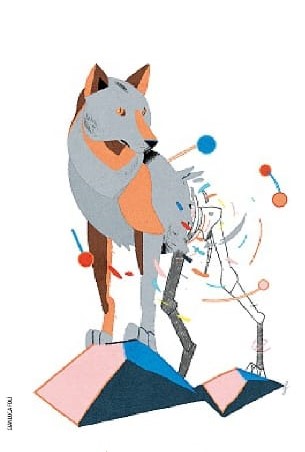
The dire wolves “genetically resurrected” by the U.S.-based company Colossal have impressed many with their beauty but have also scandalized others. Among the latter are commentators criticizing the media hype, and naturalists worried that a few partially “de-extinct” animals may attract more attention than the long list of species currently at risk of extinction due to climate change and other human actions. It doesn’t help that the dire wolves’ comeback has no foundation in published scientific data—no peer-reviewed articles, no preprints yet, only two extensive reportages and some YouTube videos. There is certainly room for controversy. However, if we only listen to the critical voices, we risk losing sight of some key facts.

Continue reading

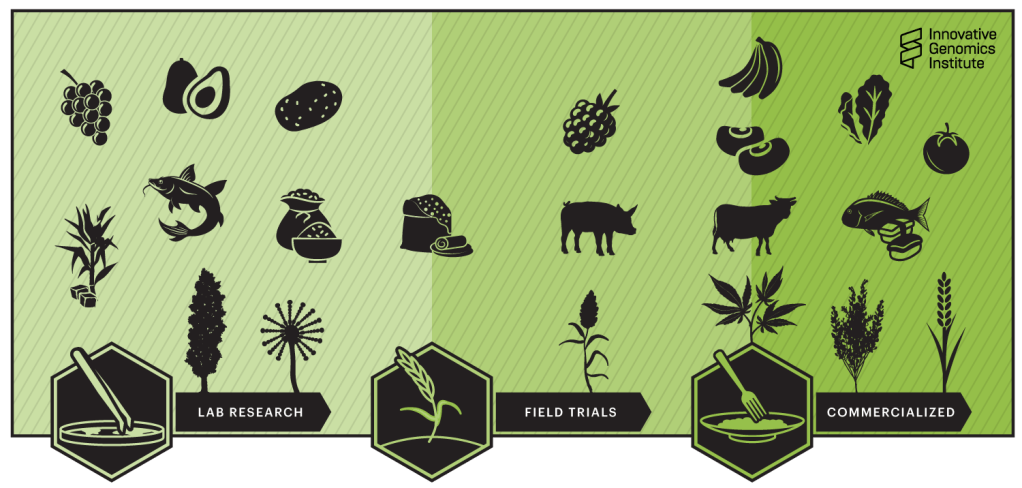
A for Avocado, B for Banana, C for CRISPR Cannabis

As 2025 starts, where does CRISPR stand in transforming agriculture? The Innovative Genomics Institute has provided a snapshot of the state of the art, and (despite the wait for new European regulations), things are moving forward. Let’s take a closer look.

Continue reading

CRISPR on the Road to Mars

Future space exploration will depend in large part on using organisms capable of surviving in extreme conditions. One source of inspiration for achieving this goal is the tardigrade, a tiny invertebrate that is a champion of endurance and could lend its genes (and perhaps some superpowers) to other species designed to feed astronauts and provide useful substances.

Continue reading