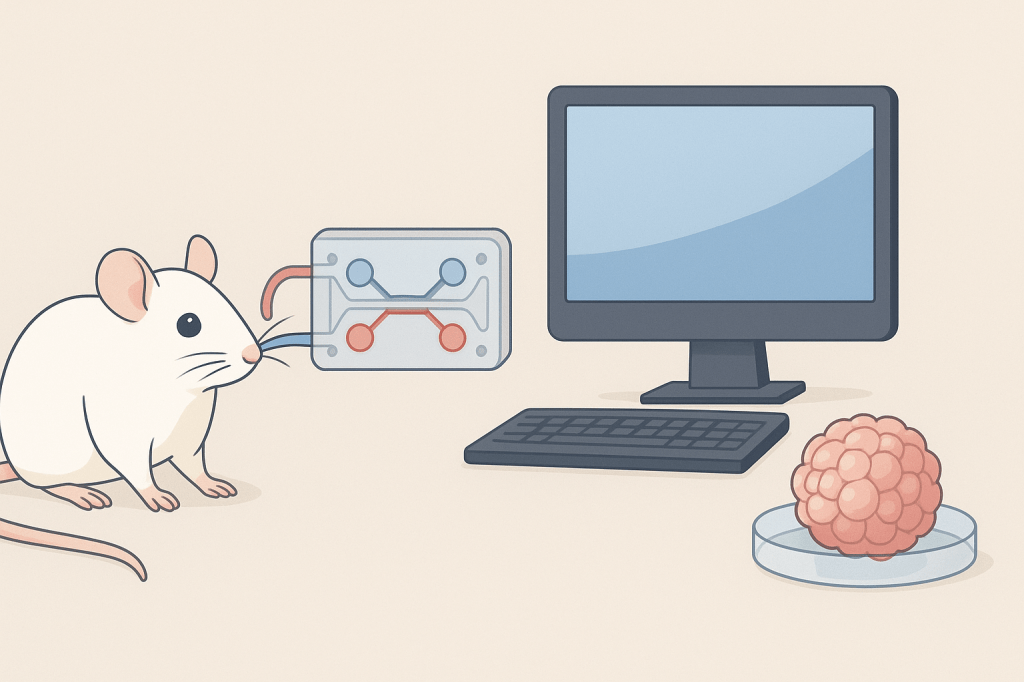
Can technology replace animal testing?

New Approach Methodologies (NAMs) have a bright future ahead, but they should be seen as complementary rather than alternative to classical experimentation.

Regulatory and funding agencies in the U.S. and Europe are promoting ambitious initiatives to foster the development and adoption of advanced systems capable of testing the effects of drugs and other substances without using animal models. The hope is that biomedical research can become more ethical, safer, and cheaper. But the challenge is complex, and the requirements vary depending on the application. As a result, some voices urge a faster “transition,” while others warn that rushing the process could be risky. Recently published articles in leading scientific journals capture this polarized debate, but they also hint at a possible middle ground.

Continue reading
Organoids & CRISPR in the toolbox of virologists


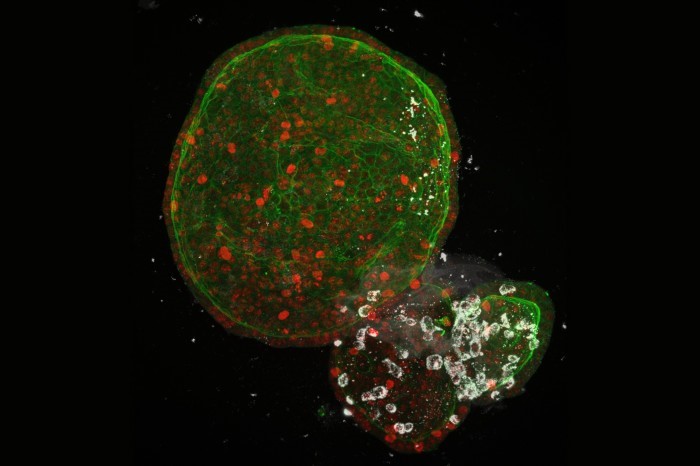
Human gut organoids infected with SARS-CoV-2 (Credit: Joep Beumer/Hubrecht Institute)

“Virologists have infected millions of miniature organs with SARS-CoV-2, to learn how the virus wreaks havoc and how to stop it,” writes Smriti Mallapaty in the latest issue of Nature. In one study, published in Science Immunology in 2020, researchers used CRISPR in gut organoids to identify two proteins (TMPRSS2 and TMPRSS4) that facilitate the virus entry into human cells, together with the ACE2 receptor. “Other labs are knocking out ACE2 entirely, to see whether the virus can still get in”. Here the full text of the news feature.

CRISPRing the Neanderthal’s mind

Neanderthal_minibrains

Sapiens vs Neanderthalized brain organoids (credit A. Muotri)

Taking a peek into the brain of a Neanderthal specimen would be a dream for whoever is interested in the evolution of human intelligence. To get an idea of the cognitive abilities of our closest relatives, so far, anthropologists and neuroscientists could only study the fossil and archaeological record, but a new exciting frontier is opening up where paleogenetics meets organoids and CRISPR technologies. By combining these approaches, two labs are independently developing mini-brains from human pluripotent stem cells edited to carry Neanderthal mutations. Alysson Muotri did it at UC San Diego, as Jon Cohen reported in Science last week. Svante Pääbo is doing it at the Max Planck Institute in Leipzig, as revealed by The Guardian in May. Forget George Church’s adventurous thoughts on cloning Neanderthals. The purpose here is to answer one of the most captivating questions ever asked: did the mind of these ancient men and women, who interbred with our sapiens ancestors before going extinct, work differently from ours? Last but not least, with respect to the ethics of experimenting with mini-brains, don’t miss the perspective published in Nature.