A little more patience. The European Parliament’s final vote, originally scheduled for March, has been postponed to late April, but the finish line is in sight. We should finally have rules that distinguish true transgenic plants (containing foreign DNA) from edited plants that do not contain extra genes and are indistinguishable from traditional breeding programs.
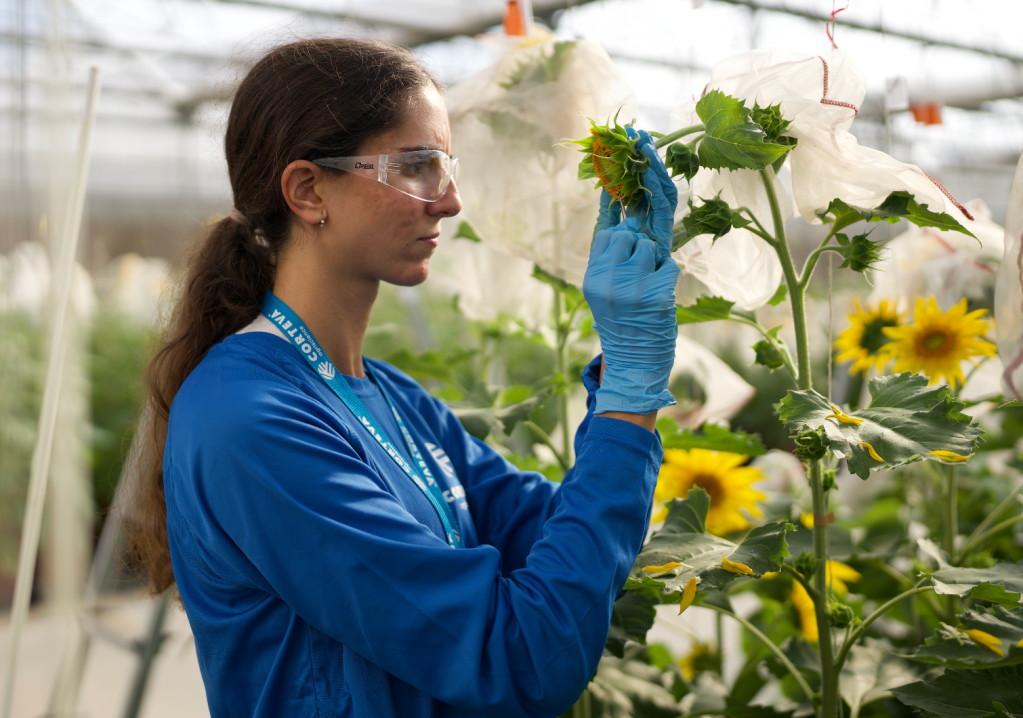
Anyone who has ever stood beside a sunflower knows the quiet astonishment of being matched, petal for head, by a flower. Now imagine weaving your way through tens of thousands of stems at eye level, each one tethered to the transparent ceiling by a white cord, as if suspended between earth and sky. Overhead stretches a vision in perfect symmetry: thousands of threads rising in parallel, anchoring a forest of blossoms veiled like brides at the altar, their vivid yellow only just shimmering through the gauze. It could be a contemporary art installation, but this is the greenhouse of the world’s most advanced sunflower research center. We are not at the Venice Biennale nor at Documenta in Kassel, but just outside Seville, at the Centro Tecnológico de Investigación de La Rinconada.
Food for Thought is a coalition of 18 Italian associations in the agrifood sector, established in 2017 to promote innovation in agriculture. Today, nearly eight years after the first manifesto, a new one has been presented to address the challenges of both the present and the future, including the climate crisis, geopolitical tensions, and changing consumption patterns. The event was held yesterday in Rome at the initiative of Senator Bartolomeo Amidei, as part of the activities of the Parliamentary Intergroup on Made in Italy and Innovation. Among the key points is the inclusion of New Genomic Techniques — a clear sign that there is widespread awareness within the Italian productive sector of the importance of genetic improvement, and that there are voices in the national Parliament willing to advocate for “innovative and sustainable agriculture.”
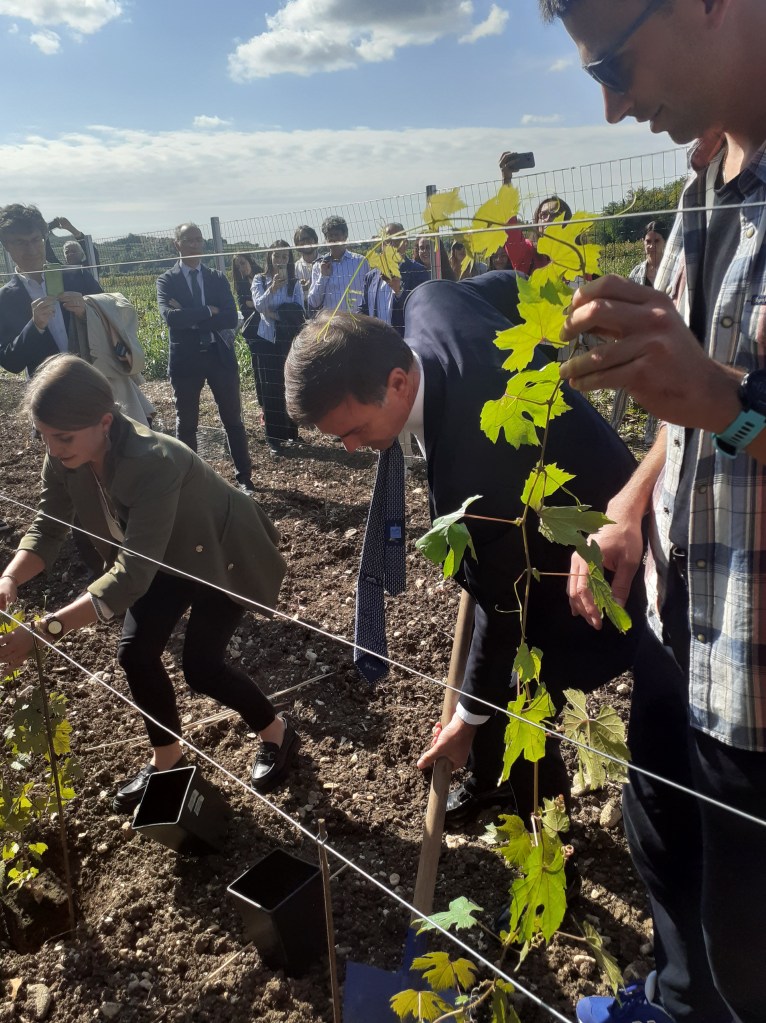
Testing of Chardonnay edited to resist downy mildew starts today near Verona, while the prosecco variety awaits its turn in the greenhouse
The president of the influential farmers’ association Coldiretti, Ettore Prandini, formerly very hostile to GMOs, as he plants an edited vine with his own hands in the Verona experimental field on Sept. 30, 24Continue reading →
While the number of studies on this topic is limited, they generally align in indicating that genome-edited plants are more appealing to the public than GMOs. Supporting this assertion is an analysis set to be published in the June issue of Current Opinion in Biotechnology. Hans De Steur and his colleagues at the University of Ghent in Belgium conducted a review of data collected from various countries worldwide, including Europe, Asia, and the Americas.
Marco Pasti grows corn, soybeans, wheat, barley, sugar beets, potatoes, some wine grapes and walnuts on his farm near Venice, in Italy. In addition to being a farmer, he is an advocate for science-based agriculture. Don’t miss his opinion piece written for the Global Farmer Network after the European Parliament vote on the New Genomic Techniques last February. After the EU elections next June, the path of the new regulatory framework will resume, which could mark a turning point “in favor of sound science – and possibly a major break from the mistakes of the past when Europeans treated crop innovation with skepticism and even fear.”
There is no doubt that this is good news: on February 7, the European Parliament approved the Commission’s regulatory proposal on New Genomic Techniques, covering also CRISPR plants. Some of the approved amendments (particularly the one on genetic modification of polyploid plants) have the effect of improving the text, others risk being a problem and should be reconsidered during the trilogue with member states (particularly the requirement to label all final products, even if they do not contain foreign genes). The European Parliament also brought in the issue of non-patentability of NGT plants, which would deserve to be addressed elsewhere. For more information, this is the position expressed on February 14 by European Plant Science Organisation (EPSO).
In these times of climate crisis, biodiversity loss and renewed food insecurity, a scientific and evidence-based approach is essential in every respect. Now more than ever, we must rise above ideology and dogmatism. That is why we the undersigned turn to you and urge you to carefully consider the benefits of embracing New Genomic Techniques (NGTs) in your upcoming parliamentary decisions. As concerned citizens who believe in the power of science to improve our lives and our relationship with the planet, we implore you to vote in favour of NGTs, aligning your decisions with the advancements in scientific understanding. Conventional breeding for climate resilient crops (with cross-breeding of certain traits, subsequent selection and then backcrossing to remove undesirable traits) is too time-consuming. It takes years, decades even. We do not have this time in an era of climate emergency.
[Here you can read the full text of the letter and subscribe to it]
The news of the week is definitely this: the first clinical trial with base editing (the CRISPR platform used to chemically change single DNA letters without double-strand breaks) hit the goal of lowering cholesterol in patients but raised questions about the risks (with two serious adverse events, including one death), as Nature reports.
But we also recommend reading two other articles. Nature Biotechnology takes a look at experiments using CRISPR to eliminate viruses that manage to hide from the immune system, such as HIV and hepatitis. While Genetic Literacy Project publishes an analysis of the problems that could cripple the new regulation on edited plants proposed by the European Commission and delay (even until 2030) the arrival of the first products on the EU market.
On April 29, the European Commission launched an online public consultation on whether the EU regulatory framework should be reformed to keep pace with scientific and technological advances. The results, released on the consultation website, show a clear majority in favor of rethinking the current rules, which were approved when New Genomic Techniques (NGTs) such as targeted mutagenesis (i.e., CRISPR) did not yet exist. Here are the highlights:







 CRISPeR FRENZY