The FDA charts a new route for bespoke therapies

Inspired by the Baby KJ case, the agency proposes a flexible framework allowing personalized treatments for individual patients to contribute to shared, platform-based approvals.

The announcement appeared on November 12 in the New England Journal of Medicine under a seemingly cautious title: “The FDA’s New Plausible Pathway.” Yet the article, written by two senior figures at the Food and Drug Administration, reveals vision and leadership. For once, it is worth starting from the end, which reads like a strong statement of intent: “Nearly 30 years after the sequencing of the human genome, bespoke therapies are close to reality. The FDA will work as a partner and guide in ushering these therapies to market, and our regulatory strategies will evolve to match the pace of scientific advances.”

Continue reading

Baby KJ Effect: the new horizon of bespoke CRISPR therapies

The FDA is set to authorize “umbrella” clinical trials for rare diseases; the new approach will make the process faster and more sustainable by combining data from similar protocols, cutting redundant procedures, and reducing animal testing.

Continue reading

Baby KJ is a symbol of hope — But is it replicable?

The personalized editing therapy developed at record speed for the American newborn required preliminary studies, favorable circumstances, and a heroic collective effort.

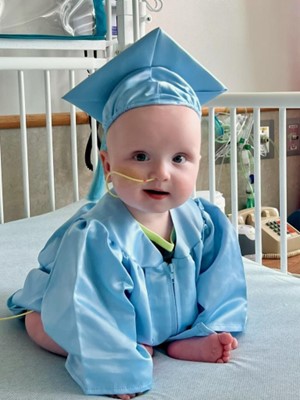
After 307 days, little KJ Muldoon was discharged from the Children’s Hospital of Philadelphia (CHOP), wearing a tiny graduation outfit complete with a blue gown and cap. Born ten months ago with a severe metabolic disorder, the baby received a genome editing therapy developed exclusively for him, and his remarkable progress has been hailed by many as the dawn of a new era in precision medicine. A month after the publication of his case in the New England Journal of Medicine, we take a closer look at how researchers managed to develop the treatment in just six months—and whether this breakthrough could be replicated for other rare disease patients in need of life-saving therapies.

Continue reading

Hi I’m JK, the first baby treated with a personalized CRISPR therapy

The announcement was made yesterday at the annual meeting of the American Society of Gene & Cell Therapy and simultaneously published in the New England Journal of Medicine. I wrote about it for the Italian edition of Scientific American, but this story is worth seeing and reading.
PS: Before KJ was treated for his metabolic disorder, there was the case of Terry Horgan, who had muscular dystrophy. Unfortunately, the personalized treatment for him came too late, and he did not survive an adverse reaction. So yes, we can say that KJ represents a first: the first time genome editing was used early, rapidly, and tailored enough to truly offer hope for a happy ending.