The end of infinite cloning

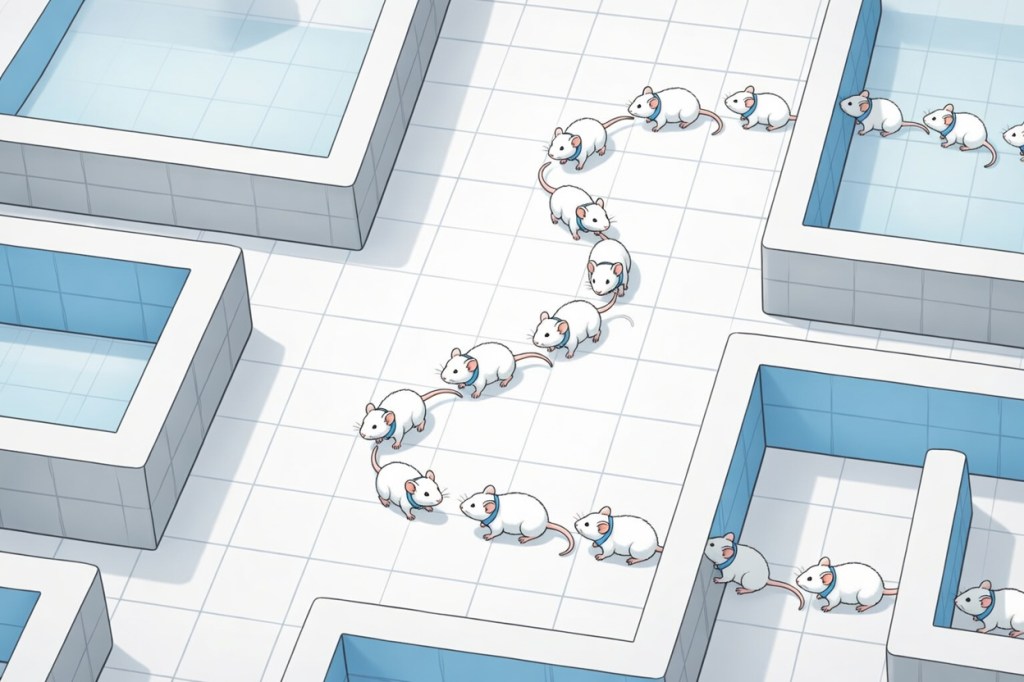
A team led by Teruhiko Wakayama at the University of Yamanashi generated more than 1,200 cloned mice from a single original donor, across over 30,000 cloning attempts, using the classic technique that produced Dolly the sheep: nuclear transfer (please see their paper in Nature Communications). Up to the 25th generation, things proceeded largely smoothly: the clones were normal, lived as long as conventionally bred mice, and the line appeared indefinitely sustainable. But from the 27th generation onward, the success rate began to decline. By the 58th generation it had collapsed, and the few pups that were born died shortly after birth, despite showing no obvious abnormalities. A discovery that may prompt a reassessment of certain lines of research involving genome editing.

Continue reading

Where is the revived mammoth?

I watched Genesis 2.0, which is debuting in Italy almost two years after its release at the Sundance Film Festival. In the meanwhile, Semyon Grigoriyev has died. The Russian paleontologist leading the effort to clone a mammoth was one of the movie’s main characters. He always had little chance of success, and the plan’s odds are now worse than ever.

Continue reading

The art of learning from microbes

ecoli-1184pxBy Antonio Polito

Do you remember Dolly, the sheep cloned 20 years ago? I was one of the many going on pilgrimage to visit her in its golden prison at the Roslin Institute, near Edinburgh. And like other reporters I was worried while talking with Dolly’s “father” Ian Wilmut, about practical and ethical implications of the breakthrough, which appeared huge at the time. Media were boiling with awe and outrage: is human cloning the next step? It would be evil or blessing? Are we playing God?  Continue reading