A Cambrian explosion for CAR-T

Credit Mesa Shumacher/Santa Fe Institute

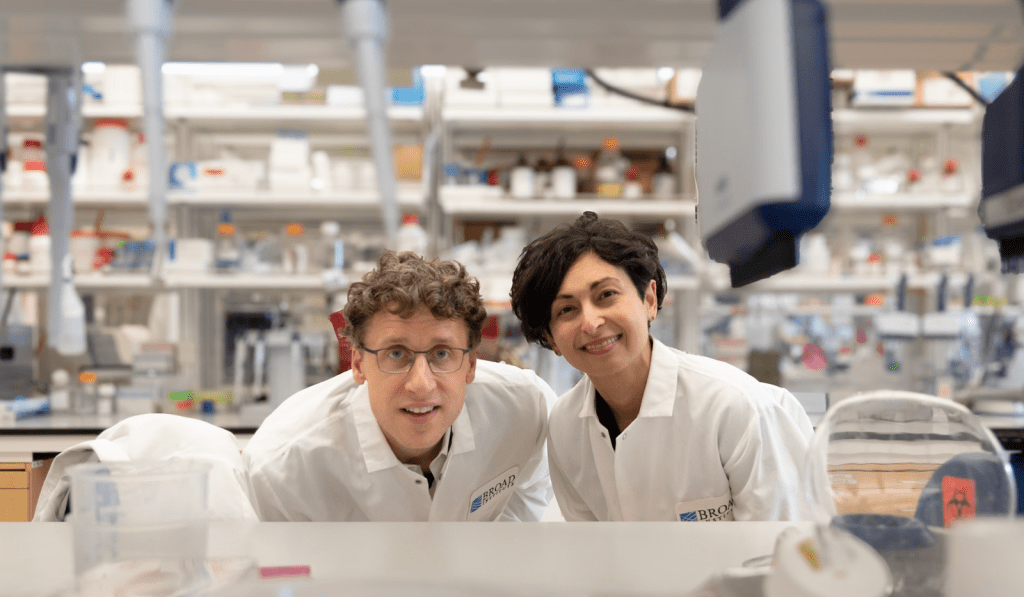
Around 500 million years ago, life on Earth underwent a phase of rapid diversification that led to the formation of complex biological structures and the appearance of new groups of organisms. This crucial event for evolution captured the imagination so strongly that it became a metaphor. ‘CARs in 2025: the Cambrian explosion continues’, in fact, is the title chosen by Michel Sadelain for the lecture hosted by GEN (Genetic Engineering & Biotechnology News) on 29 January. The most exciting branch of immunotherapy, using engineered T lymphocytes to efficiently and selectively attack cancer cells, is experiencing a boom in new approaches and applications.

Continue reading

Record living with a pig kidney: 60 days and counting

Dr. Jayme Locke, Towana Looney, and Dr. Robert Montgomery
 Credit: Mateo Salcedo/NYU Langone Health

The other xenograft patients arrived at the operating theatre in critical condition, which likely contributed to why none of them survived beyond two months. Towana Looney, however, was in better health when she received the pig kidney edited to reduce the risk of rejection. She benefited from the insights gained from earlier attempts and, on January 25, celebrated a record sixty days with an animal organ. She is the first patient to receive a kidney from a pig with 10 genetic modifications and is currently the only person in the world living with a pig organ.

A for Avocado, B for Banana, C for CRISPR Cannabis

As 2025 starts, where does CRISPR stand in transforming agriculture? The Innovative Genomics Institute has provided a snapshot of the state of the art, and (despite the wait for new European regulations), things are moving forward. Let’s take a closer look.

Continue reading

Why AI + CRISPR Will Define 2025

Image Credit Karen Arnott/EMBL-EBI

Have you read Jennifer Doudna’s article in Wired? She discusses how the combination of CRISPR and artificial intelligence could be transformational. In her lab, researchers recently used AI tools to help find “small gene-editing proteins that had been sitting undiscovered in public genome databases because we simply didn’t have the ability to crunch all of the data that we’ve collected”.

Continue reading

Atomic spaghetti and mutagenesis B.C. (before CRISPR)

Before the advent of genome editing and GMOs, mutagenesis was achieved through radiation. This technique was also used to modify varieties of durum wheat, which, through crossbreeding, contributed to the production of pasta consumed in Italy (see this old statement made by Norberto Pogna to Nature Biotechnology). The term “atomic spaghetti” is sometimes invoked in debates on agricultural biotechnology to highlight how modern techniques are vastly more precise than those of the past. However, few people are aware of the full complexity of this story.

Continue reading

CRISPR Wow: Arabidopsis Dresses Up

For scientists, it is a model organism—perfect for research because it grows fast, self-pollinates, and has a small genome that is easy to modify. In fact, it is the most studied plant in the world, the first to have its DNA sequenced, a true diva of genetics. To everyone else, it is an anonymous weed: among countless botanical wonders, Arabidopsis thaliana hardly stands out, being so small and with such unremarkable flowers.
But the foundational knowledge is there, and so are the biotechnological tools. So, why not give its colorless, modest bloom a gala makeover, with petals to make a rose jealous? This idea sparked the imagination of Nick Desnoyer from the University of Zurich. With a little breeding and a touch of CRISPR, he created a plant with the genetic backbone of Arabidopsis but adorned with a sumptuous corolla.
Don’t miss his visually stunning thread on X and bluesky where he announces a bio-art project set to blossom in 2025.

CRISPR on the Road to Mars

Future space exploration will depend in large part on using organisms capable of surviving in extreme conditions. One source of inspiration for achieving this goal is the tardigrade, a tiny invertebrate that is a champion of endurance and could lend its genes (and perhaps some superpowers) to other species designed to feed astronauts and provide useful substances.

Continue reading

Fall and Rise: Italy’s Journey from GMOs to CRISPR

Italy has long been one of the most hostile countries toward GMOs, to the point of shutting down research in this field. Today, however, it stands among the most active EU members in testing New Genomic Techniques. How did this transformation happen? EMBO Reports features insights from some of the Italian scientists who have championed the defense of GMOs and the revival of experimental fields. Happy reading!

CRISPR ethics for everyone

CRISPRpedia is an online encyclopedia on CRISPR developed by the Innovative Genomics Institute. A new chapter, devoted entirely to the bioethics of gene editing, has recently been added to existing sections on CRISPR in nature, CRISPR technology, applications in medicine, and applications in agriculture. The ability to edit the genomes of people, embryos, plants and animals raises both old and new questions. How do we decide what uses are legitimate and desirable? Who gets to make these decisions? How can we ensure safety and fair access?
Answers to these and other pressing questions have been compiled by UC Berkeley bioethicist Jodi Halpern, in collaboration with communications strategist Hope Henderson. Check it out!