
The International Union for Conservation of Nature (IUCN) rejects the moratorium request and approves a resolution recognizing the risks and benefits of SynBio techniques, calling for case-by-case evaluations
Continue reading
The International Union for Conservation of Nature (IUCN) rejects the moratorium request and approves a resolution recognizing the risks and benefits of SynBio techniques, calling for case-by-case evaluations
Continue reading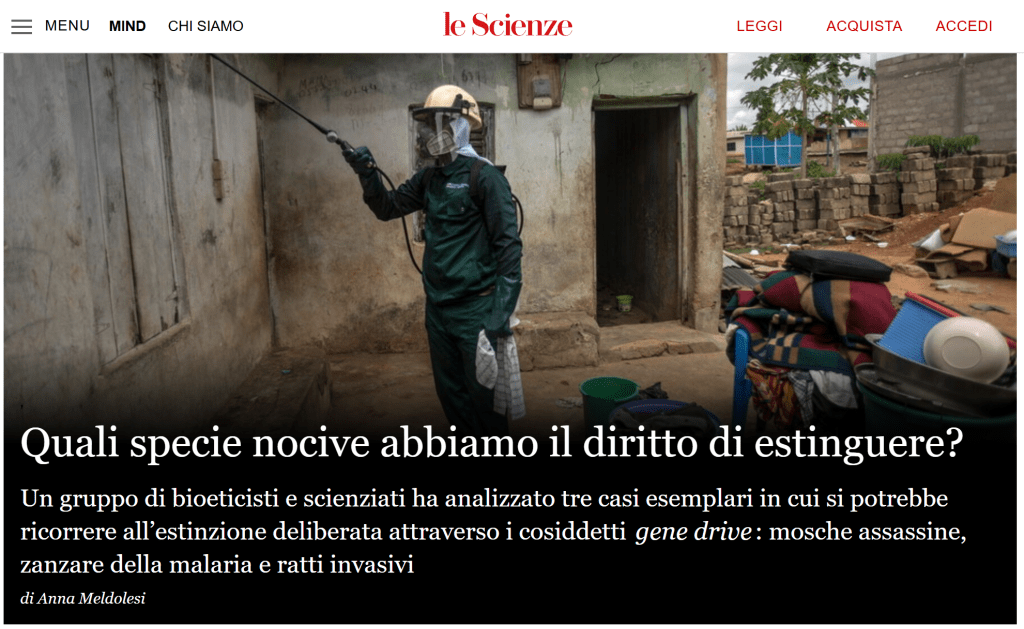
Since its origins, Homo sapiens has driven many species to the brink of extinction—and sometimes irreversibly beyond it. We have done so to feed, defend, colonize, cultivate, and enrich ourselves—often without fully realizing it. To do so today, deliberately, in an era of biodiversity treaties and conservation efforts, might seem absurd or extreme. Yet there is no shortage of organisms deemed highly harmful to human health or the environment. Under what conditions might it be justifiable to eliminate them using genetic technologies? Do we have the right to erase another life form from the face of the Earth?
Continue reading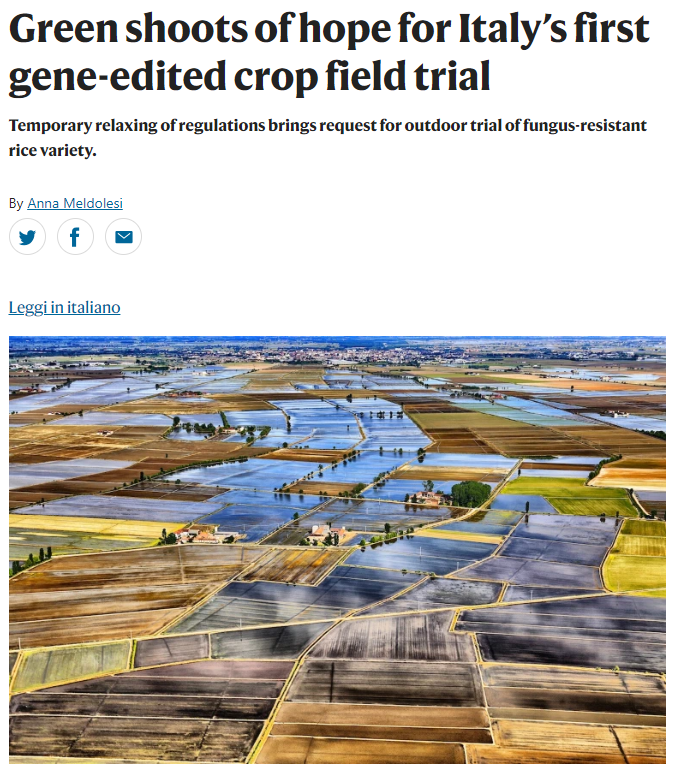
A CRISPR/Cas9-modified rice variety may be planted in a test field in northern Italy as soon as this spring after a government rule change introduced in 2023. A University of Milan team was the first research group in the country to apply for a field test under a law change that streamlines procedures for field trials of plants developed through genome editing or cisgenesis. With several other groups also planning proposals, a new wave of agricultural genetics in Italy could follow. [Please see the details in my article for Nature Italy]

Dear Members of the European Parliament,
In these times of climate crisis, biodiversity loss and renewed food insecurity, a scientific and evidence-based approach is essential in every respect. Now more than ever, we must rise above ideology and dogmatism. That is why we the undersigned turn to you and urge you to carefully consider the benefits of embracing New Genomic Techniques (NGTs) in your upcoming parliamentary decisions. As concerned citizens who believe in the power of science to improve our lives and our relationship with the planet, we implore you to vote in favour of NGTs, aligning your decisions with the advancements in scientific understanding. Conventional breeding for climate resilient crops (with cross-breeding of certain traits, subsequent selection and then backcrossing to remove undesirable traits) is too time-consuming. It takes years, decades even. We do not have this time in an era of climate emergency.
[Here you can read the full text of the letter and subscribe to it]

The European Commission is collecting comments on the proposed regulation on New Genomic Techniques (NGTs) presented on 5 July. On this page you will find all the documents you need to form an opinion: from the criteria for establishing when a NGT plant is comparable to a conventional plant, to calculations on the costs of coexistence for organic producers (see in particular the Impact assessment report). The feedback received during the consultation period (8 weeks, extendable) will be summarised by the European Commission and presented to the European Parliament and the Council to feed into the legislative debate. In general, CRISPeR Frenzy appreciates the proposed regulation, especially for its focus on the promised benefits of NGTs in terms of environmental sustainability.

Jennifer Doudna’s Innovative Genomic Institute has received $70 million to explore a bold idea: combating climate change and other emergencies by modifying the microbial communities that live outside and inside us.
Bacteria are the true masters of the planet, for better or worse. Besides affecting our health in many ways, they are responsible for much of the methane emissions. This gas traps heat far more than carbon dioxide and is produced in large quantities by microbes that proliferate in environments associated with human activities (farms, landfills, rice paddies). The good news is that methane is short-lived, so reducing its emissions would have a rapid and substantial effect on global warming. What tools do we have at our disposal to try to pursue such an ambitious goal?
Continue reading
The Innovative Genomics Institute runs a program aiming to “supercharge plants and soils to remove carbon from the atmosphere” with the help of CRISPR and funding from the Chan Zuckerberg Iniziative. I asked Andy Murdock, communications director at IGI, three questions to update the picture. Please see his answers below.
Continue reading CRISPeR FRENZY