Organic farming & CRISPR – the not so odd couple

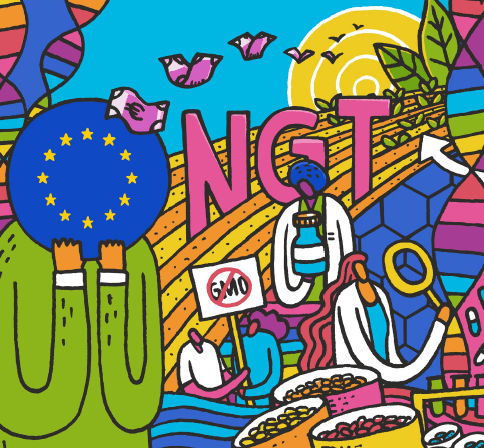
The New Genomic Techniques (NGTs) such as CRISPR are slowly rearranging the ranks in the debate on plant genetics and GM food. A few stakeholders that have always been hostile to GMOs have decided to open the door to the new opportunities coming from gene editing (in Italy, for example, the powerful farmers’ association Coldiretti has changed its mind). Others (e.g., Greenpeace, despite some isolated and courageous vanguards) have confirmed an ideological/cultural opposition, even in cases where the genetic intervention is so soft that the plants are concretely indistinguishable from those developed by conventional techniques. As for the galaxy of organic farming, it is standing still, yet something is moving. Don’t miss the article published in EUobserver by Lone Andersen and other organic farmers, who are calling on European institutions not to ban the new breeding techniques from their fields in the ongoing regulatory revision. “By encouraging the use of a limited share of the new NGTs in organic agriculture while preserving the non-GM status, the EU can further promote sustainable practices and reinforce its commitment to a greener future,” they write.

Hopes and worries in the CRISPR world

Credit Bing Image Creator

The news of the week is definitely this: the first clinical trial with base editing (the CRISPR platform used to chemically change single DNA letters without double-strand breaks) hit the goal of lowering cholesterol in patients but raised questions about the risks (with two serious adverse events, including one death), as Nature reports.

But we also recommend reading two other articles. Nature Biotechnology takes a look at experiments using CRISPR to eliminate viruses that manage to hide from the immune system, such as HIV and hepatitis. While Genetic Literacy Project publishes an analysis of the problems that could cripple the new regulation on edited plants proposed by the European Commission and delay (even until 2030) the arrival of the first products on the EU market.

CRISPR crops: the devil in the detail of the EU proposal

Image source: “How the EU risks falling behind in the bioeconomy revolution“, a report by the Breakthrough Institute and the Alliance for Science

The scientific community has warmly welcomed the proposal for partial deregulation of new genomic techniques put forward by the European Commission last July. Unfortunately, the legislative process will not be able to make significant progress before the next parliamentary term, which opens with the European elections in June 2024. However, this time will not be wasted if it serves to address a few problematic points and to finalise a few clarifying amendments. The devil is in the details: from the 20-nucleotide threshold proposed to delimit permissible interventions on the genome to the unknowns regarding coexistence with organic farming, not forgetting the stigma against herbicides. This article published in Nature Biotechnology by Belgian and German researchers is useful for going through the still unresolved issues.

Genetic gain is a team game

[The number of studies investigating the impact of modifying one or a few genes on the yield of a crop]

Some champions can make a difference, but to win matches and tournaments, there must be chemistry among the players. The same happens for the effort to increase the productivity of crop plants. Hunting down the single key gene, hoping it will work the miracle, is not enough. One must focus on the harmony of genetic combinations, through approaches that marry the most advanced technologies with agronomic knowledge. In short, handling DNA and test tubes is fine, but it is equally important to know what actually works when the plants reach the field. That’s the message a group of influential researchers such as Pamela Ronald of the University of California at Davis delivered to the pages of Nature in a commentary provocatively titled “Genetic modification can improve crop yields – but stop overselling it”.

Continue reading

Edited crops in EU – Have your say

The European Commission is collecting comments on the proposed regulation on New Genomic Techniques (NGTs) presented on 5 July. On this page you will find all the documents you need to form an opinion: from the criteria for establishing when a NGT plant is comparable to a conventional plant, to calculations on the costs of coexistence for organic producers (see in particular the Impact assessment report). The feedback received during the consultation period (8 weeks, extendable) will be summarised by the European Commission and presented to the European Parliament and the Council to feed into the legislative debate. In general, CRISPeR Frenzy appreciates the proposed regulation, especially for its focus on the promised benefits of NGTs in terms of environmental sustainability.

A brief guide to the messy Italian debate on NGTs

There is great disorder under the heavens of new biotechnology. Judging by the Italian debate on genetic innovation in agriculture, it seems that we no longer know what to call what. We are waiting for the European Commission to present its proposal to regulate ‘new genomic techniques’ (NGTs) on 5 July (see the leaked draft here). But in the meantime, on 9 June, the Italian Parliament approved a regulation in favour of experimentation with ‘assisted evolution techniques’ (TEAs), which are the same thing. However, if you read the official wording (9 bis, drought decree law) this expression is missing: instead, it refers to the deliberate release into the environment for experimental purposes of ‘organisms produced by genome editing techniques through site-directed mutagenesis or by cisgenesis’.

Continue reading

NGT-leaks: EC confidential proposal circulating online

The European Commission’s proposal for an updated regulatory framework for New Genomic Techniques is due on 5 July, but someone leaked the confidential document online. In a nutshell, if the modification could also have been achieved naturally or by conventional methods, and the plant has the same risk profile as its conventional counterpart, it should be treated similarly to conventional plants and differently from GMOs (it would not require authorisation, risk assessment, traceability, labelling as GMO, but would be placed in a transparency register). For plants in which editing or cisgenesis has led to results that differ from conventional ones, the current GMO rules apply. You can read the Genetic Literacy Project’s explanation here.

Please note a couple of things environamental NGOs and organic producers should like: herbicide-tolerant NGT plants would remain subject to GMO rules, and all NGT plants would remain subject to the prohibition of use of GMOs in organic production.

Editing by grafting – a new GM-free strategy

The practice of grafting is ancient, Cato the Censor already wrote about it over two thousand years ago. CRISPR, on the other hand, is a young invention that will empower the future. A new GM-free editing strategy could blossom from the meeting of the two. Let’s call it editing by grafting. Don’t miss the paper published in Nature Biotechnology
by Friedrich Kragler’s group and Caixia Gao’s accompanying commentary. The process is shown in this video, posted on the Plamorf consortium website.

Would you buy a CRISPR salad from these men?

The company which developed the new vegetable (and is working on new varieties of cherries and berries) was founded by CRISPR top scientists David Liu, Keith Joung and Feng Zhang

By now it seems official. The first CRISPR plant to debut in the US market will not be a commodity for industry or intensive livestock farming, as was the case with classic GMOs in the 1990s. This time genetic innovation enters on tiptoe, with a food product designed for discerning consumers. A new type of salad, as nutrient-rich as a wild misticanza but without the bitter notes that usually relegate brassicas to foods to be eaten cooked (see here).

Continue reading