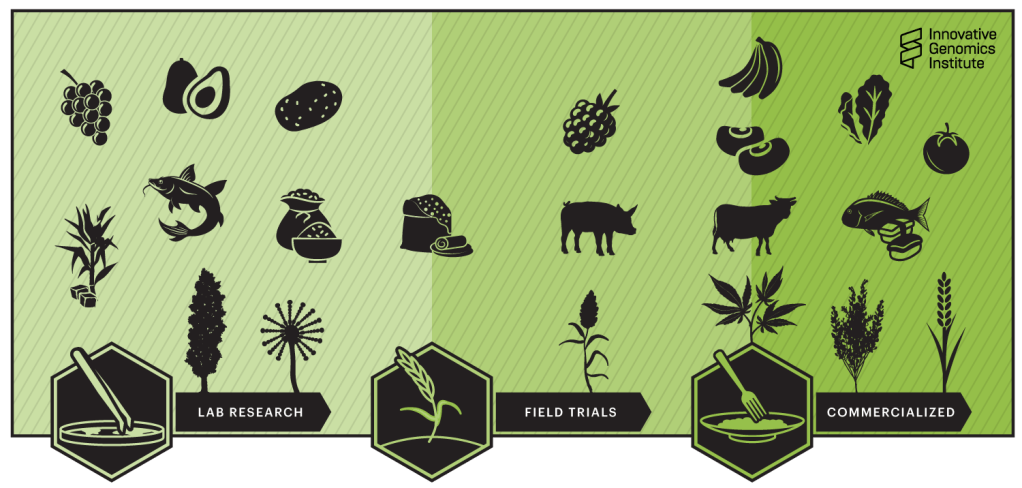
A for Avocado, B for Banana, C for CRISPR Cannabis

As 2025 starts, where does CRISPR stand in transforming agriculture? The Innovative Genomics Institute has provided a snapshot of the state of the art, and (despite the wait for new European regulations), things are moving forward. Let’s take a closer look.

Continue reading

Atomic spaghetti and mutagenesis B.C. (before CRISPR)

Before the advent of genome editing and GMOs, mutagenesis was achieved through radiation. This technique was also used to modify varieties of durum wheat, which, through crossbreeding, contributed to the production of pasta consumed in Italy (see this old statement made by Norberto Pogna to Nature Biotechnology). The term “atomic spaghetti” is sometimes invoked in debates on agricultural biotechnology to highlight how modern techniques are vastly more precise than those of the past. However, few people are aware of the full complexity of this story.

Continue reading

Fall and Rise: Italy’s Journey from GMOs to CRISPR

Italy has long been one of the most hostile countries toward GMOs, to the point of shutting down research in this field. Today, however, it stands among the most active EU members in testing New Genomic Techniques. How did this transformation happen? EMBO Reports features insights from some of the Italian scientists who have championed the defense of GMOs and the revival of experimental fields. Happy reading!

CRISPR hits tomato’s sweet spot

Recolored tomatoes, as in this cover. Enriched with vitamin D, such as those developed with the help of Italian scientists. Resistant to parasitic plants (broomrapes), like those being studied also in Italy. Redomesticated tomatoes, as if it were possible to rewind and restart the film of domestication at an accelerated speed. Even hot tomatoes. There is no doubt that CRISPR is making waves with this fruit so central to our cuisine and so important to the global economy (186 million tons are produced worldwide). The latest addition is the extra-sweet tomato, which had the honor of being featured in a paper in Nature.

Continue reading

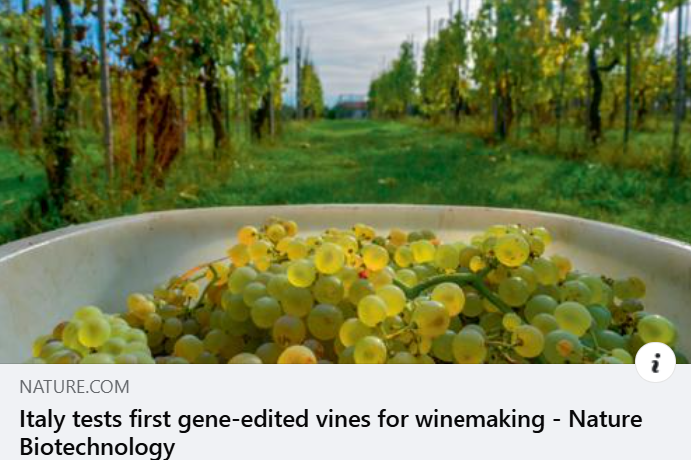
CRISPR Chardonnay – Italy Doubles Up

The University of Verona’s edited vines are already in the field, and soon it could be the turn of the Edmund Mach Foundation and CREA-CNR. Once again, the focus is on Chardonnay, edited to resist downy mildew (with a double knock-out approach) or powdery mildew. I spoke with the key figures of this new chapter in Italian research: Mario Pezzotti, Sara Zenoni, Umberto Salvagnin, Riccardo Velasco, and Vittoria Brambilla. Returning to write for Nature Biotechnology is a joy for me, especially because this time, Italy is leading the way in innovation rather than holding it back, as in the past. Prosit!

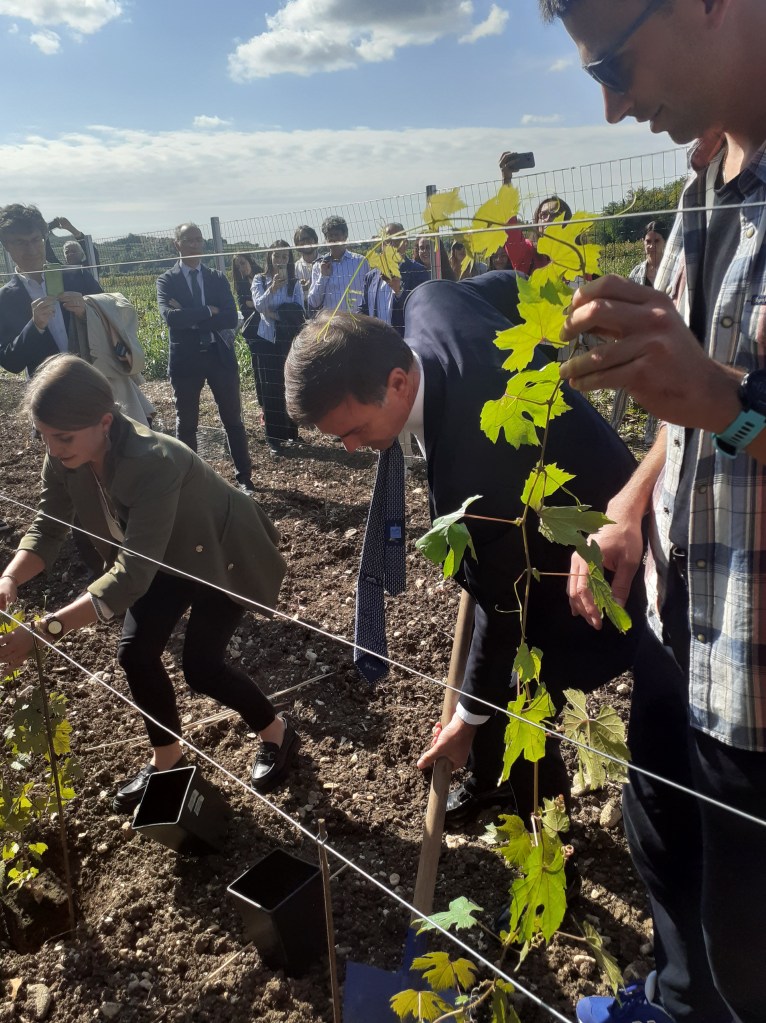
CRISPR vines make their field debut in Italy

Testing of Chardonnay edited to resist downy mildew starts today near Verona, while the prosecco variety awaits its turn in the greenhouse

The president of the influential farmers’ association Coldiretti, Ettore Prandini, formerly very hostile to GMOs, as he plants an edited vine with his own hands in the Verona experimental field on Sept. 30, 24
Continue reading

Where ag genetics goes (in Italy and beyond)

Four intense days of talks and discussions on the present and future of agricultural genetics. We will be there at the round table “Social impact of plant biotechnologies: challenges and opportunities” (12 September afternoon). See the full program here.

Meet Vittoria Brambilla: they tried to destroy it, but her CRISPR field lives on

Vittoria Brambilla starting the first CRISPR field trial in Italy in May 2024 (Credit ALC)

The start of the first field trial with an edited plant had been greeted with joy by Italian scientists (here is the announcement in Nature Italy). However, less than two months after planting, unknown persons vandalized the harmless rice plants, Science reported. Fortunately, all was not lost: some plants survived, and with them the hope of completing this experiment and starting new ones. We talked about this with Vittoria Brambilla, who together with Fabio Fornara developed the edited rice at the University of Milan and obtained permission to study it outdoors to see how resistant it is to a fungal infection (rice blast). Please find the interview on the Italian site Agriscienza.

A petition for CRISPR fields in Italy

This year Italy authorized the first field trial with an edited plant, a rice variety modified to resist a fungus. The trial was vandalized, but enough plants were saved to continue with reduced goals. Now the Italian Parliament should confirm the regulatory window that made the application possible for next year as well. No experimentation can run out after just one year, and there are many more plants developed in Italy with the New Genomic Techniques that deserve to be tested in the field. This is why the Luca Coscioni Association for Freedom of Scientific Research is collecting signatures and addressing the Parliament. I have signed, you can do so too at this link.

Shock and sadness after destruction of Italy’s first CRISPR field

Having attended the festive launch of the first field trial of a CRISPR plant developed in Italy on May 13, we share the dismay of the scientists behind the project – Vittoria Brambilla and Fabio Fornara of the State University of Milan – over the destruction tonight by unknown ecoterrorists of the harmless seedlings, which represented hope for sustainable agriculture and innovative research in our country. The official press release follows. Here are a few links for further reading.

Continue reading