Unknown's avatar

About Anna Meldolesi

science writer

Slimming down by silencing a gene? The next frontier in obesity

Credit https://www.alnylam.com/

After the stunning commercial success of semaglutide-based obesity drugs, the race is on in the biotech world to find a more durable solution that does not require frequent injections. The idea is to silence selected genes without irreversibly intervening on DNA. Basically, it would not involve genetically fixing the target sequence, but preventing its expression through a phenomenon called RNA interference. As is well known, a classical-type gene, in order to express itself, must be transcribed into RNA and then translated into protein. Blocking the transcript, therefore, cancels its action, as Nobel laureates Craig Mello and Andrew Fire have realized.

Continue reading

A success story with a half happy ending

Jacob Peckham, 11, can see much better after receiving an experimental CRISPR-based treatment. The American child, a carrier of a genetic defect that impairs the retina, has had surgery on only one eye and hopes to complete the treatment in the future. However, his wish is unlikely to be granted because the company that developed the treatment (Editas) had to abandon the program due to affordability issues. To give a future to treatments for rare diseases such as this one, insists editing pioneer Fyodor Urnov, it is crucial to build a new model for research, development, and production – that is, to simplify, standardize, integrate, scale up.

A very special day for NGTs in Italy

The fence bounds twenty-eight square meters of bare land in the middle of the Lombard countryside. Inside it a dozen researchers from the University of Milan are busy. The laptop resting on the ground shows the layout of the plots. A meter is unrolled to mark the coordinates on the ground.  Yellow tags are ready to be stuck into the clods: the inscription TEA (the Italian equivalent of New Genomic Techniques is “Assisted Evolution Techniques”) is used to mark rice that has been genetically edited for resistance to a fungal disease (rice blast), while the abbreviation WT indicates wild-type plants, which have not been modified and serve as a control group.

Continue reading

Italian CRISPR rice on its way to the field!

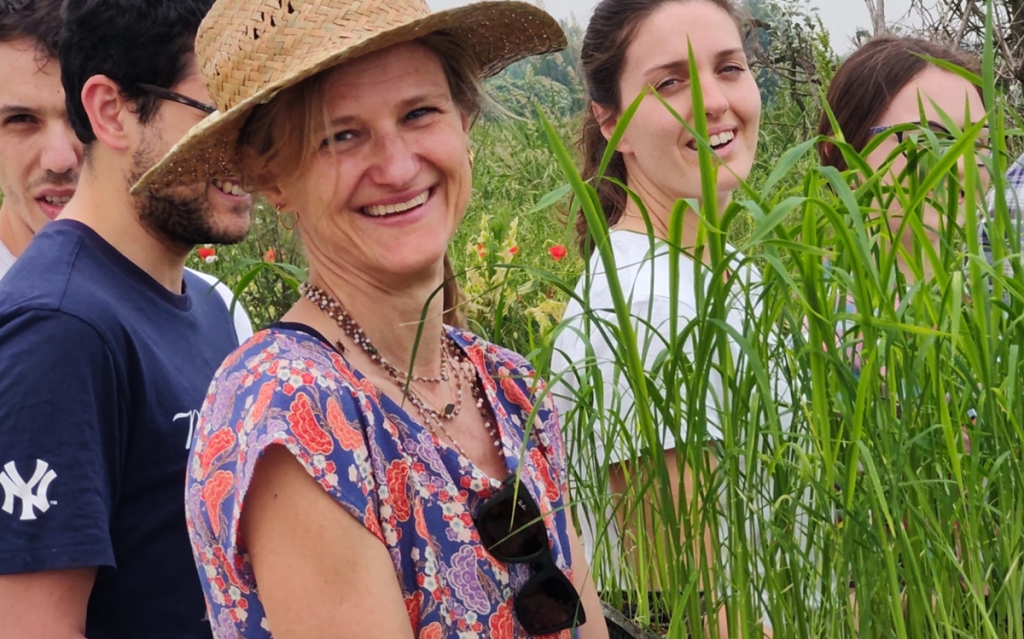
Early in the morning on Monday, May 13, Vittoria Brambilla will open her technological treasure chest at the Department of Agricultural and Environmental Sciences at the University of Milan. In jargon it is called a phytotron and is an air-conditioned room. Here are kept 400 precious plantlets, ready to be transferred to Italy’s first experimental field of the CRISPR era, with the blessing of the Ministry of Environment and Energy Security. Fertile soil awaits them in which to sink their delicate roots, and then sun, wind, rain and perhaps drought and pests. All that changeable stuff happens when you grow outdoors instead of inside a laboratory.” To learn all about this field debut (the first after a 20-year wait in Italy), the trial that is about to begin and who made it possible, there is my new piece for Le Scienze, with comments from Vittoria Brambilla, Roberto Defez, Elena Cattaneo, Roberto Schmid and Federico Radice Fossati, the ag entrepreneur who offered his land for the trial. For more technical details on this fungus-resistant rice there is the article I had published in Nature Italy. In the gallery above, meanwhile, you will find: the researchers of the laboratories directed by Vittoria Brambilla and Fabio Fornara, the sign posted outside the experimental field, the climate-controlled chamber holding the edited seedlings until next week, one of the trays in which they will be transported, the cage delimiting the experimental field, yet to be completed with the upper part (28 square meters in Mezzana Bigli, in the province of Pavia, northern Italy).

Will edited foods appeal to consumers?

While the number of studies on this topic is limited, they generally align in indicating that genome-edited plants are more appealing to the public than GMOs. Supporting this assertion is an analysis set to be published in the June issue of Current Opinion in Biotechnology. Hans De Steur and his colleagues at the University of Ghent in Belgium conducted a review of data collected from various countries worldwide, including Europe, Asia, and the Americas.

Continue reading

OpenCRISPR – gene editing meets AI

OpenCRISPR, credit Profluent

Natural evolution has had four billion years to experiment with living matter. From now on, artificial intelligence will also help expand the catalog of possible and desirable molecules. These so-called ‘language systems’ are no longer limited to producing text or images, as exemplified by ChatGPT or Midjourney. They can now be instructed and utilized to design new proteins, thereby potentially creating improved CRISPR scissors.

Continue reading

Time to give NGTs a chance

Marco Pasti grows corn, soybeans, wheat, barley, sugar beets, potatoes, some wine grapes and walnuts on his farm near Venice, in Italy. In addition to being a farmer, he is an advocate for science-based agriculture. Don’t miss his opinion piece written for the Global Farmer Network after the European Parliament vote on the New Genomic Techniques last February. After the EU elections next June, the path of the new regulatory framework will resume, which could mark a turning point “in favor of sound science – and possibly a major break from the mistakes of the past when Europeans treated crop innovation with skepticism and even fear.”

A must-read recommended by Doudna, Gates and…

The Italian publisher did me the crazy honor of including a quote from me on the back cover of the best book of the year (IMHO), along with quotes from CRISPR inventor Jennifer Doudna and Bill Gates. The autobiography of Katalin Karikó, the mRNA vaccine scientist, is a must-read for those who love great science and great minds. We had already blogged about her in the aftermath of the Nobel Prize.

Resurrecting extinct species _ where do we stand?

Beth Shapiro is chief scientific officer at Colossal Biosciences

Plans to genetically bring mammoths and other vanished animals back to life have scientific stakes far beyond the imagery of Jurassic Park

Continue reading