My journey to Seville, where tomorrow’s sunflowers grow

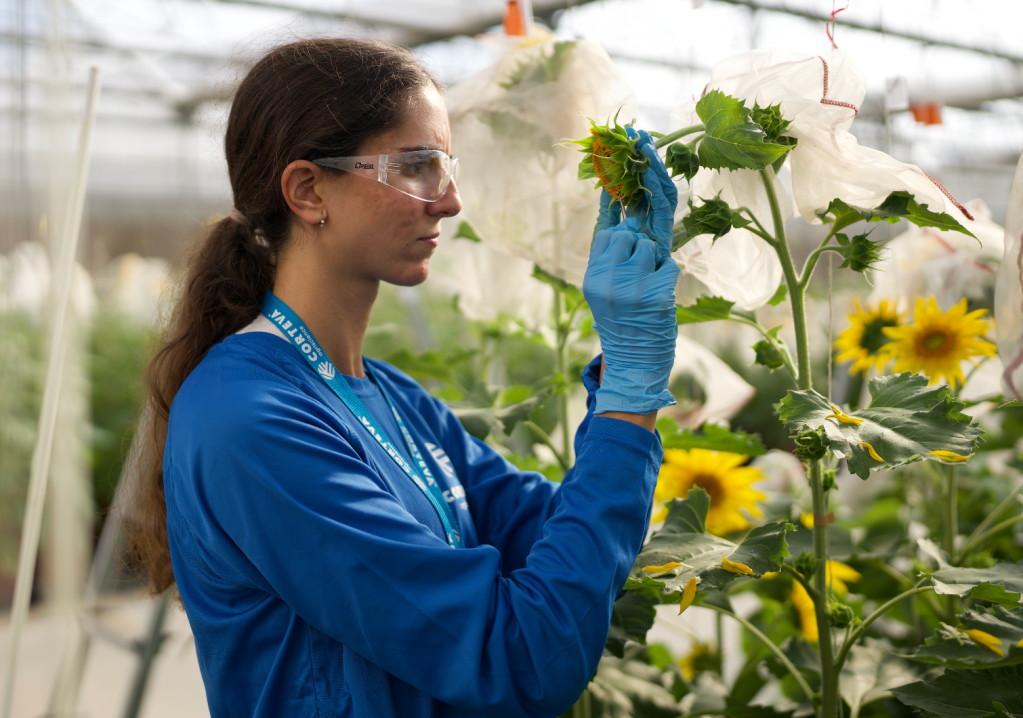
Anyone who has ever stood beside a sunflower knows the quiet astonishment of being matched, petal for head, by a flower. Now imagine weaving your way through tens of thousands of stems at eye level, each one tethered to the transparent ceiling by a white cord, as if suspended between earth and sky. Overhead stretches a vision in perfect symmetry: thousands of threads rising in parallel, anchoring a forest of blossoms veiled like brides at the altar, their vivid yellow only just shimmering through the gauze. It could be a contemporary art installation, but this is the greenhouse of the world’s most advanced sunflower research center. We are not at the Venice Biennale nor at Documenta in Kassel, but just outside Seville, at the Centro Tecnológico de Investigación de La Rinconada.

Continue reading
A for Avocado, B for Banana, C for CRISPR Cannabis

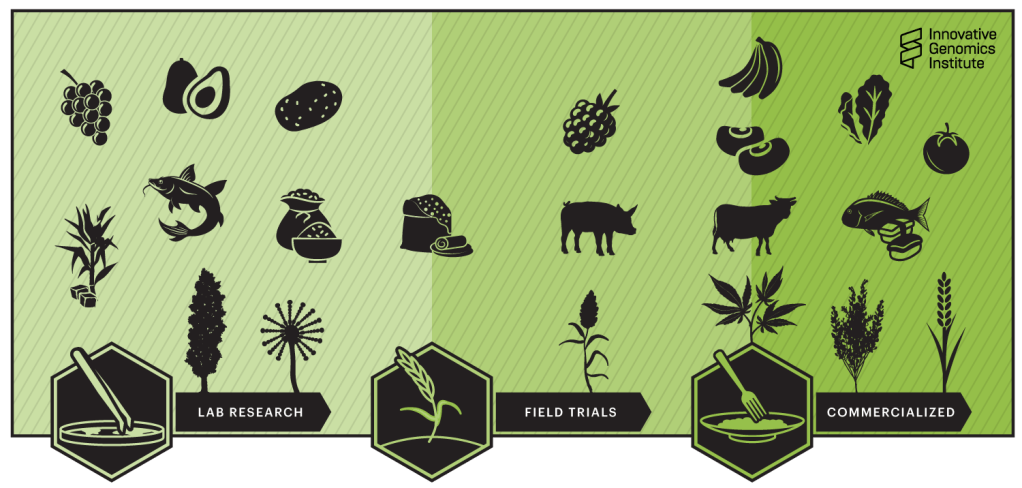
As 2025 starts, where does CRISPR stand in transforming agriculture? The Innovative Genomics Institute has provided a snapshot of the state of the art, and (despite the wait for new European regulations), things are moving forward. Let’s take a closer look.

Continue reading

CRISPRing future harvests at DuPont

This slideshow requires JavaScript.

CRISPR is set to make its commercial debut in maize fields in 2020. The honor (and burden) of probing the market, as the first product developed with the revolutionary technique for genome editing, is up to a kind of corn called waxy for the appearance of its kernels. Its starch is almost entirely amylopectin and almost zero amylose. Conventional waxy varieties already available to farmers have some yield drag due to the undesirable genetic baggage introduced by breeding. Conversely, DuPont Pioneer researchers created a waxy version of their best corn without yield drag or foreign DNA by editing out a gene for an enzyme that produces amylose. Amylopectin is used for the production of goods such as paper adhesives and food thickeners. What remains after its extraction is a protein flour that can be employed as feed. It may sound like a low-profile debut for the celebrated genome editing technology that is asked to succeed where GMOs have failed: gaining consumer confidence. But this is a deliberate strategy, as explained below by Neal Gutterson, DuPont Pioneer’s vice president of R&D. Continue reading