
The International Union for Conservation of Nature (IUCN) rejects the moratorium request and approves a resolution recognizing the risks and benefits of SynBio techniques, calling for case-by-case evaluations
Continue reading
The International Union for Conservation of Nature (IUCN) rejects the moratorium request and approves a resolution recognizing the risks and benefits of SynBio techniques, calling for case-by-case evaluations
Continue reading
Nature Biomedical Engineering has introduced a chatbot specifically designed to help beginners with their first experiments and to support experienced researchers in their work.
Since it was first described in Science in 2012, in the landmark paper by Emmanuelle Charpentier and Jennifer Doudna, the success of the CRISPR technique has been summed up with a handful of adjectives: cheap, precise, easy to use. But since everything is relative, it’s worth asking: how easy, and compared to what? When measured against previous genetic editing platforms, CRISPR is far simpler to apply. Whereas only a few highly specialized centers could once perform these experiments, with CRISPR a standard lab, the basic skills of an ordinary biologist, and solid familiarity with bioinformatics may be enough. Still, novices need guidance, and even seasoned researchers can run into problems.
Continue reading
The European Commission is collecting comments on the proposed regulation on New Genomic Techniques (NGTs) presented on 5 July. On this page you will find all the documents you need to form an opinion: from the criteria for establishing when a NGT plant is comparable to a conventional plant, to calculations on the costs of coexistence for organic producers (see in particular the Impact assessment report). The feedback received during the consultation period (8 weeks, extendable) will be summarised by the European Commission and presented to the European Parliament and the Council to feed into the legislative debate. In general, CRISPeR Frenzy appreciates the proposed regulation, especially for its focus on the promised benefits of NGTs in terms of environmental sustainability.
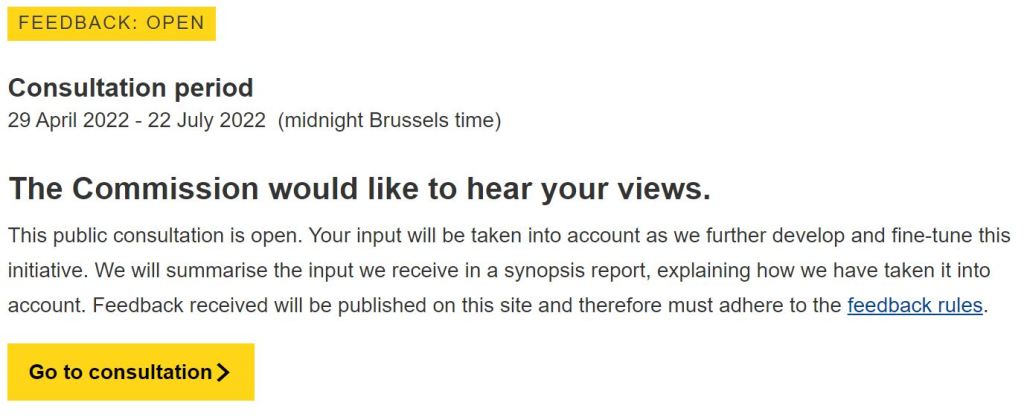
Participatory democracy means citizens have a say in the process of policymaking. Here is your chance to contribute to creating an updated, science-based European legal framework for edited plants. You will be asked questions such as: “Should the potential contribution to sustainability of the modified trait of a product be taken into account in new legislation on plants produced by targeted mutagenesis or cisgenesis?”
 CRISPeR FRENZY