
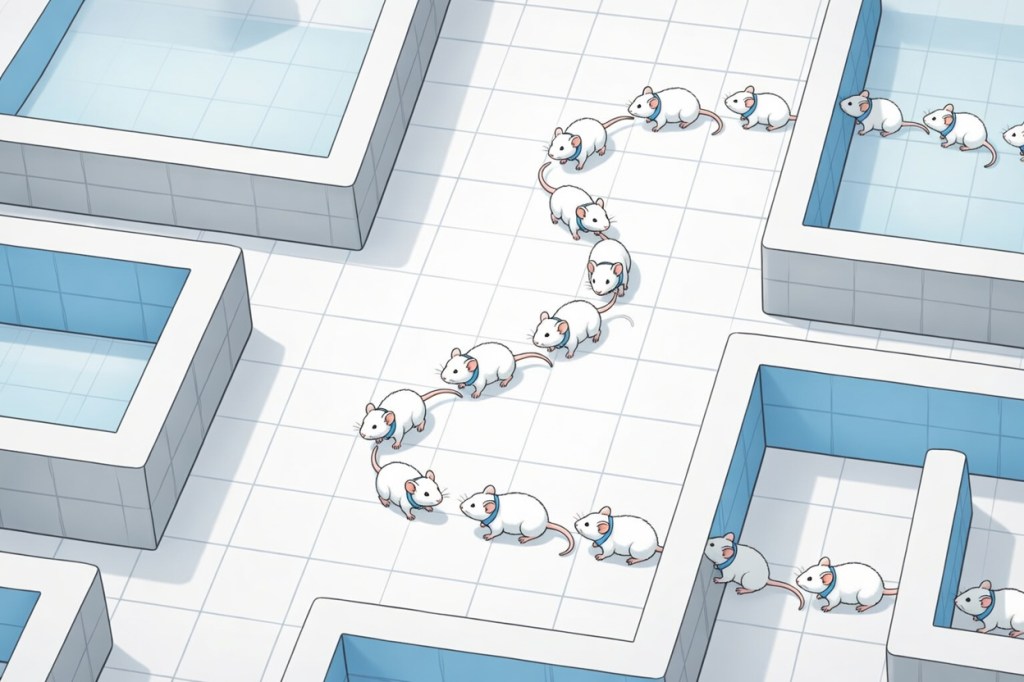
A team led by Teruhiko Wakayama at the University of Yamanashi generated more than 1,200 cloned mice from a single original donor, across over 30,000 cloning attempts, using the classic technique that produced Dolly the sheep: nuclear transfer (please see their paper in Nature Communications). Up to the 25th generation, things proceeded largely smoothly: the clones were normal, lived as long as conventionally bred mice, and the line appeared indefinitely sustainable. But from the 27th generation onward, the success rate began to decline. By the 58th generation it had collapsed, and the few pups that were born died shortly after birth, despite showing no obvious abnormalities. A discovery that may prompt a reassessment of certain lines of research involving genome editing.
Continue reading CRISPeR FRENZY