A Cambrian explosion for CAR-T

Credit Mesa Shumacher/Santa Fe Institute

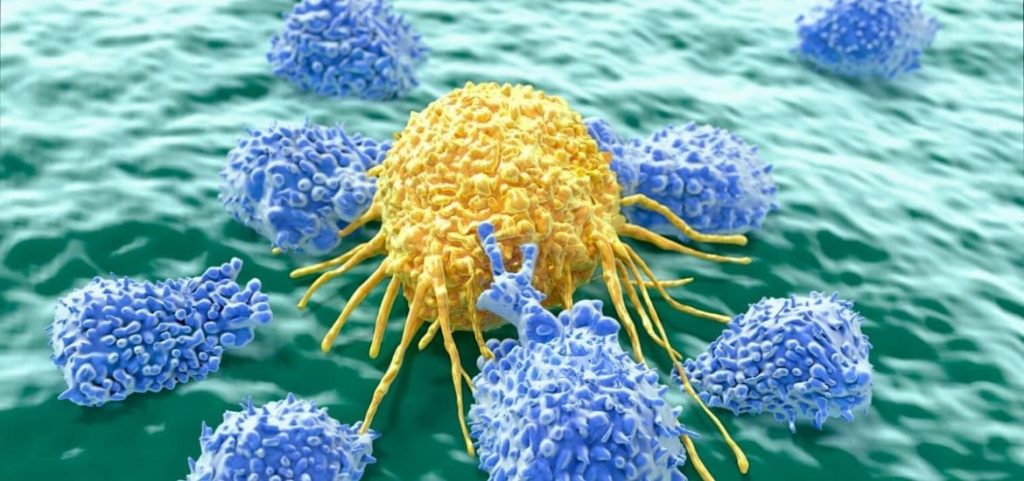
Around 500 million years ago, life on Earth underwent a phase of rapid diversification that led to the formation of complex biological structures and the appearance of new groups of organisms. This crucial event for evolution captured the imagination so strongly that it became a metaphor. ‘CARs in 2025: the Cambrian explosion continues’, in fact, is the title chosen by Michel Sadelain for the lecture hosted by GEN (Genetic Engineering & Biotechnology News) on 29 January. The most exciting branch of immunotherapy, using engineered T lymphocytes to efficiently and selectively attack cancer cells, is experiencing a boom in new approaches and applications.

Continue reading
CRISPR & cancer – small steps forward

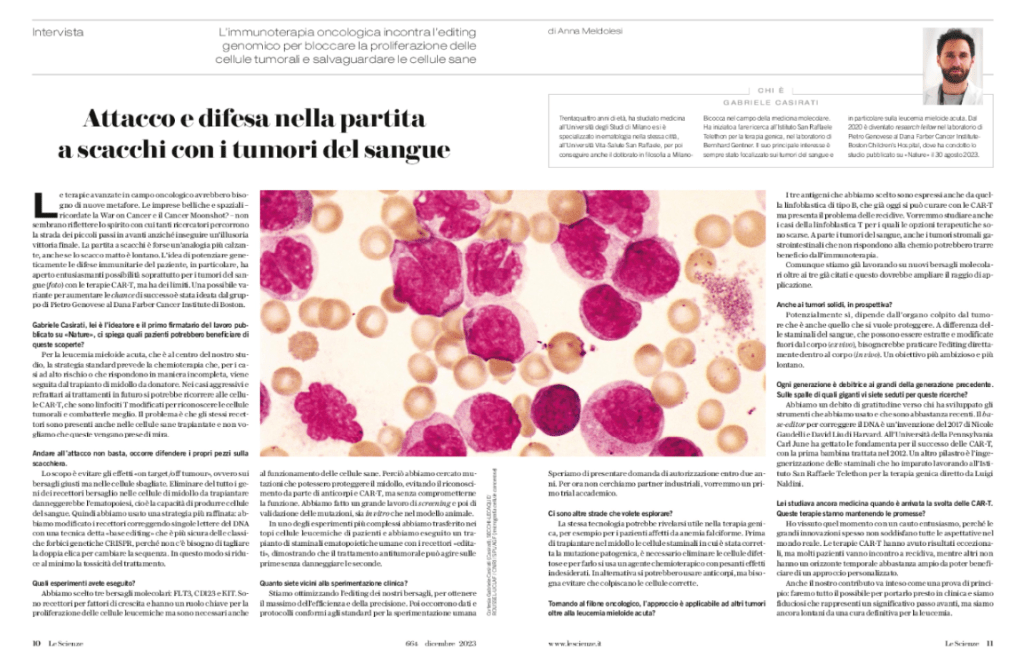
Advanced cancer therapies would need new metaphors. War and space efforts – do you remember the War on Cancer and the Cancer Moonshot? – do not seem to reflect the spirit with which so many researchers pursue the strategy of small steps forward rather than chasing an illusory ultimate victory. The game of chess is perhaps a more fitting analogy, although checkmate is a long way off. The idea of genetically enhancing a patient’s immune defenses, in particular, has opened up exciting new possibilities especially for blood cancers (Car-T therapies) but is not without its limitations. One possible variant to increase the chances of success has been devised by Pietro Genovese’s group at the Dana Farber Cancer Institute in Boston and described in Nature a few months ago. If you can read Italian, please see also the December 2023 issue of Le Scienze, with my interview to Gabriele Casirati, first author of the Nature’s paper.

A promising alternative to CAR-T cells

Engineering lymphocytes to recognize cancer cells is a strategy that has already produced convincing clinical results thanks to CAR-T therapy. But this is not the only approach on the horizon. An emerging alternative is TCR-engineered lymphocytes, where TCR stands for T-cell receptors.

Continue reading