
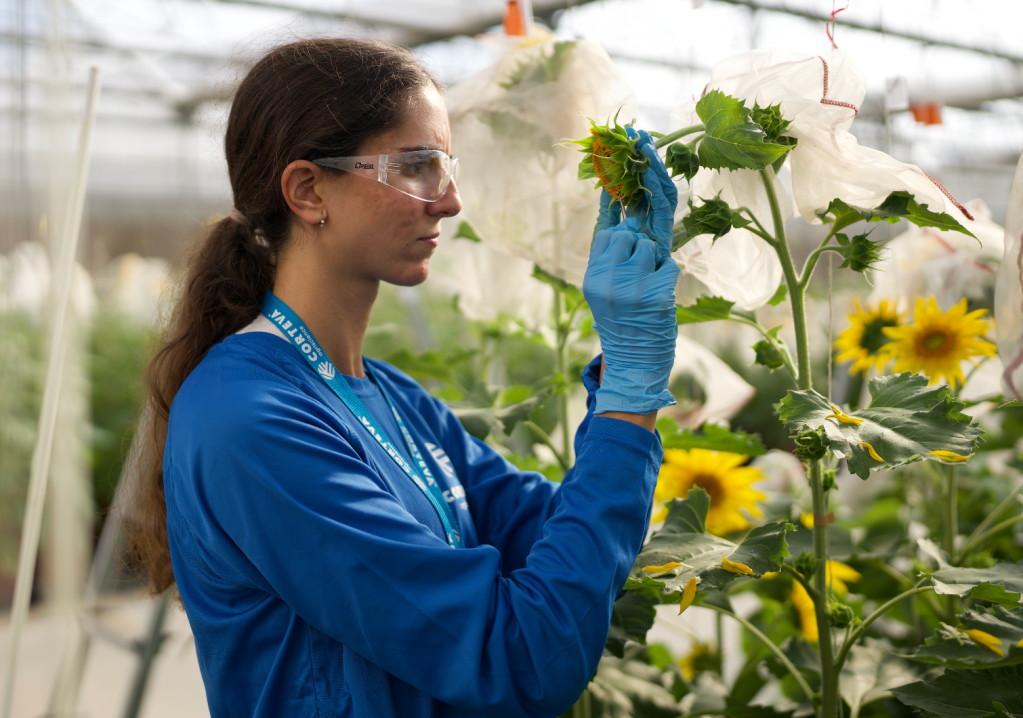
Anyone who has ever stood beside a sunflower knows the quiet astonishment of being matched, petal for head, by a flower. Now imagine weaving your way through tens of thousands of stems at eye level, each one tethered to the transparent ceiling by a white cord, as if suspended between earth and sky. Overhead stretches a vision in perfect symmetry: thousands of threads rising in parallel, anchoring a forest of blossoms veiled like brides at the altar, their vivid yellow only just shimmering through the gauze. It could be a contemporary art installation, but this is the greenhouse of the world’s most advanced sunflower research center. We are not at the Venice Biennale nor at Documenta in Kassel, but just outside Seville, at the Centro Tecnológico de Investigación de La Rinconada.
Continue reading Pollination is a natural way to deliver DNA into plant cells. So why not to use pollen as a vehicle for CRISPR machinery to start genome editing? HI Edit, as this approach is called, has been successfully tested by Syngenta in corn, Arabidopsis and wheat in the lab. Please see the paper just published in
  CRISPeR FRENZY