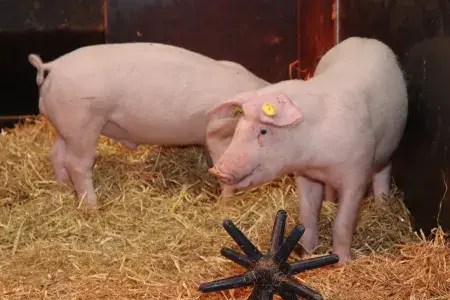
At the Roslin Instituteof the University of Edinburgh – the same research centre that created Dolly the sheep – scientists have used gene editing to achieve a new advance in animal breeding. With a precise CRISPR tweak, they have produced pigs that are immune to a highly contagious and often deadly viral disease: classical swine fever.
A summit in Cambridge, Massachusetts, and a special issue of The CRISPR Journal featured a diversity of voices advocating for a broader debate in the name of cosmopolitanism and participation. How relevant is the call?
Vittoria Brambilla and Sara Zenoni have launched the first Italian field trials, respectively with gene-edited rice and grapevine, both targeted by antibiotech vandals
Do you remember the activists who threw tomato puree on art masterpieces? Of course we do. News reports, collective outrage, and calls for exemplary punishment followed. To stop such actions in Italy, Law Number 6 of January 22, 2024, was passed, introducing “Sanctioning provisions on the destruction, dispersion, deterioration, defacement, and illegal use of cultural or landscape heritage.” Now for another question: Do you remember the activists who tore down protective nets, uprooted plants born from Italian research, and sabotaged experiments designed to make agriculture more sustainable? Probably not — because they acted at night with their faces covered. And because both the media and politicians had little to say when these incidents happened — in June 2024 against the University of Milan and in February 2025 against the University of Verona.
Watson & Crick for the double helix. Doudna & Charpentier for CRISPR. Karikó & Weissman for RNA vaccines… Do two people think better than one or even many? Itai Yanai and Martin J. Lercher suggest so in Nature Biotechnology.
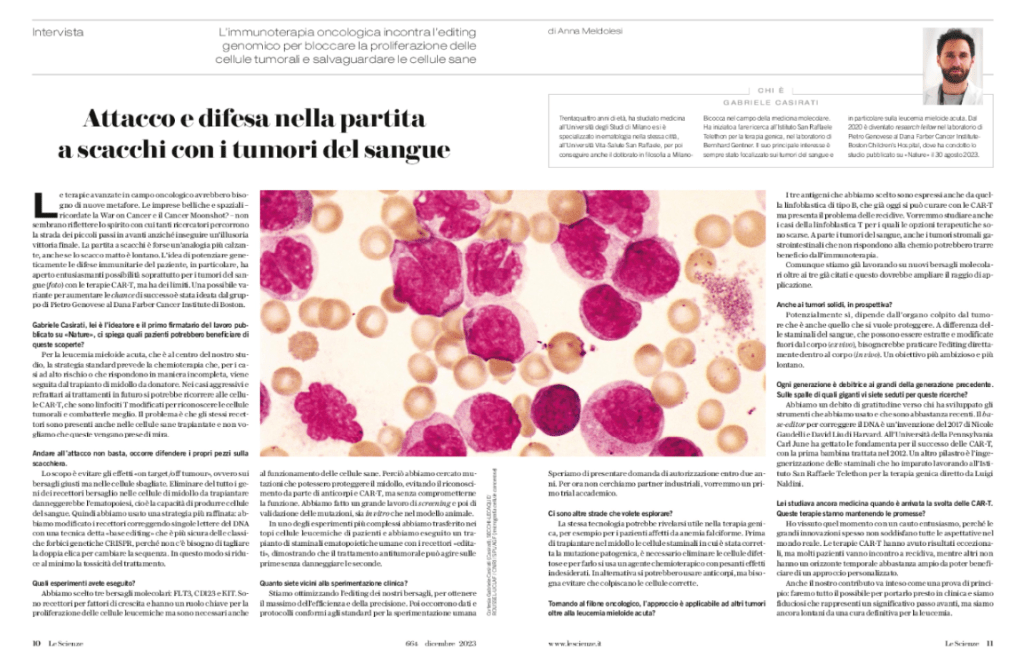
Advanced cancer therapies would need new metaphors. War and space efforts – do you remember the War on Cancer and the Cancer Moonshot? – do not seem to reflect the spirit with which so many researchers pursue the strategy of small steps forward rather than chasing an illusory ultimate victory. The game of chess is perhaps a more fitting analogy, although checkmate is a long way off. The idea of genetically enhancing a patient’s immune defenses, in particular, has opened up exciting new possibilities especially for blood cancers (Car-T therapies) but is not without its limitations. One possible variant to increase the chances of success has been devised by Pietro Genovese’s group at the Dana Farber Cancer Institute in Boston and described in Nature a few months ago. If you can read Italian, please see also the December 2023 issue of Le Scienze, with my interview to Gabriele Casirati, first author of the Nature’s paper.
Plant species are threatened by pathogens and pests, and the climate crisis is making things worse. CRISPR could help address some forest health threats, by making trees more resilient. But intervening in a complex ecosystem is a big decision. What are the alternatives? What are the uncertainties? Let’s think about a specific example, the American chestnut, and watch this iBiology video.
Working with Estonian-American scientist Kira Makarova, in 2002 Eugene Koonin identified the genetic region known as CRISPR-Cas. Three years later his group discovered its natural function. He continues to work on microbial defense systems.
“Science in times of war: oppose Russian aggression but support Russian scientists” is the heartfelt article recently published by Eugene Koonin in EMBO Reports. Koonin is a leading evolutionary molecular biologist and a CRISPR pioneer. Born and raised in Moscow, he left the USSR a few weeks before it dissolved in 1991 and moved to the US where he works at the National Center for Biotechnology Information (NCBI-NIH).
He was elected Member of the National Academy of Sciences of the USA in 2016 and Foreign Member of the Russian Academy of Sciences (RAS) in 2019 but resigned from the second one at the end of February this year. You can read why in the excerpt below, and learn more about his outstanding contribution to science and the CRISPR field in this PNAS profile.
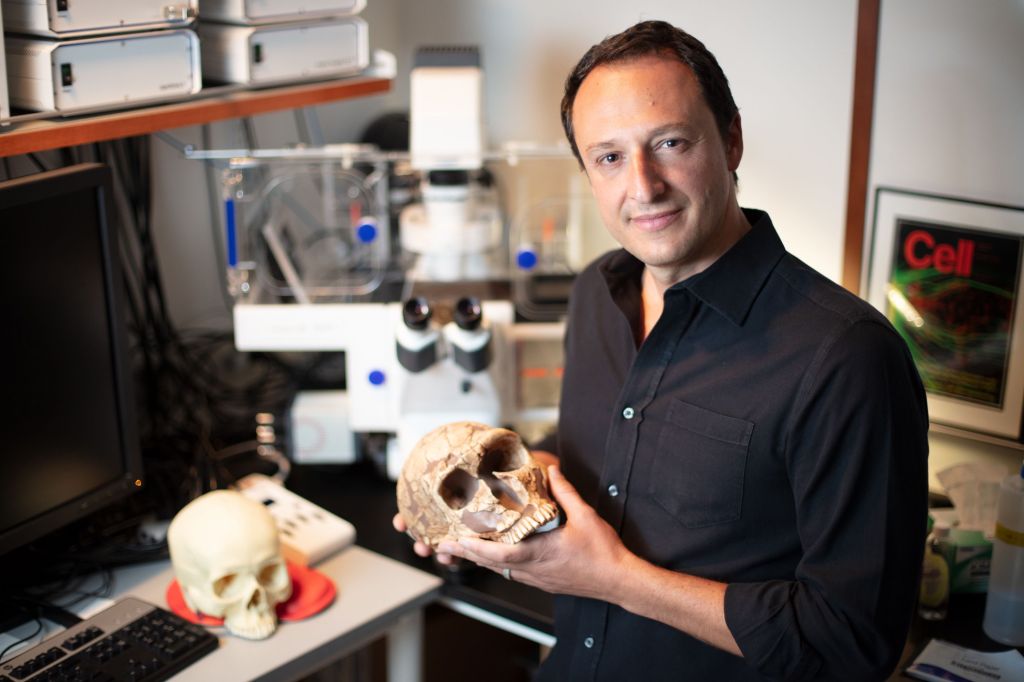
Alysson Muotri is a neuroscientist at the University of California, San Diego. His team is developing lentil-size, Neanderthalized mini-brains by using CRISPR + paleogenomics + organoids. After reading the paper published in Science last February, we asked him a few questions about the experiments of paleo-gene-editing he is doing at the Archealization Center.











 CRISPeR FRENZY