Tired of illustrating articles and PowerPoint presentations on genome editing with the usual genetic scissors and Swiss Army knives? You might not know that the Innovative Genomics Institute, founded by CRISPR inventor Jennifer Doudna, offers images created by its graphic designers free of charge for educational and non-commercial use. Take a look at the Science × Art section of their website and their illustrated glossary.
Nature Biomedical Engineering has introduced a chatbot specifically designed to help beginners with their first experiments and to support experienced researchers in their work.
Since it was first described in Science in 2012, in the landmark paper by Emmanuelle Charpentier and Jennifer Doudna, the success of the CRISPR technique has been summed up with a handful of adjectives: cheap, precise, easy to use. But since everything is relative, it’s worth asking: how easy, and compared to what? When measured against previous genetic editing platforms, CRISPR is far simpler to apply. Whereas only a few highly specialized centers could once perform these experiments, with CRISPR a standard lab, the basic skills of an ordinary biologist, and solid familiarity with bioinformatics may be enough. Still, novices need guidance, and even seasoned researchers can run into problems.
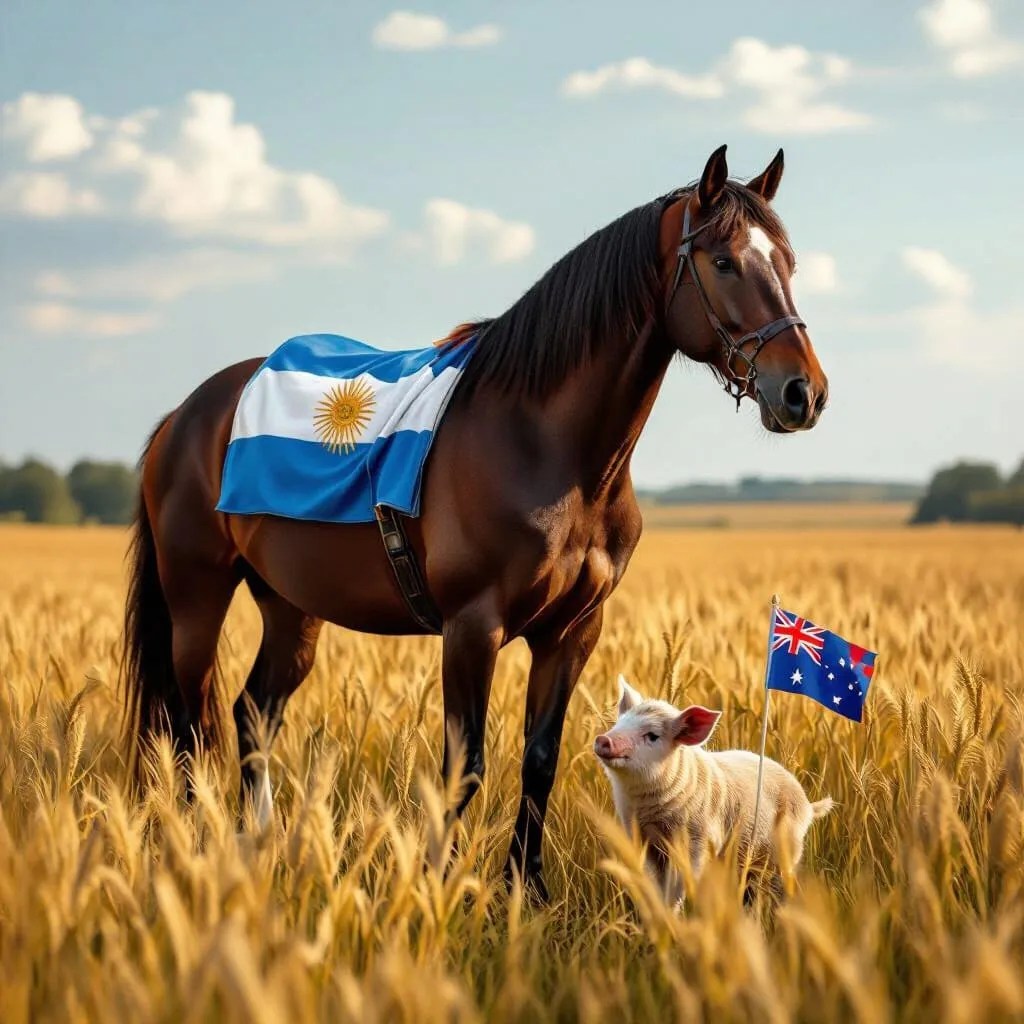
A selection of news we missed during August. Reuters reports on the controversy surrounding horses edited by Kheiron Biotech to enhance their muscles. In Argentina, veterinary reproductive technologies are cutting-edge, and the use of cloning in horse breeding is accepted. Still, for now, genetically edited animals are not allowed to compete in polo.
I couldn’t resist—here’s how ChatGPT ‘Ghiblized’ a famous photo of Emmanuelle Charpentier and Jennifer Doudna, Nobel Prize winners for the invention of CRISPR (with sincere apologies to Master Miyazaki).
Rumor has it that RNA has fallen out of favor politically, presumably as a key molecule for vaccines against Covid, making it an unwelcome symbol to the U.S. administration in the era of Robert F. Kennedy Jr. and Donald Trump. According to reports, U.S. researchers have been advised to specifically remove references to messenger RNA from research projects competing for public funding.
At first glance, it looks like the cover of a design magazine, but it’s actually the technology supplement published by The Economist in March. Titled ‘The Age of CRISPR,’ it features eight articles exploring the most cutting-edge areas of genome editing—gene therapies, xenotransplantation, epigenetic editing, gene drives, gene-edited plants, and much more. It doesn’t shy away from the challenges, from companies struggling to stay afloat to regulatory hurdles. But the tone is measured: the era of sensationalism is over, yet CRISPR is here to stay.
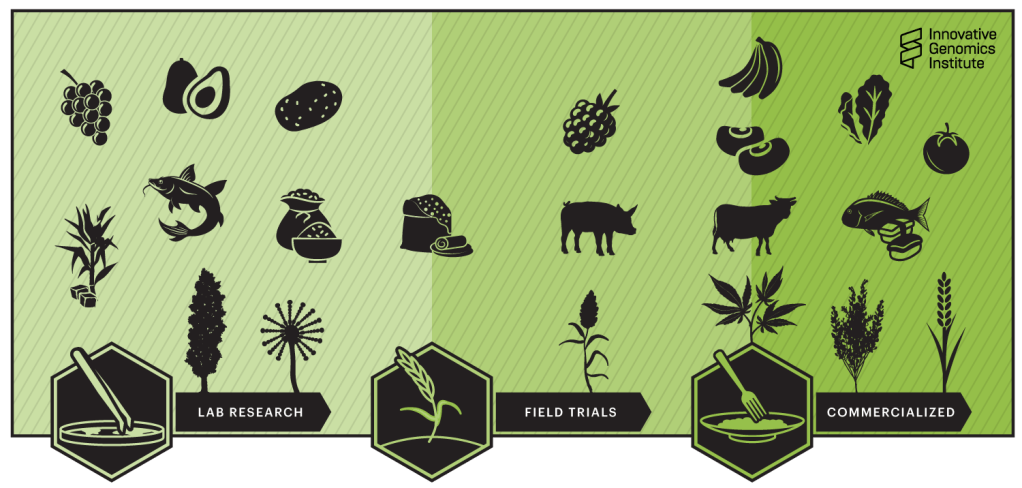
As 2025 starts, where does CRISPR stand in transforming agriculture? The Innovative Genomics Institute has provided a snapshot of the state of the art, and (despite the wait for new European regulations), things are moving forward. Let’s take a closer look.







 CRISPeR FRENZY