Fall and Rise: Italy’s Journey from GMOs to CRISPR

Italy has long been one of the most hostile countries toward GMOs, to the point of shutting down research in this field. Today, however, it stands among the most active EU members in testing New Genomic Techniques. How did this transformation happen? EMBO Reports features insights from some of the Italian scientists who have championed the defense of GMOs and the revival of experimental fields. Happy reading!
CRISPR Chardonnay – Italy Doubles Up

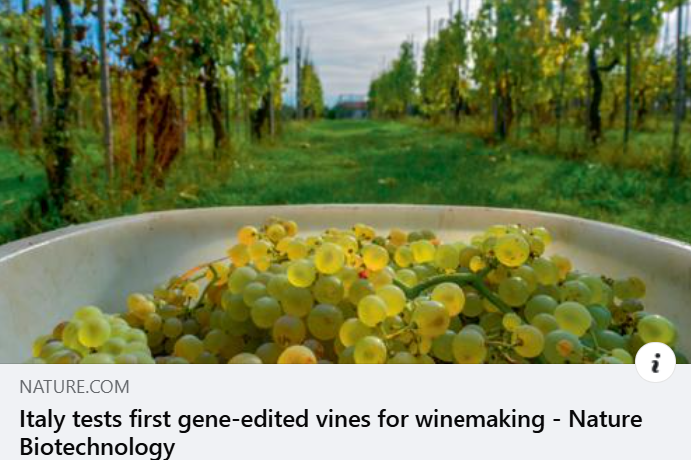
The University of Verona’s edited vines are already in the field, and soon it could be the turn of the Edmund Mach Foundation and CREA-CNR. Once again, the focus is on Chardonnay, edited to resist downy mildew (with a double knock-out approach) or powdery mildew. I spoke with the key figures of this new chapter in Italian research: Mario Pezzotti, Sara Zenoni, Umberto Salvagnin, Riccardo Velasco, and Vittoria Brambilla. Returning to write for Nature Biotechnology is a joy for me, especially because this time, Italy is leading the way in innovation rather than holding it back, as in the past. Prosit!

Meet Vittoria Brambilla: they tried to destroy it, but her CRISPR field lives on

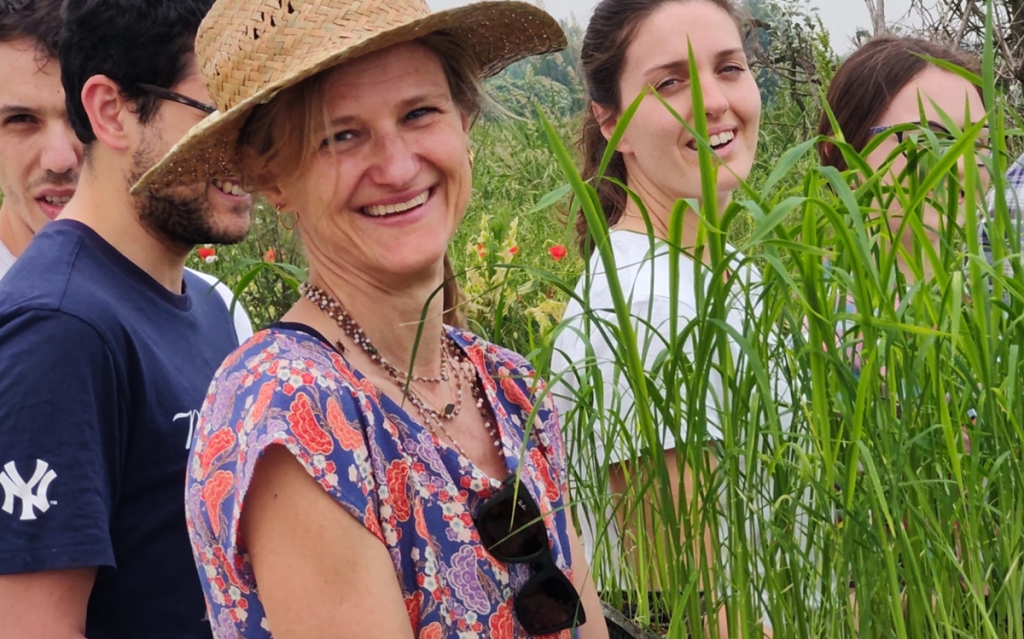
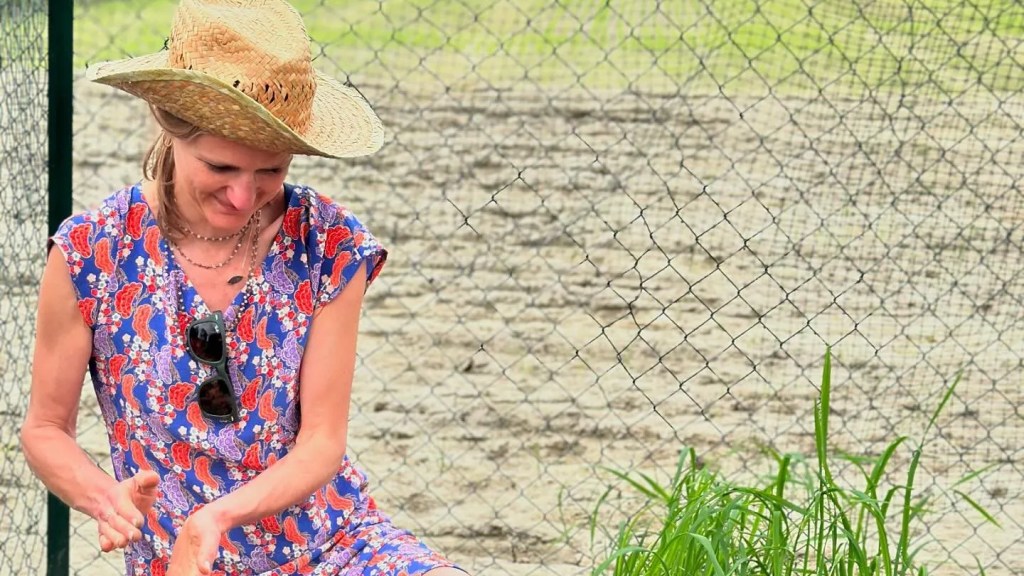
Vittoria Brambilla starting the first CRISPR field trial in Italy in May 2024 (Credit ALC)

The start of the first field trial with an edited plant had been greeted with joy by Italian scientists (here is the announcement in Nature Italy). However, less than two months after planting, unknown persons vandalized the harmless rice plants, Science reported. Fortunately, all was not lost: some plants survived, and with them the hope of completing this experiment and starting new ones. We talked about this with Vittoria Brambilla, who together with Fabio Fornara developed the edited rice at the University of Milan and obtained permission to study it outdoors to see how resistant it is to a fungal infection (rice blast). Please find the interview on the Italian site Agriscienza.

Shock and sadness after destruction of Italy’s first CRISPR field

Having attended the festive launch of the first field trial of a CRISPR plant developed in Italy on May 13, we share the dismay of the scientists behind the project – Vittoria Brambilla and Fabio Fornara of the State University of Milan – over the destruction tonight by unknown ecoterrorists of the harmless seedlings, which represented hope for sustainable agriculture and innovative research in our country. The official press release follows. Here are a few links for further reading.

Continue reading

A very special day for NGTs in Italy

The fence bounds twenty-eight square meters of bare land in the middle of the Lombard countryside. Inside it a dozen researchers from the University of Milan are busy. The laptop resting on the ground shows the layout of the plots. A meter is unrolled to mark the coordinates on the ground.  Yellow tags are ready to be stuck into the clods: the inscription TEA (the Italian equivalent of New Genomic Techniques is “Assisted Evolution Techniques”) is used to mark rice that has been genetically edited for resistance to a fungal disease (rice blast), while the abbreviation WT indicates wild-type plants, which have not been modified and serve as a control group.

Continue reading

CRISPR crops – Italy fires the starting gun

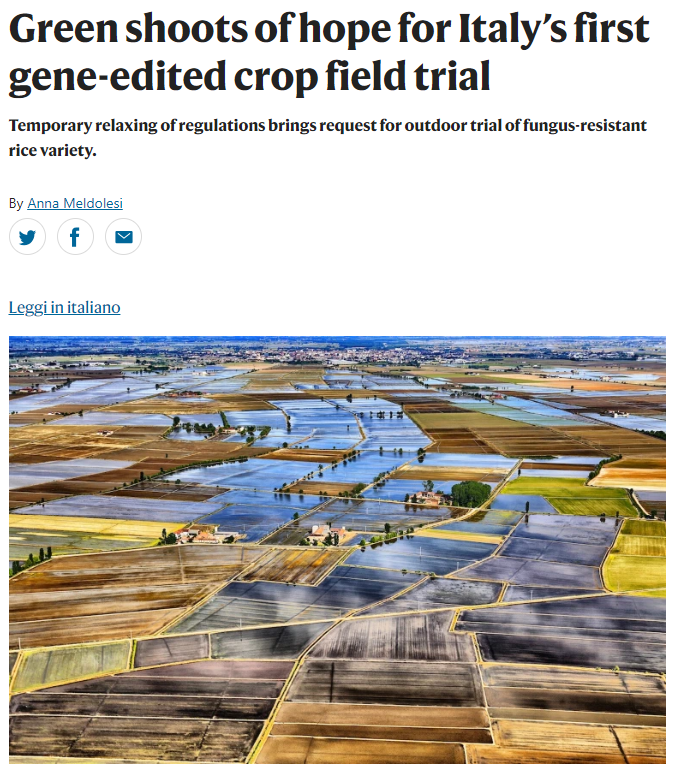
A CRISPR/Cas9-modified rice variety may be planted in a test field in northern Italy as soon as this spring after a government rule change introduced in 2023. A University of Milan team was the first research group in the country to apply for a field test under a law change that streamlines procedures for field trials of plants developed through genome editing or cisgenesis. With several other groups also planning proposals, a new wave of agricultural genetics in Italy could follow. [Please see the details in my article for Nature Italy]

CRISPR boosts rice yield

zhu-stresses

Jian-Kang Zhu (courtesy of Purdue University)

Around 30% more grain. This is the result announced in PNAS by Chinese researchers that have made the most of CRISPR’s multiplexability in rice. By simultaneously targeting multiple genes, the editing technique is a boon for scientists struggling with plants’ genetic redundancies. Continue reading