A little more patience. The European Parliament’s final vote, originally scheduled for March, has been postponed to late April, but the finish line is in sight. We should finally have rules that distinguish true transgenic plants (containing foreign DNA) from edited plants that do not contain extra genes and are indistinguishable from traditional breeding programs.
In these times of climate crisis, biodiversity loss and renewed food insecurity, a scientific and evidence-based approach is essential in every respect. Now more than ever, we must rise above ideology and dogmatism. That is why we the undersigned turn to you and urge you to carefully consider the benefits of embracing New Genomic Techniques (NGTs) in your upcoming parliamentary decisions. As concerned citizens who believe in the power of science to improve our lives and our relationship with the planet, we implore you to vote in favour of NGTs, aligning your decisions with the advancements in scientific understanding. Conventional breeding for climate resilient crops (with cross-breeding of certain traits, subsequent selection and then backcrossing to remove undesirable traits) is too time-consuming. It takes years, decades even. We do not have this time in an era of climate emergency.
[Here you can read the full text of the letter and subscribe to it]
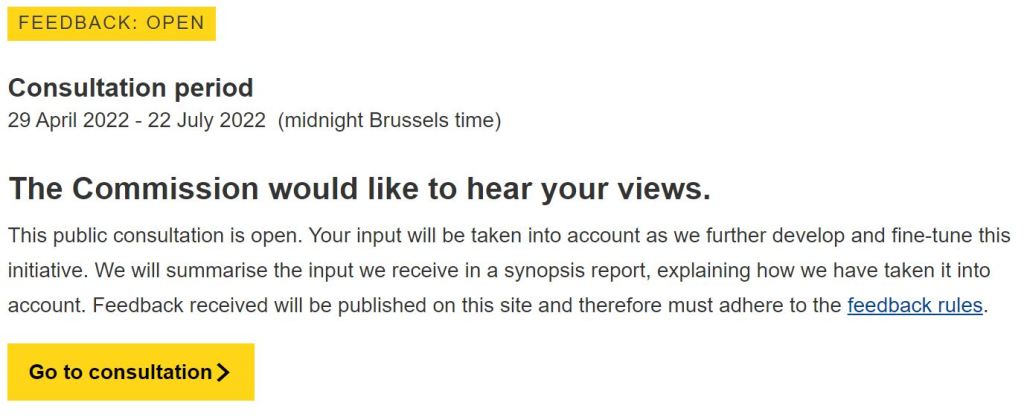
The European Commission is collecting comments on the proposed regulation on New Genomic Techniques (NGTs) presented on 5 July. On this page you will find all the documents you need to form an opinion: from the criteria for establishing when a NGT plant is comparable to a conventional plant, to calculations on the costs of coexistence for organic producers (see in particular the Impact assessment report). The feedback received during the consultation period (8 weeks, extendable) will be summarised by the European Commission and presented to the European Parliament and the Council to feed into the legislative debate. In general, CRISPeR Frenzy appreciates the proposed regulation, especially for its focus on the promised benefits of NGTs in terms of environmental sustainability.
The European Commission’s proposal for an updated regulatory framework for New Genomic Techniques was presented today (see here the leaked confidential document circulating online, here the offical document and more)
There is great disorder under the heavens of new biotechnology. Judging by the Italian debate on genetic innovation in agriculture, it seems that we no longer know what to call what. We are waiting for the European Commission to present its proposal to regulate ‘new genomic techniques’ (NGTs) on 5 July (see the leaked draft here). But in the meantime, on 9 June, the Italian Parliament approved a regulation in favour of experimentation with ‘assisted evolution techniques’ (TEAs), which are the same thing. However, if you read the official wording (9 bis, drought decree law) this expression is missing: instead, it refers to the deliberate release into the environment for experimental purposes of ‘organisms produced by genome editing techniques through site-directed mutagenesis or by cisgenesis’.
Participatory democracy means citizens have a say in the process of policymaking. Here is your chance to contribute to creating an updated, science-based European legal framework for edited plants. You will be asked questions such as: “Should the potential contribution to sustainability of the modified trait of a product be taken into account in new legislation on plants produced by targeted mutagenesis or cisgenesis?”
What’s the right way to regulate edited-plants? The question still waits for an answer in Brussels, and debate goes on in Europe.
According to Reuters, France backs non-GMO regulation for crop gene-editing in the EU. Gene editing of crops and livestock may soon be permitted in England, says the Guardian. Parliamentary commissions divided on new breeding techniques, media report in Italy. For a comparative viewpoint of regulatory frameworks globally, see the recent “Genome editing for crop improvement” by All European Academies.






 CRISPeR FRENZY