Developing CRISPR for developing countries

iita

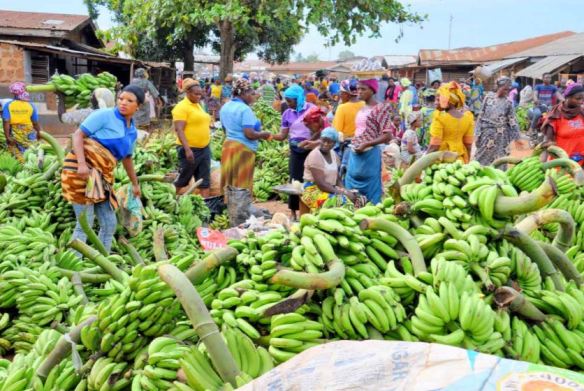
Researchers from the International Institute of Tropical Agriculture in Nairobi, Kenya, are using CRISPR to inactivate the banana streak virus DNA in the genome of plantain. Their strategy, reported in Communications Biology today, paves the way for improving banana breeding and getting better varieties of this staple food crop. This project is a welcome addition to the list of CRISPR applications being considered for developing countries’ agriculture, such as maize varieties resistant to lethal necrosis and cassava resistant to brown streak disease.
 

From chili pepper to hot tomato?

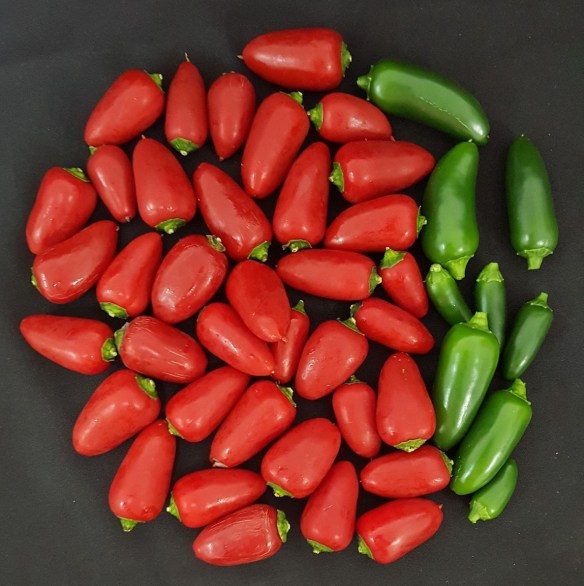
this image shows jalapeño peppers (a cultivated variety of capsicum annuum) credit emmanuel rezende naves

Chili peppers have happily entered our kitchens with their capsaicinoid content, since Cristoforo Colombo brought then back from Central America. Capsicum species however are labour-intensive and difficult to grow. They are also notoriously recalcitrant to biotechnological intervention. Tomatoes are much handier in comparison. The Capsicum and Solanum clades split at least 19 Mya ago but comparative genomics has revealed that tomatoes retain all the necessary genes for pungency. Why not to harness CRISPR power to turn tomatoes into capsaicinoid biofactories then? Continue reading

Your CRISPR blogger tries the real thing

scuola crispr 1_2

My lab adventure in the Italian edition of Scientific American (Le Scienze)

It’s never too late to learn how to rewrite a genome. So here I am, attending this CRISPR school. Forget the do-it-yourself kits sold over the internet. I am lucky enough to take the first practical course on genome editing organized by the Italian Society of Agricultural Genetics (Siga) in Grugliasco, at the Department of Agricultural, Forestry and Food Sciences of the University of Turin. After writing a lot about CRISPR, it’s time to try the real thing. Continue reading

CRISPR seeds: the asexual revolution is now

apomictic rice UC Davis

Imtiyaz Khanday (left), Venkatesan Sundaresan (right)  with their apomictic rice  (credit: KARIN HIGGINS/UC DAVIS)

“To make a seed it takes a fruit,” pupils use to sing in Italy. Then students learn that there is an embryo inside seeds and it takes a pollen fertilized egg to make it. The dream of plant scientists, however, has always been to be able to produce seeds using only the cell egg. This dream has finally come true: a group led by Venkatesan Sundaresan, at UC Davis, has developed a rice variety capable of cloning its seed. Continue reading

Milan toasts with biotech wine

aperitivo biotech 2

Assobiotec tasting event in Milan (photo credit: Marco Marazza)

When toasting during Christmas holidays, perhaps with a glass of Italian sparkling prosecco, think about it: viticulture in Europe occupies 3% of the cultivated area, but it accounts for 65% of all fungicides employed in agriculture. The adoption of new wine grape varieties resistant to powdery and downy mildew could significantly cut chemical use. If fairly regulated, advanced biotech tools such as CRISPR could help sustainability without losing anything of the genetic identity of iconic varieties. Continue reading

CRISPR rice vs GM rice: which would you buy?

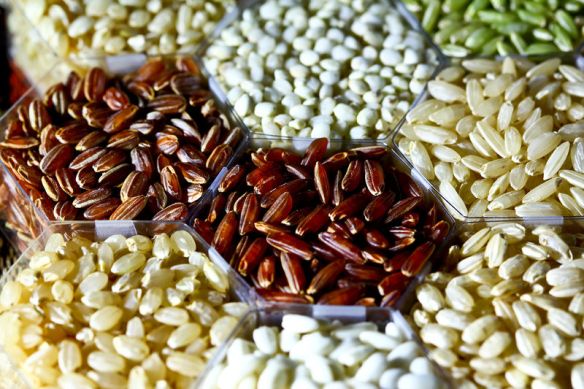
Rice_grains_(IRRI)Just imagine you could find them all on the supermarket shelves, would you buy rice labeled as CRISPR or GMO, or stick to conventional non-genetically modified rice? And what price would you consider fair? Aaron Shew and colleagues from the University of Arkansas conducted a multi-country assessment of willingness-to-pay for and willingness-to-consume a hypothetical CRISPR-produced food and published their findings in Global Food Security. Continue reading
EU science advisors on CRISPR and GMOs

SAMThe European Commission’s Group of Chief Scientific Advisors has published a statement on gene editing and the GMO directive, following the controversial judgment released last July by the EU Court of Justice. They state that new scientific knowledge and recent technical developments made Directive 2001/18 “no longer fit for purpose.” Therefore “there is a need to improve EU GMO legislation to be clear, evidence-based, implementable, proportionate and flexible.” The document was welcomed by Carlos Moedas, Commissioner for Research, Science and Innovation, and Vytenis Andriukaitis, Commissioner for Health and Food Safety. Let’s hope actions will follow, and laws keep up with labs.

The Netherlands are calling. Will the EU answer?

windmillA proposal from the Netherlands Ministry of Infrastructure and the Environment points the way out of the GM regulatory impasse for most CRISPR crops in Europe. Rather than trying to clarify ambiguous definitions, the EU could simply amend Annex B1, that is the list of technologies that are excluded from regulation by the directive on GMOs (2001/18/EC). Continue reading

Ag research or biowarfare?

corndrought“Agricultural research, or a new bioweapon system?”. This is the question asked by Guy Reeves et al. in a policy forum published in Science today. The evolutionary geneticist from the Max Planck Institute and his German and French coauthors doubt that the Insect Allies program funded by Darpa in the US will realize significant agricultural benefits, e.g. in relation to drought, frost, flooding, herbicide, salinity, or disease. They fear, indeed, that it will be “widely perceived as an effort to develop biological agents for hostile purposes and their delivery, which – if true – would constitute a breach of the Biological Weapons Convention.” Continue reading

CRISPR crops and the EU law. A wise proposal from Germany

2016-berlin-reichstag-politik_0_1

When the European Court of Justice ruled that CRISPR products must obey the same cumbersome rules as GMOs, European ag scientists were shocked. After complaining, it’s time to advance new proposals. A German council advising the Federal Government has just released its recommendations, calling for new EU legislation. According to the 17 members panel, named Bioökonomierat, we should adopt a differentiated approach to the genome-editing technology and its applications, ranging from single letter mutations to complex genome modifications. For example, graduated licensing and approval procedures for different classes of risk. Please see the main points below. Continue reading