
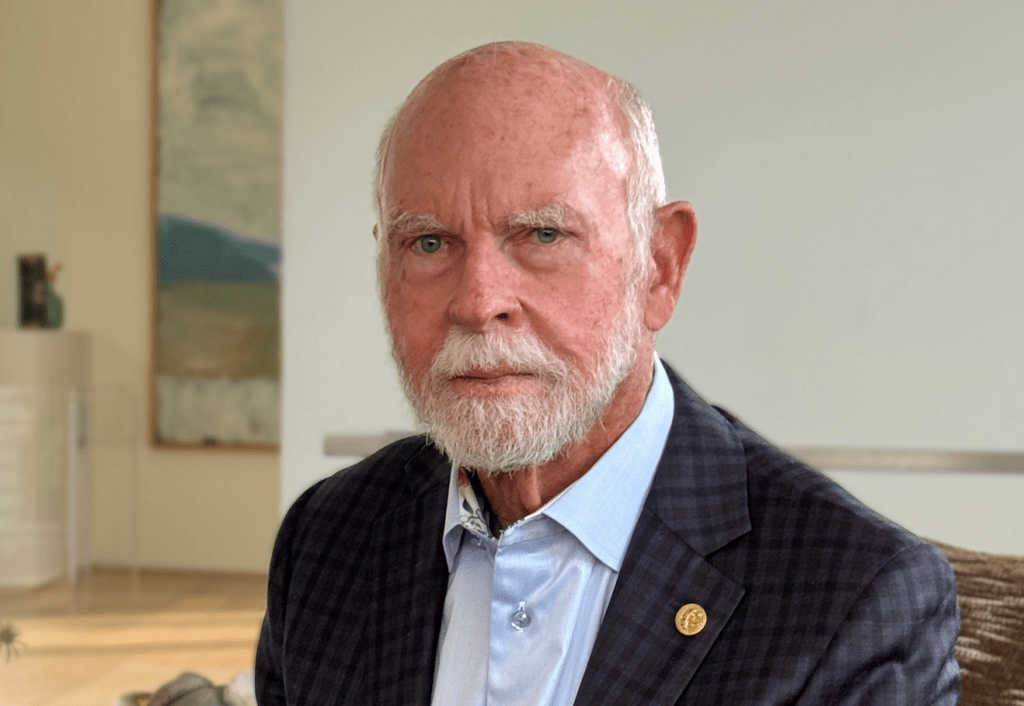
Craig Venter was the first person to read his own genome (his full sequence was published in 2007). He was able to study his genetic predispositions and undergo the most advanced tests to verify their real-world relevance. In 2014, he launched a company called Human Longevity with the goal of building bridges between genetic sequences and diagnosis. In this way, by 2016 he had identified and defeated prostate cancer, but science and luck were not enough to save him a second time in 2026. When he passed away on April 29, he had not accomplished everything he had hoped to, but more than enough to secure a place in history, and perhaps even earn the respect of many of his former rivals.
“Trust your instincts and blaze your own trail”, he used to say. Craig Venter did just that many times across different fields, not only during the genome race that made him famous. You can find many accounts of the competition between the international consortium and the maverick scientist leading the company Celera Genomics. In this final portrait, we will only briefly recall Venter’s rise to the heights of genomics, before turning to his lesser-known contributions and the final challenge he was unable to win.
The story of an outsider standing up to the establishment never loses its appeal, even if in this case almost everyone was rooting for Goliath rather than David. The giant, after all, represented nonprofit public research, while the bold challenger carried the risks associated with private enterprise. That is a simplistic reading, especially considering that the competition ultimately spurred both sides forward (the consortium had to improve efficiency, while the company had to improve accuracy). If David managed to lay siege to Goliath, it was also thanks to the alliance Venter forged with Nobel laureate Hamilton Smith. His other ace in the hole was shotgun sequencing, a risky but ultimately successful technical choice based on randomly fragmenting DNA and then reassembling it computationally.
Proof of principle came in 1995 with the first-ever sequenced microorganism (the bacterium Haemophilus influenzae). The second, more demanding test followed in 2000 with the first sequenced eukaryotic species (the fruit fly Drosophila). From there, Venter made the leap toward his ultimate goal: the human genome. At the same time, the American scientist never lost his passion for the microbial world. At the request of the Italian vaccinologist Rino Rappuoli, he sequenced meningococcus B and the H7N9 avian influenza virus, paving the way for their respective vaccines. In 2004, he organized a global circumnavigation expedition (Sorcerer II Global Ocean Sampling), collecting and sequencing marine microbial biodiversity and making a fundamental contribution to the advancement of metagenomics. He then turned to designing artificial organisms (synthetic biology), focusing on Mycoplasma mycoides and capricolum. In 2010, he synthesized the first artificial genome, and in 2016 he systematically eliminated nonessential genes until identifying the minimal set required for viable life (473 genes, about one-third of which of unknown function). His final masterstroke came in 2026, when his group performed a complete genome transplant into chemically inactivated cells, bringing them back to life. The bioRxiv server released the work just weeks before Venter died from complications related to treatment for a recently diagnosed cancer.
Among so many victories, one challenge remained unresolved. In his final interview with Nature in 2023, Venter explained his growing interest in disease prevention. His personal genome had revealed a risk of early-onset Alzheimer’s disease, yet brain imaging showed no abnormalities, suggesting that the mutation was not predictive in his case. That’s when he got the idea of opening a clinic where they could perform deep phenotyping alongside genome sequencing to try to obtain real-world data. Once again, Venter went his own way, against the consensus of the medical community, choosing to test only asymptomatic individuals. “Just by doing these tests we discovered that roughly 50% of the self-described healthy people that came through have a significant disease or risk of disease that they were completely unaware of”. The danger of this approach, of course, is overdiagnosis: identifying real conditions that would never have caused problems during a person’s lifetime, thereby triggering cascades of unnecessary worries, avoidable interventions, and wasted resources.
Matthew Herper of STAT devoted the final part of his obituary to the controversial philosophy behind Human Longevity: genome sequencing, full-body MRI scans, over 100 biomarkers, all powered by artificial intelligence, aimed at preventing disease years before the first symptoms appear. He recounted undergoing sequencing himself and taking tests that ultimately proved unnecessary. His arteries, typical of a healthy forty-year-old, appeared clear even under the scrutiny of CT imaging. For him, as for many others, taking standard statins to control cholesterol makes far more sense than relying on such an aggressive, high-tech predictive approach. Coincidentally, just days before Venter, another physician passed away, less famous but highly influential, who helped save countless lives. This was Eugene Braunwald, the cardiologist who, in the 1960s, helped change how we understand heart attacks, framing them not as sudden events but as the culmination of progressive pathological processes that can be monitored and addressed. The world we live in is largely Braunwald’s world, Herper writes, but we can and should continue to hope that one day we will live in Venter’s.
(translated and adpted from an article by Anna Meldolesi for Osservatorio Terapie Avanzate)

