
The progress achieved in Japan through experiments on mice has shown the way forward, but replicating these results in humans will pose technical, ethical, and legal challenges
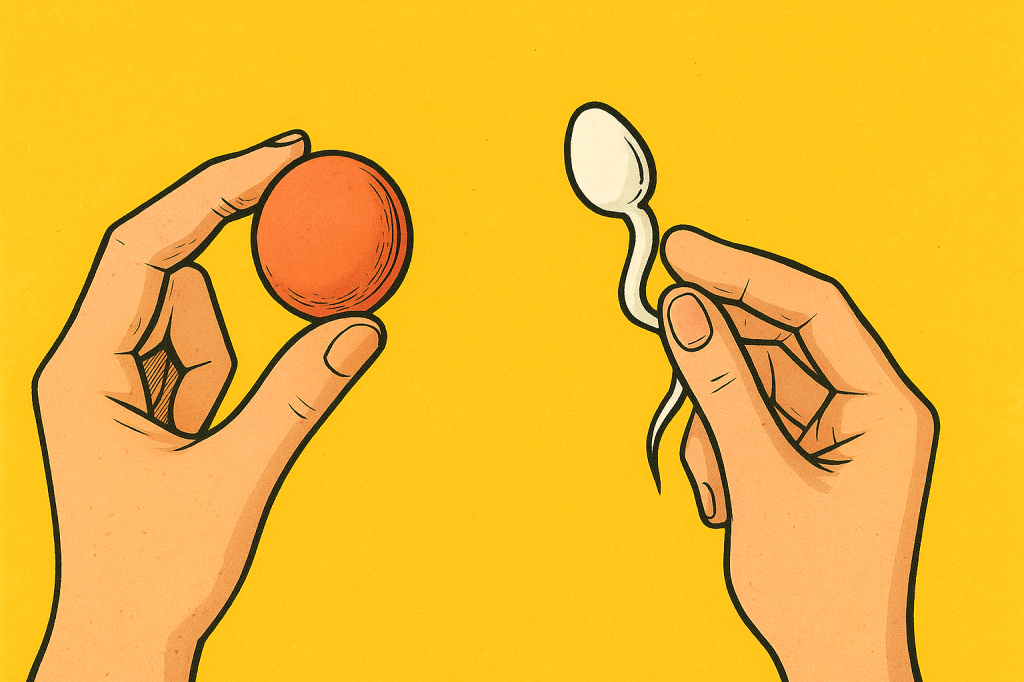
Gametogenesis is the process by which gametes — male and female sex cells — are formed. In nature, it occurs inside the testes and ovaries, starting from progenitor cells that receive a variety of signals. Replicating the process in vitro is already possible in mice, albeit with low efficiency. Some specialists expect that within a decade, knowledge and technology will have advanced enough to apply these methods to humans, producing both sperm and eggs from cells taken from other parts of the body, and from individuals of either sex. This could allow infertile couples to have genetically related children without external donors, but it would also open the door to troubling new scenarios.
For over twenty years, researchers have known how to reprogram adult body cells, reverting them to an embryonic-like state that allows them to follow various differentiation pathways. This line of research was pioneered by Japanese scientist Shinya Yamanaka, who won the 2012 Nobel Prize in Medicine for his work on induced pluripotent stem cells (iPS). Rejuvenated to a pluripotent state, these cells can become, for example, cardiac cells or neurons.
Gametes, however, are a very special kind of cell: they contain only half the usual genetic material (they are haploid), since egg and sperm must unite to restore the full, diploid genetic complement typical of adult cells. The stages of gametogenesis are also uniquely complex and prolonged. Cells destined to become gametes form by the millions already in the fetus, but oocytes take years to complete their development, and ovulation begins only after puberty. On the other hand, replicating the environment in which sperm mature has proven particularly difficult in the lab. For these reasons, turning induced pluripotent stem cells into gametes has been a daunting challenge, as noted in a recent feature article in Nature.
Because access to human tissues for experimental purposes is limited, researchers have to devise ingenious workarounds: incubating human cells in animal tissues, 3D-printing testicular tubules, or growing organoids that mimic at least some features of reproductive organs. These experiments primarily aim to study the signals that govern the key steps of the process, starting with meiosis, the division that halves the genetic material in gametes. Errors in this division can be fatal, leading to abnormalities in chromosome number.
Another delicate event during gametogenesis is the removal of epigenetic markers, chemical modifications surrounding DNA that determine how active certain genes are. When cells begin to differentiate during embryonic development, each will acquire its own epigenetic profile: for example, a skin cell and a liver cell share the same DNA but express it differently. It’s worth remembering that not only genetic mutations but also epigenetic errors can cause disease.
Before moving to human trials, the safety of these techniques must be tested in non-human primates, monitoring offspring produced from artificial gametes throughout their lives and across generations. In short, it will take time before in vitro gametogenesis can aspire to become a routine practice in assisted reproduction. Still, commercial pressures are already mounting, as lab-grown gametes could spare women the invasive procedures required to retrieve eggs for IVF, and make donor sperm or eggs unnecessary, fulfilling the desire for genetically related offspring for both parents.
However, as noted in a recent report by the Nuffield Council on Bioethics in the UK, such a future of abundant gametes could drastically increase the number of surplus embryos created to select desired traits, not just to ensure a healthy life but also to optimize appearance or abilities. Even today, some U.S. companies offer services of this kind, assigning “report cards” to embryos based on polygenic scores, but an aspiring mother typically has no more than about 15 embryos at a time. In vitro gametogenesis could, in theory, vastly expand the catalog of potential “made-to-order” children.
The day when a few skin cells suffice to produce sperm or eggs, we might also have to worry about someone obtaining a biological trace of us – from a discarded object, for instance – and using it without our consent to create gametes carrying our DNA. Another possible reproductive application involves same-sex couples: in mice, researchers have already succeeded in producing pups with two mothers, and even more surprisingly, with two fathers.
The announcement of the latter breakthrough, made during the Third International Summit on Human Genome Editing in London, astonished the scientific community, as many had considered such a feat impossible. Its creator, Katsuhiko Hayashi of Osaka University, was subsequently named by Nature among the ten scientists who shaped 2023. Curious how he did it?
His team took cells from the tail of a male mouse, carrying both X and Y sex chromosomes, and reverted them to an undifferentiated state. During this reprogramming step, a small fraction of induced pluripotent stem cells spontaneously lost the Y chromosome. By selecting these cells and treating them with a compound that induces division errors (reversine), the researchers obtained a few cells in which the X chromosome had duplicated. These XX cells (genetically female) were then induced to differentiate into oocytes. After fertilization, more than 600 embryos were produced, leading to the birth of seven live pups, offspring of two fathers, which grew normally and proved fertile.
Replicating this result in human cells could be technically difficult, as the two species differ biologically in many ways, and controversial. Still, if successful, it could potentially help people unable to have children due to sex-chromosome anomalies, such as Turner syndrome. Same-sex couples might also have genetically related children, provided, in the case of two fathers, that a surrogate mother carried the pregnancy.
Whether these distant, hypothetical, and controversial goals will ever be achieved is uncertain. Yet along the way, much valuable knowledge will be gathered, shedding light on the causes of infertility and possible treatments. In the meantime, as noted by the UK’s Human Fertilisation and Embryology Authority (HFEA), it would be wise to be proactive, beginning public discussions on potential developments and updating legislation in advance.
(This article was published in Italian in Osservatorio Terapie Avanzate)
 CRISPeR FRENZY