
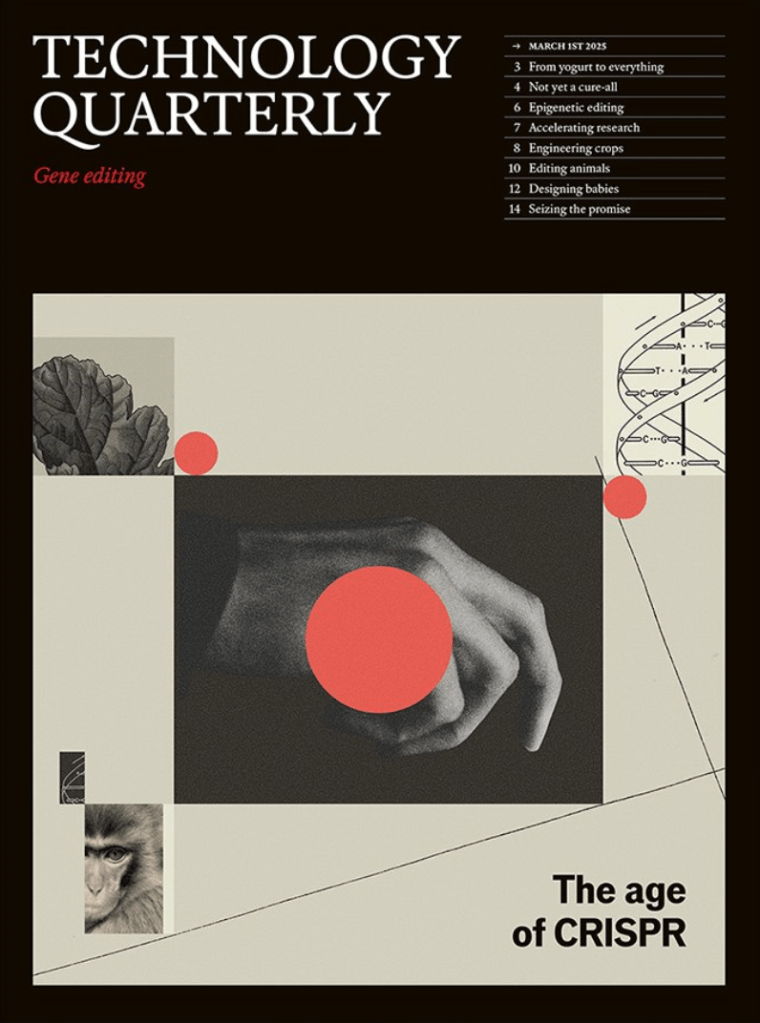
At first glance, it looks like the cover of a design magazine, but it’s actually the technology supplement published by The Economist in March. Titled ‘The Age of CRISPR,’ it features eight articles exploring the most cutting-edge areas of genome editing—gene therapies, xenotransplantation, epigenetic editing, gene drives, gene-edited plants, and much more. It doesn’t shy away from the challenges, from companies struggling to stay afloat to regulatory hurdles. But the tone is measured: the era of sensationalism is over, yet CRISPR is here to stay.
Also on the Economist website, we recommend the Babbage podcast with an interview with He Jiankui, the Chinese scientist behind the CRISPR babies scandal (the three little girls gene-edited at the embryo stage in an attempt to make them immune to the AIDS virus). Of their health conditions we know nothing; instead, it is known that the experiment presented serious technical and ethical problems. Incredibly, however, the perpetrator, after serving three years in prison, now says he is against monitoring the girls’ health (“they are not lab rats”).
 CRISPeR FRENZY