
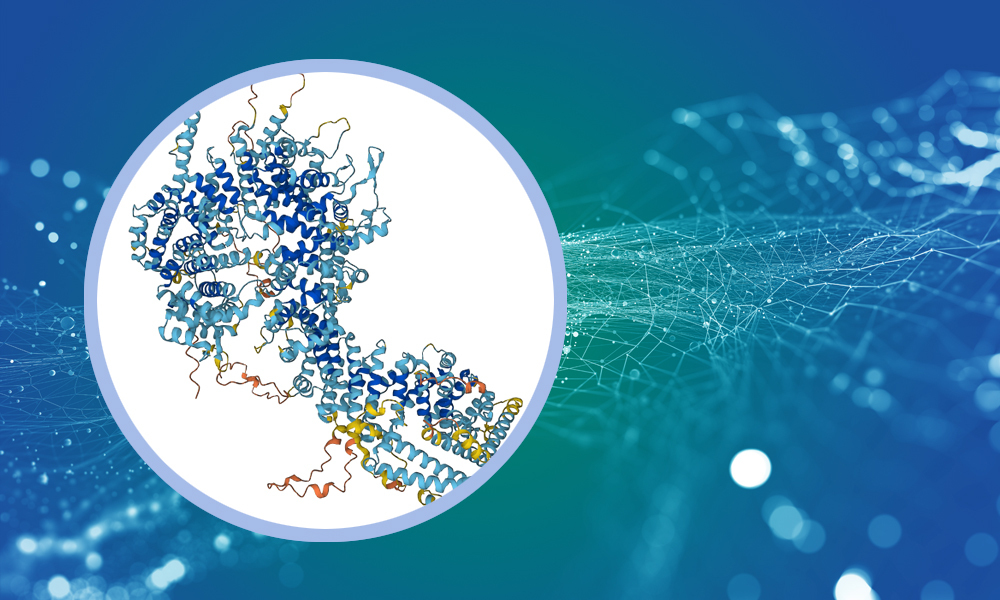
Have you read Jennifer Doudna’s article in Wired? She discusses how the combination of CRISPR and artificial intelligence could be transformational. In her lab, researchers recently used AI tools to help find “small gene-editing proteins that had been sitting undiscovered in public genome databases because we simply didn’t have the ability to crunch all of the data that we’ve collected”.
Smaller genetic scissors can, of course, enable more efficient delivery of therapies into cells. But AI might go even further: it could help expand the catalog of possible and desirable molecules by designing new proteins, including potentially improved CRISPR scissors. Furthermore it may help accelerate the development of CRISPR-based therapies by predicting the best editing targets, maximizing precision and efficiency, and reducing off-target effects, as Doudna points out.
Much has been said about AI’s ability to predict protein structures—an achievement that earned the 2024 Nobel Prize in Chemistry. However, a similar approach can also be applied to RNA and ribosomes. Enhancing these tiny cellular factories that produce proteins could lead to improved biomanufacturing processes for drugs. Jamie Cate and colleagues have paved the way by training deep learning models on RNA sequences from microbes that thrive in high-temperature environments. Their models were able to predict mutations that increase ribosome stability.
Of course, AI is in a hype cycle, but its impact on life science research is already tangible. According to an estimate published in The Economist, 65 AI-inspired molecules are currently in phase 1 or 2 human trials, and it’s likely that four or five could advance to phase 3 by 2025.
 CRISPeR FRENZY