
Testing of Chardonnay edited to resist downy mildew starts today near Verona, while the prosecco variety awaits its turn in the greenhouse
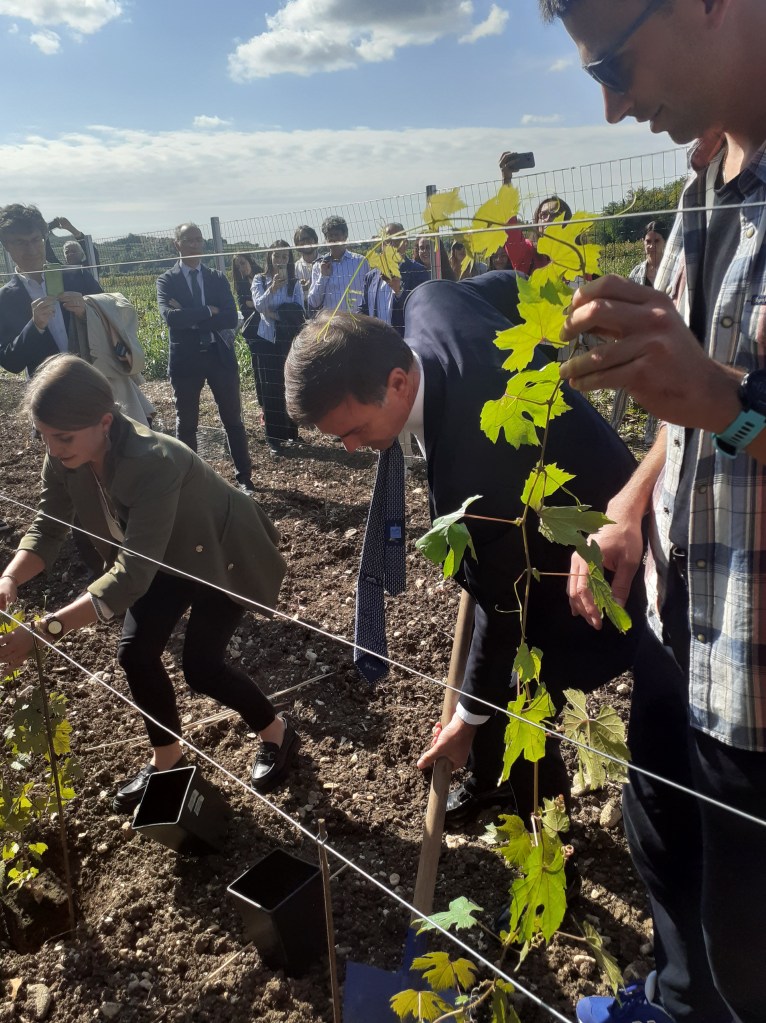
It is a small vanguard in the fight against fungal diseases, but it is only the beginning. This morning five plants carrying a targeted mutation left the greenhouse to be transplanted outdoors. Compared with ordinary vines, they should have one advantage: the ability to defend themselves against downy mildew, without the help of pesticides.
At least that is the hope of researchers at the academic spinoff EdiVite, who developed the plants by gene editing and obtained permission from the relevant authorities to test their performance under real world conditions. “This is the first field trial with edited vines in Europe,” says Sara Zenoni, who teaches agricultural genetics at the University of Verona and is one of the founding partners of EdiVite.
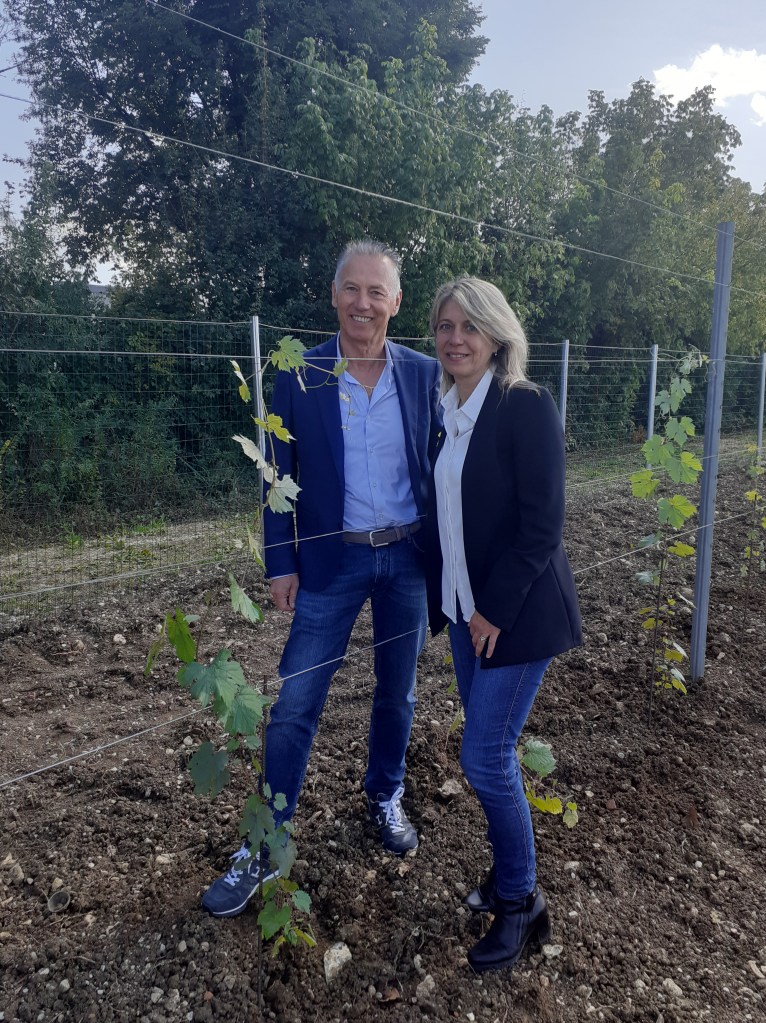
The trial has kicked off in a 250-square-meter plot owned by the university. Then in the coming months the experiment will expand to a second site in the Padua area. Within a couple of years the edited vines will become 30, alongside an equal number of unmodified vines that will serve as controls. “If all goes well, in 2025 we will collect the first data on downy mildew susceptibility, which in the greenhouse appeared to be low, and we should already have some bunches of grapes to test. Then in 2026 we expect to proceed to winemaking,” Zenoni predicts.
This is the second field trial authorized in Italy for plants whose DNA has been targeted by gene editing. It follows the green light given to the University of Milan for edited rice, just a few months earlier, raising hopes that future applications from other teams will find an efficient authorization process.
Several factors combine to make this experimental field special. The grapevine is not just any plant for the Veneto region or Italy in general: iconic in terms of landscape and culture, it is profitable but environmentally problematic. “Reducing the pesticides used in viticulture is a major challenge. New genomic techniques (NGTs) allows us to do it while preserving typicality, keeping the genetic identity of the vines intact,” argues Italian Society of Agricultural Genetics President Silvio Salvi.
Sometimes it happens that new technologies are looking for a problem to solve in order to establish themselves. In this case the exact opposite has occurred: in all evidence the problem is here, and it demands a scientific solution. Suffice it to say that viticulture uses 41% of the fungicides employed in European agriculture, despite occupying only 2 percent of the cultivated area in Europe. This is why Italian research on edited vines is beginning to be viewed favorably by the most forward-looking wine producers, major farmers’ associations, and some politicians.
“Bringing basic research to the field requires knowledge built over the years. In this case, the sequencing of the grapevine genome and the functional study of its genes were crucial, as well as the skills acquired in plant tissue cultivation,” explains Mario Pezzotti, who built an important part of his career as an agricultural geneticist in Verona and is one of the founding partners of EdiVite.
“We decided to start with the Chardonnay variety precisely because it regenerates well, as well as having an international connotation. With the proper authorizations, however, we would be ready to field test other edited varieties, starting with Glera which is used for prosecco, and other traits, first and foremost protection against powdery mildew,” Zenoni adds.
Inactivating genes for disease susceptibility seems a preferable strategy to inserting genes for resistance borrowed from wild vines, as it avoids triggering competition between the host and pathogen, potentially offering longer-lasting protection. In the case of the newly initiated trial, the strategy was to use CRISPR genetic scissors to delete a few letters in the DMR6 gene, which inhibits the production of a molecule (salicylic acid) that is important for the plant’s immune defenses.
A small deletion is enough to disrupt the reading frame of the target gene and it allows the vine to preemptively and intensively defend itself. “It is possible that this also helps protect vines against other pathogens; we will try to verify this during the trial,” Zenoni explains. No foreign DNA had to be introduced into the plant to induce this targeted mutation. As a result, the vines are not transgenic and fall into the category that should be exempt from restrictions that apply to GMOs in the EU, according to the proposed regulatory review under discussion in Brussels.
“We were lucky enough to meet producers active in our region, interested in science and free of preconceptions, who wanted to see what we were doing, believed in us, and decided to invest in Italian know-how. Thanks to this collaboration EdiVite was born in 2020,” Zenoni recalls.
By combining viticulture, enology, and biotechnology, Verona provides young researchers with the opportunity to develop a valuable mix of skills. So let’s raise a glass to their future success, perhaps a Chardonnay. Libiamo ne’ lieti calici, as they sing in Verdi’s La Traviata.
[This is a simplified and translated version of the article written by Anna Meldolesi for Le Scienze, the Italian edition of Scientific American]
 CRISPeR FRENZY
Pingback: CRISPR - Itália testa as primeiras videiras geneticamente editadas na Europa