
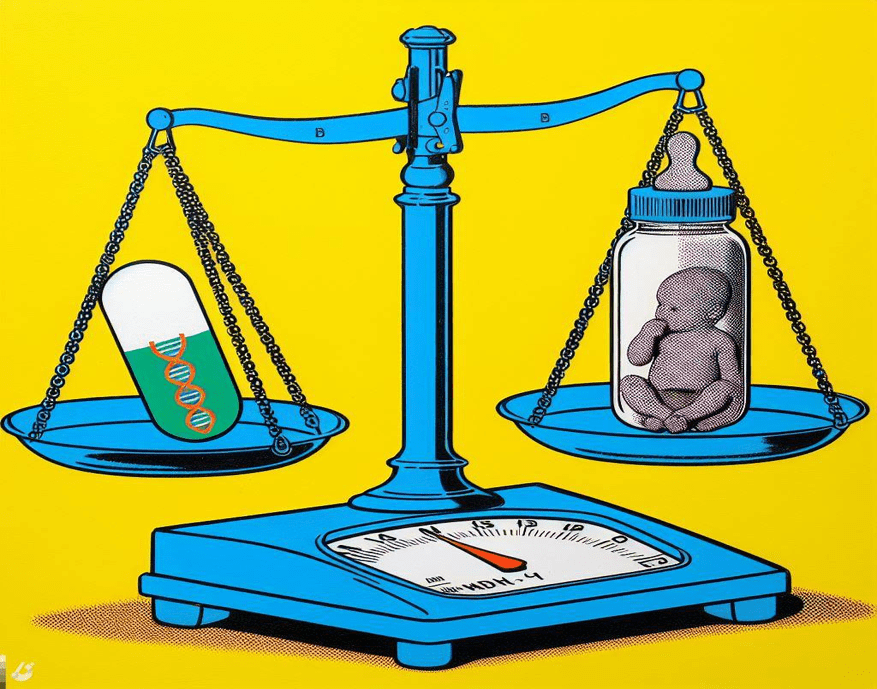
The approval of Casgevy, the new CRISPR option for sickle cell disease, is big news for American patients. The list price is high ($2.2 million) although lower than the non-CRISPR gene therapy approved by the FDA for the same pathology the same day. But in addition to economic sustainability, another issue worries scientists, clinicians, and patients: infertility.
Chemotherapy is used to make room for edited cells in the patient’s bone marrow, but this pre-treatment also wipes out reproductive cells. The difficult trade-off between the chances of having children naturally and the chance of being relieved from a painful disease is the focus of a must read article by Megan Molteni in STAT.
During clinical trials, the companies developing Casgevy provided counseling with reproductive specialists and offered to cover egg and tissue freezing and sperm banking. However most Americans patients will be unable to pay for these procedures and IVF as Casgevy hits the market.
Technical advancements to avoid chemotherapy, by switching from ex vivo to in vivo editing treatments, would solve the dilemma but are not yet at hand. In the meantime grants from donors, discounts at fertility clinics, new rules for insurers to cover fertility preservation for people with sickle cell would be needed.
 CRISPeR FRENZY