
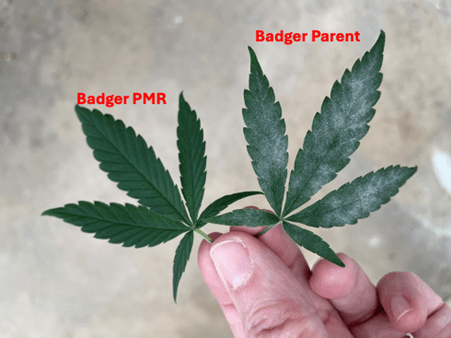
In a book published several years ago titled The Botany of Desire, Michael Pollan devoted a chapter to the evolution of cannabis. When our ancestors began cultivating hemp in the Neolithic period, they were interested in its fibers, but they were soon won over by its special effects. Perhaps it wasn’t we who domesticated cannabis, it may have been cannabis that domesticated us. The question is: why did evolution favor the production of psychoactive substances? Perhaps cannabinoids help the plant protect itself from radiation damage or pests. Or maybe, Pollan suggests, they enabled hemp to win the favor of human beings, who then actively cultivated it. Now evolution continues in labs, also with the help of gene editing, including efforts to eliminate those psychoactive substances from varieties used for therapeutic purposes. The latest news is that two new varieties have recently been deregulated in the United States.
Both were developed by the University of Wisconsin–Madison and have received federal clearance from the U.S. Department of Agriculture’s Animal and Plant Health Inspection Service (APHIS). One is resistant to powdery mildew (Badger PMR), while the other is cannabinoid-free (Badger Zero). CRISPR was used to switch off the production of tetrahydrocannabinol, thereby preventing THC levels from accidentally exceeding the legal limit that would trigger the mandatory destruction of fields. The researchers also developed varieties with higher concentrations of CBG (cannabigerol), a non-psychoactive compound valued for its potential therapeutic benefits. Overall, according to ISAAA, the goal is to stabilize the hemp market by providing growers with “reliable, high-value, legally compliant varieties.”
 CRISPeR FRENZY