
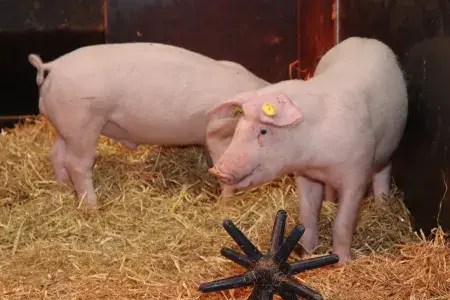
At the Roslin Institute of the University of Edinburgh – the same research centre that created Dolly the sheep – scientists have used gene editing to achieve a new advance in animal breeding. With a precise CRISPR tweak, they have produced pigs that are immune to a highly contagious and often deadly viral disease: classical swine fever.
As reported in Trends in Biotechnology, editing a single gene (DNAJC14) was enough to stop the virus from replicating inside cells, giving the animals complete protection without any negative effects on their health or development. Classical swine fever is not currently found in most of Europe but remains endemic across large regions of Asia, Africa, and Latin America, where it continues to cause suffering, mass culling, and severe economic losses despite vaccination efforts. This latest achievement from the Roslin Institute, therefore, shows that CRISPR technology may play a valuable role in livestock breeding, even if regulatory hurdles and market uncertainty are still slowing the path toward commercial use of gene-edited meat.
 CRISPeR FRENZY